
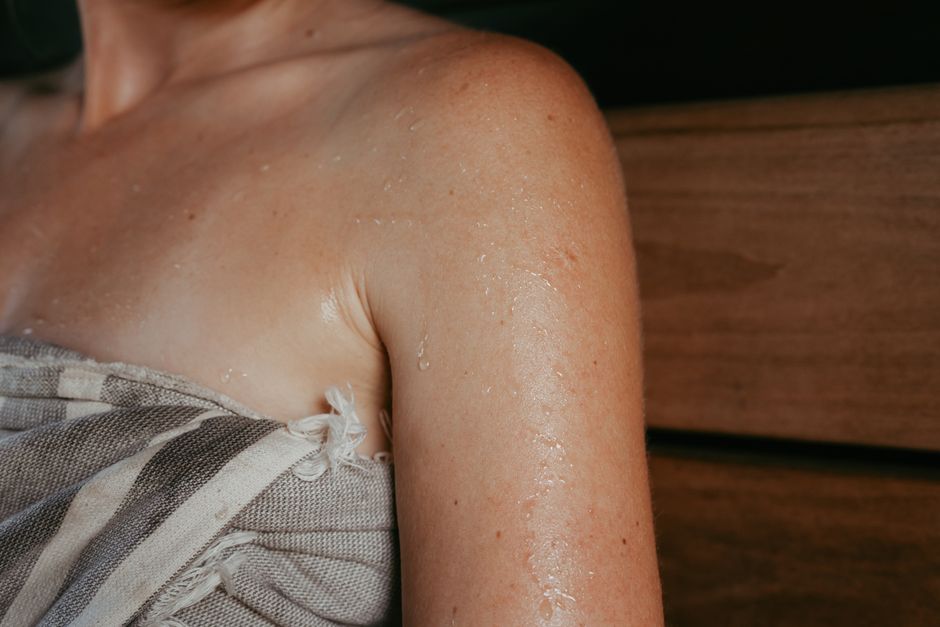
If you are sitting in a hot sauna and barely producing a drop of sweat, the most common explanation is that your body is doing exactly what it should — it just hasn’t needed to sweat yet. Sweating is not an instant reaction to heat. It is a cooling response triggered once your core temperature rises past a certain point, and that threshold varies from person to person.
Other frequent reasons include a cool or short sauna session, dehydration, certain medications, and natural differences in how many sweat glands you have and how active they are. In rarer cases, a medical condition that affects sweating may be involved. Below are the eight most common causes, explained honestly.
How Sweating Actually Works In A Sauna
Sweat is your body’s main cooling system. When sensors in your skin and brain detect a rise in internal temperature, your nervous system signals millions of sweat glands to release fluid onto your skin. As that fluid evaporates, it carries heat away with it.
Here is the part many people miss: you do not start sweating the moment you enter a hot room. Your core temperature has to climb first. If the sauna is only moderately hot, if you just stepped in, or if your body is efficient at holding its temperature steady, you may sit there dry for several minutes. That is normal, not a sign that something is broken.
Two types of glands are involved. Eccrine glands cover most of your body and produce the watery sweat that cools you. Apocrine glands, found mainly in the armpits and groin, produce a thicker fluid and are more tied to stress and hormones than to temperature. When people say they “don’t sweat,” they usually mean the eccrine system is not firing yet — or not firing much.
Why Am I Not Sweating In The Sauna? 8 Causes
These eight factors explain the large majority of cases where someone sweats little or not at all in a sauna. They range from completely harmless to worth a doctor’s attention.
- Your core temperature hasn’t risen enough yet. Sweating lags behind heat exposure. Give it time.
- The sauna isn’t hot enough. A lukewarm room may never push your core temperature high enough to trigger a strong response.
- You’re dehydrated. Low body water means less fluid available to make sweat.
- A medication is suppressing it. Several common drug classes reduce sweating.
- You have fewer or less active sweat glands. This is largely genetic.
- You’re acclimated to heat. Regular sauna or hot-climate exposure makes your sweating more efficient, not necessarily heavier.
- Age. Sweat gland function tends to decline with age.
- An underlying medical condition. A range of health issues can reduce sweating.
The rest of this article looks at each one in more detail.
Does Dehydration Stop You From Sweating?
Yes. Sweat is made from fluid pulled from your body, and when you are low on water, you have less to spare. This is one of the most common and most fixable reasons for reduced sweating.
You do not need to be severely dehydrated for this to matter. Going into a sauna after a long day with little water intake, or after exercise without rehydrating, can blunt your sweat response. Alcohol the night before has a similar effect because it increases fluid loss.
The fix is simple in principle: drink water before and after sauna use. But be careful not to overdo it. Drinking excessive water without replacing electrolytes can dilute your blood sodium, a condition called hyponatremia. That is uncommon from sauna use alone, but it is a real risk if you drink large volumes of plain water in a short time. Plain water in normal amounts is the sensible approach for most healthy adults.




Which Medications Can Reduce Sweating?
Several widely prescribed medications can suppress sweating. This is a well-documented effect, not a fringe concern. If you started a new medication and noticed your sauna sweating dropped off, the timing may not be a coincidence.
Classes of drugs commonly linked to reduced sweating include:
- Anticholinergic medications, used for conditions like overactive bladder, allergies, and some digestive issues
- Certain antidepressants, particularly older tricyclics and some SSRIs
- Some antipsychotics
- Beta blockers, used for blood pressure and heart conditions
- Some antihistamines
Do not stop or change any medication on your own because of reduced sweating. If this concerns you, talk to your prescriber. They can tell you whether your specific drug is known to affect sweating and whether any adjustment makes sense.
Can You Be Physically Unable To Sweat?
Yes, though it is uncommon. The medical term is anhidrosis — the reduced or absent ability to sweat. It can be caused by skin damage that destroys sweat glands, nerve damage from diabetes or other conditions, certain genetic disorders, and some autoimmune or endocrine conditions.
Anhidrosis matters because sweating is how you cool down. If you cannot sweat normally, you are at higher risk of overheating, heat exhaustion, and heat stroke. That risk goes up significantly in a hot sauna, not down.
Signs worth taking seriously include sweating very little across your whole body in many situations, not just the sauna, and a history of overheating easily during exercise or in warm weather. If that sounds like you, see a doctor before continuing regular sauna use.
Is It Genetic? Sweat Gland Differences
Largely, yes. People are born with different numbers of sweat glands and different levels of gland activity. Estimates vary, but the range across healthy adults is wide. Some people simply produce less sweat than others under identical conditions.
This is why two people can sit side by side in the same sauna and have completely different experiences. One is drenched; the other is barely damp. Neither is necessarily unhealthy. Genetics also influences where you sweat most — some people sweat heavily on the forehead and back, others on the palms and chest.
If you have always been a light sweater and have no other symptoms, genetics is a reasonable explanation. It becomes less likely if your sweating pattern changed suddenly.
Does Heat Acclimation Change How Much You Sweat?
Yes, and this surprises many people. Regular sauna use or time in hot climates causes your body to adapt. One of the key adaptations is that you start sweating sooner and more evenly across your body — but the total volume does not always increase. In some people it becomes more efficient, meaning you cool down with less sweat.
So if you are a frequent sauna user and notice you sweat less than you used to, that can reflect adaptation rather than a problem. Your body has learned to manage heat more effectively. This is the same process that helps athletes perform in hot conditions.
Acclimation typically develops over days to a few weeks of repeated heat exposure, though the exact timeline varies by person and by how intense and frequent the exposure is.
Age, Skin, And Other Everyday Factors
Sweat gland function tends to decline with age. Older adults often sweat less and are therefore more vulnerable to heat-related illness. This is a well-established pattern and one reason heat safety guidance pays special attention to older people.
Other everyday factors that can reduce sweating in a sauna include:
- Sitting in a cool spot or near a vent
- Wearing clothing that traps or blocks airflow
- A short session — under a few minutes
- Recent illness or fever
- Low body fat, which can mean faster heat loss and less need to sweat
None of these are medical problems. They are just circumstances that change how much you sweat on a given day.
When Should You See A Doctor?
See a doctor if you sweat very little across your whole body in many situations — not only in the sauna — or if you have ever overheated easily during exercise or in warm weather. A change from your normal pattern is also worth checking, especially if it came on suddenly.
Get urgent medical help if you develop signs of heat illness during or after sauna use. These include confusion, dizziness, nausea, a rapid pulse, headache, or skin that is hot and dry rather than sweaty. Hot dry skin in a hot environment is a warning sign, not a comfort.
For most people who simply sweat less than the person next to them, there is no medical issue at all. Bodies differ. But if something feels off, or if your pattern has changed, it is reasonable to ask a clinician rather than guess.
Frequently Asked Questions
Why am I not sweating in the sauna when everyone else is?
Your core temperature may simply not have risen enough yet, or you may naturally have fewer or less active sweat glands. Genetics and heat acclimation both play a large role in how much a person sweats.
Can dehydration stop you from sweating?
Yes. Sweat is made from your body’s fluid, so being low on water reduces how much you can produce. Drinking normal amounts of water before sauna use helps, but avoid drinking very large volumes quickly.
Is not sweating in a sauna dangerous?
Not sweating much in a sauna is usually harmless and often just reflects timing, temperature, or genetics. It is more concerning if you rarely sweat anywhere, or if you overheat easily in daily life.
Do medications cause reduced sweating?
Certain medications can reduce sweating, including some antidepressants, anticholinergics, beta blockers, and antihistamines. Talk to your prescriber before changing anything.
