
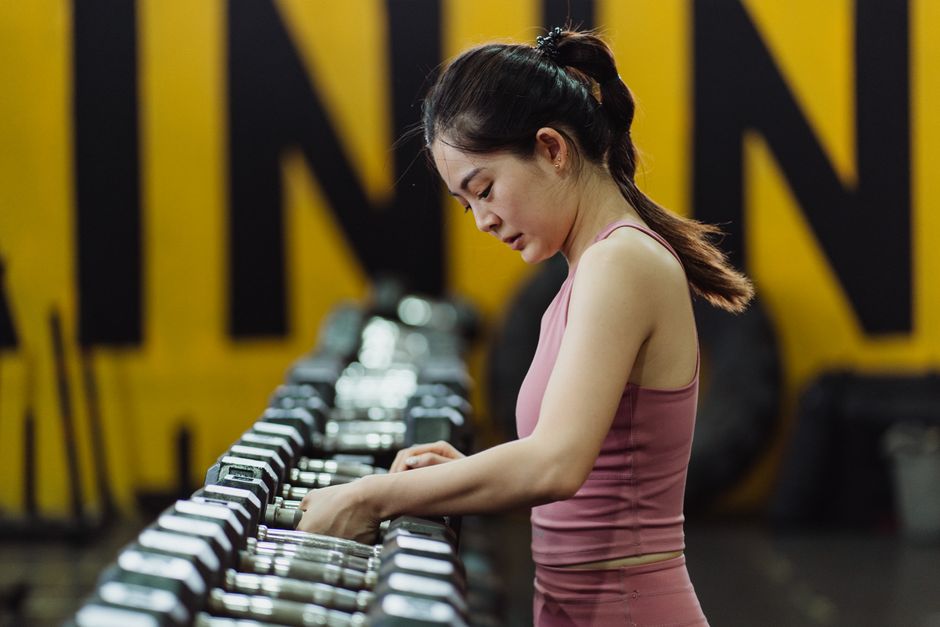
You finished your workout, put the weights away, and waited for the soreness to hit. It never came. That is not a sign your workout failed. Muscle soreness after lifting is not a reliable measure of whether a session worked. It is a side effect of unfamiliar movement, not a requirement for getting stronger.
Delayed onset muscle soreness (DOMS) usually shows up 12 to 24 hours after exercise and often peaks around 24 to 72 hours. It happens most when you do something new, change your routine, or push harder than usual. When none of those things are true, you can train hard and feel almost nothing the next day.
Soreness and muscle growth are two different things. You can build strength and size without soreness. You can also get very sore from a workout that does little for your long-term progress. Here is what is actually going on.
Why Am I Not Sore After Lifting Weights Explained
The most common reason is that your muscles have adapted to what you are asking them to do. Soreness is driven mainly by unfamiliar stress, not by how hard a workout felt in the moment.
When you repeat the same exercises at similar loads and volumes, your muscles get used to that demand. The damage and inflammation that trigger soreness become smaller. This is called the repeated bout effect. It is one of the most consistent findings in exercise science. After one bout of a new exercise, a second bout of the same exercise typically causes much less soreness.
This is why a lifter who has squatted twice a week for years may feel fine the day after a solid leg session, while a newcomer who squats for the first time can barely walk down stairs for two days. Same exercise. Very different soreness. The trained muscle is not weaker. It is just familiar with the work.
Other reasons you might not be sore include:
- You used a load or volume your body already handles well.
- You are well-recovered, hydrated, and sleeping enough.
- Your range of motion was moderate rather than extreme.
- You focused on heavier, lower-repetition work, which tends to cause less soreness than high-repetition work to fatigue.
- You have been training consistently, so your baseline soreness is simply low.
None of these mean the session was wasted. They usually mean your body is doing what a trained body does.
What Actually Causes Muscle Soreness?
Soreness comes from the combination of mechanical stress on muscle fibers and the inflammation that follows. It is not caused by lactic acid.
The lactic acid idea is one of the most persistent myths in fitness. Lactate is a normal fuel byproduct that your body clears within roughly an hour after exercise. It is not sitting in your muscles for days causing pain. DOMS is a separate process tied to microscopic damage and the repair response that follows.
That repair response involves the immune system, which is why soreness has a delay. It is also why soreness is not a direct readout of muscle damage. The two are related but not the same. Some research indicates that soreness and markers of muscle damage do not always track together. You can have significant muscle stress with little soreness, and significant soreness with modest damage.
Eccentric contractions — the lowering phase of a lift, like lowering a dumbbell or descending in a squat — tend to produce the most soreness. That is why a new exercise with a strong lowering component often hits harder than expected.
Does No Soreness Mean No Muscle Growth?
No. Muscle growth depends mainly on progressive overload, adequate protein, and enough total training volume over time. Soreness is not part of that equation.
Muscle grows when you repeatedly ask it to do more than it is used to and then recover. That can happen with almost no soreness, especially in trained lifters. If soreness were required for growth, experienced athletes who rarely get sore would stop making progress. They do not.
What actually drives growth:
- Increasing weight, reps, or sets over weeks and months.
- Training a muscle with enough challenging sets.
- Eating enough protein and calories to support repair.
- Sleeping enough to recover.
- Staying consistent long enough for adaptation to accumulate.
If you are getting stronger over time — more weight on the bar, more reps at the same weight — your training is working. That is a far better signal than how you feel the next morning.




When Should You Worry About Not Being Sore?
You should not worry about a lack of soreness by itself. It becomes worth a look only when it shows up alongside other signs that you are not progressing.
Soreness is just one input, and a noisy one. A better question is whether your training is moving forward. Ask yourself:
- Are you adding weight or reps over time?
- Are your workouts still challenging?
- Are you recovering well between sessions?
If the answer to those is yes, no soreness is not a problem. If your lifts have stalled for weeks and your sessions feel easy, the issue is probably your program, not your soreness.
One situation to watch: if you never feel challenged during a workout and never feel anything after, you may be training too light or too infrequently to create a growth stimulus. That is a programming issue. The fix is to gradually increase difficulty, not to chase soreness for its own sake.
Can You Build Muscle Without Ever Getting Sore?
Yes. Many people train for years with very little soreness and continue to gain strength and size. This is normal, not a warning sign.
Soreness tends to be highest when you are new to training or when you introduce something unfamiliar. As you adapt, it fades. That is expected. A lifter who has trained consistently for a long time may only get sore when they try a genuinely new movement or take a long break and come back.
This is also why chasing soreness can backfire. If you constantly change exercises or add volume just to feel sore, you make it harder to track progress and harder to recover. Consistent, progressive training with the same core lifts usually beats random soreness-chasing.
There is one honest caveat. If you want to maximize growth, you do need enough training stimulus. That means enough challenging sets and enough load over time. It does not mean enough soreness. Those are different targets.
How Do You Know Your Workout Was Effective?
Track performance, not pain. The clearest sign a workout worked is that you can do slightly more over time.
Useful markers of an effective session include:
- You hit or beat your target reps with good form.
- You added a small amount of weight since last time.
- You completed your planned sets without form breaking down.
- You felt the target muscle working during the set, even if it was not sore later.
These are more reliable than soreness because they measure the thing you actually care about: getting stronger. Soreness measures novelty. Progress measures results.
If you want a simple rule, write down your main lifts each week. If the numbers trend up over months, your training is doing its job — sore or not.
Should You Ever Train to Get Sore on Purpose?
No. Deliberately chasing soreness is not a training strategy, and it can work against you.
Some people assume a workout only counts if they can barely move the next day. That belief leads to constantly changing exercises, adding unnecessary volume, and training past the point of recovery. The result is often worse progress, not better.
More soreness is not more growth. Past a certain point, extra soreness mostly reflects extra damage and extra fatigue, which can cut into your next session. If you are so sore you cannot train properly for days, that is a recovery problem, not a badge of effort.
Train hard enough to progress. Recover well enough to repeat it. That is the whole formula.
Frequently Asked Questions
Why am I not sore after lifting weights?
Your muscles have likely adapted to the exercise, load, and volume you used, so the unfamiliar stress that causes soreness is smaller. This is normal and does not mean your workout was ineffective.
Does no soreness mean no muscle growth?
No. Muscle growth depends mainly on progressive overload, adequate protein, and enough training volume over time, not on soreness. Many trained lifters gain strength and size with little or no soreness.
How long should soreness last after a workout?
Delayed onset muscle soreness usually appears 12 to 24 hours after exercise and often peaks around 24 to 72 hours. It typically fades within a few days as the muscle adapts.
Should I train again if I am not sore?
Yes, as long as you have recovered and your performance is holding up. Soreness is not a required signal to rest or to train, so base the decision on how you feel and how your lifts are progressing.
