
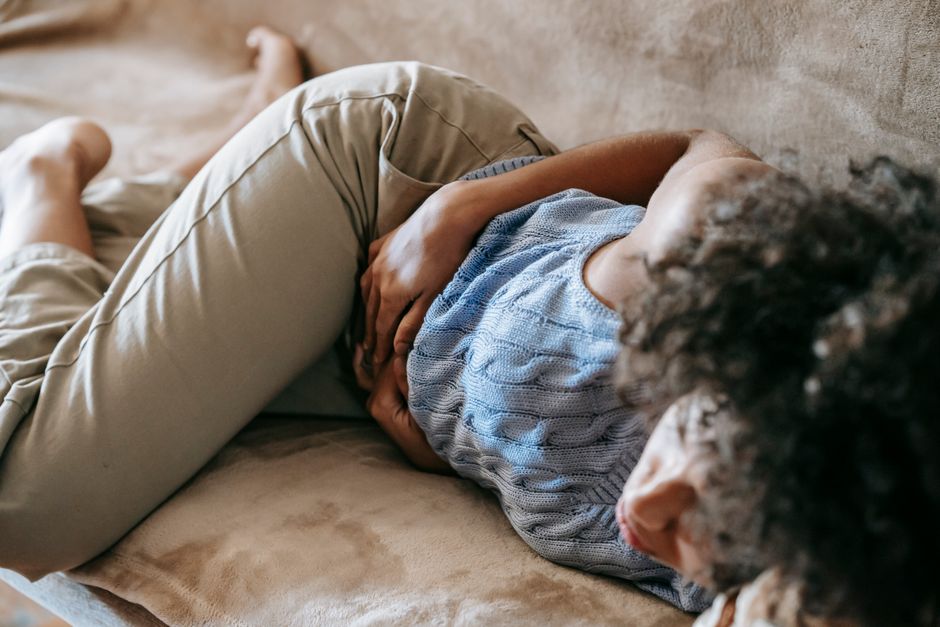
Cramps that feel exactly like your period but no blood shows up can be confusing and a little unsettling. The most common reason is that your uterus is contracting in response to hormonal signals, but there is no uterine lining left to shed. This can happen at several points in a cycle, and the cause depends on your age, your cycle history, and whether you are pregnant.
Why Am I Having Period Cramps But No Blood? Why It Happens
Menstrual cramps come from the muscular wall of the uterus contracting. Those contractions are driven mainly by hormone-like substances called prostaglandins, which rise in the second half of the cycle. When the lining has built up, contractions push it out as bleeding. When the lining is thin or already gone, the same contractions can still happen — and you feel them without any blood.
This is the core mechanism behind almost every situation where cramping occurs without flow. The sensation is real. It is not “phantom” pain. The uterus is a muscle, and muscles can cramp whether or not there is something to expel.
What causes the contractions to fire in the first place is where the possibilities branch out. Ovulation, early pregnancy, hormonal shifts, and several medical conditions can all produce this pattern. The sections below walk through each one.
Can You Have Period Cramps Without Bleeding Around Ovulation?
Ovulation pain is one of the most common explanations for mid-cycle cramping with no blood. When an egg is released from the ovary, it can cause a sharp or dull ache on one side of the lower belly. The discomfort usually lasts from a few minutes to a day or two.
Some people mistake this for an early period because the timing can feel close. Ovulation typically happens about midway through a cycle, though cycle length varies widely from person to person and even from month to month.
A small amount of spotting can occur around ovulation, but many people have none at all. If you feel cramping roughly two weeks before your expected period and see no blood, ovulation is a reasonable first guess. Tracking your cycle for a few months can help you spot the pattern.
Could It Be Implantation Cramping?
If a fertilized egg attaches to the uterine lining, some people notice mild cramping. This is called implantation, and it usually happens in the window between ovulation and when a period would be expected.
Implantation cramping is generally described as light and brief. It is not usually as intense as a full period cramp. Some people also notice a small amount of light spotting, but many notice nothing at all.
Here is the part that matters: cramping alone cannot tell you whether you are pregnant. The only reliable way to know is a pregnancy test. A home urine test is most accurate after a missed period. Testing too early can give a false negative because pregnancy hormone levels may still be too low to detect.
If you could be pregnant and you have cramping, take a test. If the result is negative and symptoms continue, test again in a few days or talk to a clinician.




What Hormonal Causes Lead to Cramps Without Flow?
Hormones control the entire menstrual cycle, so it makes sense that shifts in hormone levels can cause cramping without bleeding. Several situations fall into this group.
Anovulatory cycles happen when the ovary does not release an egg. The body still produces estrogen, which can cause the uterus to contract, but without normal ovulation the lining may not build up or shed in the usual way. These cycles are common during puberty and in the years leading up to menopause.
Perimenopause is the transition period before menopause. During this time, hormone levels swing unpredictably. Cycles may become shorter, longer, heavier, lighter, or skip entirely. Cramping without bleeding is a frequent complaint during this stage.
Thyroid problems can affect menstrual patterns. Both an underactive and an overactive thyroid can disrupt cycle regularity and cause cramping or changes in flow. A simple blood test can check thyroid function.
High prolactin levels can also interfere with normal cycling. Prolactin is the hormone that supports milk production, but elevated levels outside of breastfeeding can suppress ovulation and change bleeding patterns.
In each of these cases, the cramping is a symptom of a hormonal disruption rather than a problem with the uterus itself. That distinction matters for treatment.
When Is Cramping Without Bleeding a Sign of Something Else?
Some causes of cramping without bleeding are not related to the menstrual cycle at all. These deserve attention because they may need different care.
- Early pregnancy complications. Cramping with or without spotting in early pregnancy can sometimes signal an ectopic pregnancy, where a fertilized egg implants outside the uterus. This is a medical emergency. Severe or one-sided pain, dizziness, or shoulder pain needs urgent care.
- Ovarian cysts. A cyst can cause a dull ache or sharp pain on one side. Many cysts resolve on their own, but a ruptured or twisted cyst is a medical emergency.
- Pelvic inflammatory disease. This is an infection of the reproductive organs. It can cause cramping, unusual discharge, fever, or pain during sex. It needs treatment with antibiotics.
- Endometriosis. Tissue similar to the uterine lining grows outside the uterus. It can cause severe cramping that does not always line up with bleeding.
- Fibroids. These are non-cancerous growths in the uterus. They can cause cramping, pressure, and changes in bleeding.
- Gastrointestinal issues. Gas, constipation, and irritable bowel syndrome can all cause lower belly cramping that feels like period pain. The location and timing are often the clue.
- Urinary tract infections. A UTI can cause lower abdominal cramping and pressure that some people mistake for menstrual pain.
The pattern of your pain matters. Pain that is new, severe, one-sided, or paired with fever, dizziness, or unusual discharge is different from the mild cramping that comes and goes with your cycle.
How Can You Tell What Is Causing It?
Figuring out the cause starts with paying attention to timing and pattern. A few details make a real difference.
- When in your cycle did the cramping start?
- How long did it last — minutes, hours, or days?
- Is the pain on one side or across the whole lower belly?
- Have your cycles changed recently in length, flow, or regularity?
- Are there other symptoms like spotting, discharge, fever, or pain during sex?
- Could you be pregnant?
Tracking these details for two or three cycles gives a clinician much more to work with. If the pattern is irregular or the pain is affecting your daily life, it is reasonable to see a healthcare provider. There is no need to wait for a certain number of cycles before asking questions.
If you are over 35 and your cycles have changed, or if you are in perimenopause, irregular cramping and bleeding patterns are common. Still, new or worsening symptoms deserve a conversation with a clinician rather than assumptions.
When Should You See a Doctor?
Most occasional cramping without bleeding is not dangerous. But some symptoms need prompt medical attention.
Seek care right away if you have:
- Severe or worsening pain, especially on one side
- Fever or chills along with cramping
- Dizziness, fainting, or a rapid heartbeat
- Shoulder or upper back pain with lower belly pain
- Heavy bleeding that soaks through a pad or tampon every hour
- Positive pregnancy test with cramping or bleeding
See a clinician soon, rather than urgently, if you have:
- Cramping that keeps coming back over several cycles
- Cycles that have become very irregular
- Pain that interferes with work, sleep, or daily activities
- Unusual discharge or pain during sex
- Symptoms that started after a new medication or birth control change
Birth control pills, hormonal IUDs, and other hormonal methods can change bleeding patterns. Some people on these methods have cramping with little or no bleeding. This is a known effect, but it is still worth mentioning to your provider if it bothers you.
What Does the Evidence Actually Show?
The link between prostaglandins and menstrual cramping is well established. So is the fact that the uterus can contract without shedding its lining. These are basic reproductive physiology.
What is less clear is how often cramping without bleeding happens for each specific cause. Much of the data comes from clinical observation rather than large population studies. That means the causes listed here are recognized possibilities, not a ranking of how common each one is.
What is clear: the symptom is real, it has several possible explanations, and the right next step depends on your individual situation. Timing, pregnancy status, and accompanying symptoms are the key pieces of information.
If you are unsure, a pregnancy test and a conversation with a healthcare provider are the most useful things you can do. No online article can replace that.
Frequently Asked Questions
Can you have period cramps but no blood and still be pregnant?
Yes, early pregnancy can cause cramping before a missed period, and implantation cramping is a recognized early sign. A home pregnancy test is the only reliable way to know, and testing after a missed period gives the most accurate result.
Why do I feel like I’m about to get my period but nothing happens?
This often happens when the uterus contracts in response to hormonal signals but the lining is too thin to shed, which is common during perimenopause, anovulatory cycles, and while on hormonal birth control. Tracking the pattern over a few cycles can help identify the cause.
Is cramping without bleeding a sign of menopause?
It can be, because hormone levels fluctuate widely during perimenopause and cycles often become irregular before they stop. Cramping without bleeding is a common complaint during this transition, but new or worsening symptoms should still be checked by a clinician.
When should cramping without bleeding be treated as an emergency?
Severe or one-sided pain, fever, dizziness, fainting, or a positive pregnancy test with cramping all warrant urgent medical care. These signs can point to ectopic pregnancy, a ruptured cyst, or infection, which need prompt treatment.
