
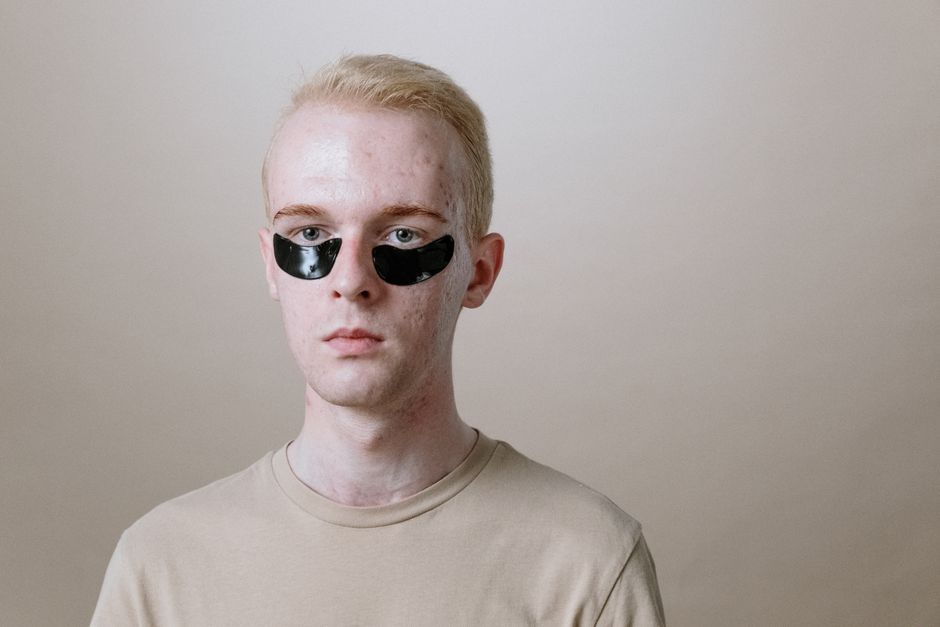
Pimples on your face happen when a hair follicle gets clogged with oil and dead skin cells, and the bacteria that normally live on your skin multiply inside that clogged pore. Your face has more oil glands than almost anywhere else on your body, which is why breakouts show up there first. Hormones, genetics, and what you put on your skin all influence how often this happens.
Why Am I Getting Pimples On My Face Key Causes?
Four things have to come together for a pimple to form. Doctors call this the “four factors” of acne, and understanding them explains almost everything else about breakouts.
First, your sebaceous glands produce more oil than usual. Second, dead skin cells inside the follicle don’t shed normally and stick together. Third, the two combine into a plug that blocks the pore. Fourth, Cutibacterium acnes, a bacterium that lives on everyone’s skin, grows inside that blocked pore and triggers inflammation. The redness, swelling, and pus you see are your immune system responding to that bacteria.
None of these steps happen because your face is dirty. This is the most persistent myth about acne. Washing harder does not clear it and usually makes irritation worse.
Hormones drive most facial acne
Androgens — hormones like testosterone that both men and women produce — signal your sebaceous glands to make more oil. This is why acne typically starts at puberty, when androgen levels rise. It is also why breakouts often appear along the jawline and chin in adult women, where oil glands are especially sensitive to hormonal shifts.
Hormonal acne in adults is real and common. It is not a sign that something is wrong with your hygiene or diet. It reflects how your oil glands respond to your own hormone fluctuations.
What Actually Triggers a Breakout?
Triggers are not the same as causes. The causes above are always present. Triggers are the things that tip a stable situation into a visible pimple.
- Hormonal shifts — menstrual cycles, pregnancy, perimenopause, and starting or stopping hormonal birth control can all change oil production.
- Stress — psychological stress raises cortisol and other hormones that can increase oil output. The effect is real but usually modest.
- Comedogenic products — heavy creams, some sunscreens, and hair products that migrate onto the face can physically block pores.
- Friction and pressure — helmets, tight collars, phone screens, and resting your face on your hands can push debris into follicles.
- Certain medications — some steroids, lithium, and certain seizure medications are associated with acne as a side effect.
Notice what is not on that list: chocolate, greasy food, and “impure blood.” No evidence supports those as direct causes.
Does Food Cause Facial Pimples?
The relationship between diet and acne is real but narrower than most people assume. The evidence is strongest for high-glycemic diets — foods that spike blood sugar quickly, like white bread, sugary drinks, and refined carbohydrates.
Some studies suggest that high-glycemic diets may worsen acne, possibly by raising insulin and insulin-like growth factor, which can increase oil production. The findings are consistent enough to be worth noting, but they are not strong enough to claim that cutting sugar will clear your skin.
Dairy has also been studied, particularly skim milk. Some research indicates an association between skim milk intake and acne in teenagers. The evidence is observational, meaning it shows a pattern rather than proving cause and effect. If you suspect dairy affects your skin, a trial period is reasonable — but do not expect a dramatic change.
What about chocolate? The idea that chocolate causes pimples is one of the most durable myths in skincare. Studies that have tested this directly have not found a clear link. The sugar and milk in milk chocolate may matter more than the cocoa itself.





Why Do Some People Get More Pimples Than Others?
Genetics play a large role. If a parent had significant acne, you are more likely to have it too. This runs through inherited differences in oil gland activity, how your skin cells shed, and how your immune system responds to C. acnes.
Hormonal conditions can also increase facial acne. Polycystic ovary syndrome (PCOS) is a common example in women, where elevated androgens can drive persistent breakouts along the jaw and chin. If adult acne comes with irregular periods or excess facial hair, that pattern is worth discussing with a doctor.
Age matters too. Teenage acne tends to appear on the forehead, nose, and cheeks — the T-zone, where oil glands are densest. Adult acne more often shows up lower on the face, around the jaw and chin.
What Makes Facial Acne Worse Without You Realizing It?
Several everyday habits quietly work against your skin.
Picking and squeezing is the biggest one. It pushes bacteria and inflammation deeper into the follicle, which can turn a small pimple into a large one and increases the risk of scarring and dark spots. The marks left behind often last far longer than the pimple would have.
Over-washing strips your skin’s natural oils. Your skin responds by producing more oil, which can create a cycle of irritation and breakouts. Twice a day with a gentle cleanser is generally enough.
Heavy or occlusive products trap oil and dead cells. Look for labels that say “non-comedogenic” — meaning the product is formulated to be less likely to clog pores.
Not removing makeup or sunscreen at night lets those products sit in your pores for hours. This is not about being “clean” — it is about not adding to the plug.
One point worth clarifying: acne is not contagious. You cannot catch it from someone else, and C. acnes lives on nearly everyone’s skin already. Touching a pimple does not spread it to a new location the way a virus would.
When Should Facial Acne Be Checked by a Doctor?
Most mild acne can be managed with over-the-counter products. But some situations call for medical evaluation.
- Acne that is painful, deep, or leaves scars
- Sudden severe breakouts, especially with fever or joint pain
- Acne in adults that appears alongside irregular periods or excess hair growth
- Acne that has not improved after several months of consistent over-the-counter treatment
Prescription treatments exist, including topical retinoids, antibiotics, and hormonal therapies. A doctor can match treatment to your specific pattern. This article is informational and not a substitute for individual medical advice.
Does Cleansing and Skincare Really Fix Facial Pimples?
Skincare helps, but it rarely cures acne on its own. This is an important distinction. Cleansers remove surface oil and debris, but they do not change the hormonal and genetic factors driving oil production inside the follicle.
That is why someone with mild, occasional pimples may see clear skin from good skincare alone, while someone with moderate to severe acne may need prescription treatment. The severity of your acne reflects how active those underlying factors are, not how well you care for your skin.
Consistency matters more than intensity. Gentle, regular care with non-comedogenic products does more good than harsh scrubs or frequent switching between products. Most topical treatments take weeks to show results, so give any approach a fair trial before judging it.
Frequently Asked Questions
Why am I suddenly getting pimples on my face as an adult?
Adult acne is most often driven by hormonal shifts, including menstrual cycles, pregnancy, perimenopause, and changes in birth control. It commonly appears along the jaw and chin, where oil glands are especially hormone-sensitive.
Does chocolate really cause pimples?
Direct studies have not found a clear link between chocolate and acne. The sugar and dairy in milk chocolate may matter more than the cocoa, but the evidence is not strong enough to call chocolate a cause.
Can stress cause pimples on my face?
Stress can raise hormones that increase oil production, so it may contribute to breakouts. The effect is real but usually modest, and stress is rarely the sole cause.
Is facial acne caused by not washing my face enough?
No. Acne forms when oil and dead skin cells plug a follicle, not from surface dirt. Over-washing can actually irritate skin and worsen breakouts.
