
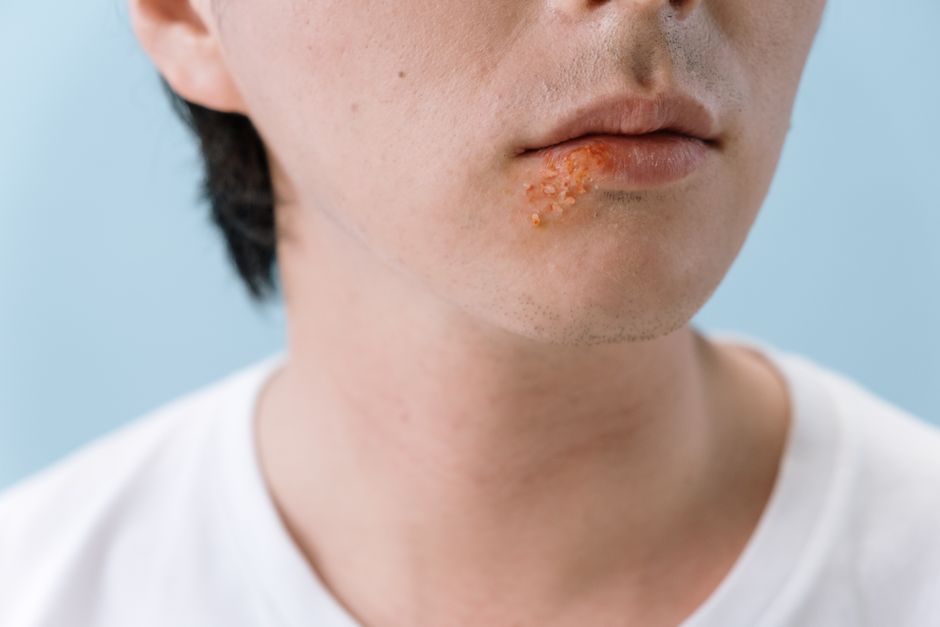
If you have genital or oral herpes and your outbreaks have suddenly become more frequent, the most common reason is a shift in your immune system’s ability to keep the virus suppressed. Herpes simplex virus (HSV) never leaves your body after the first infection. It settles into nerve cells and stays there for life. Your immune system normally holds it in check, but when that control weakens, the virus can reactivate more often.
Several factors can tip that balance. Stress, illness, poor sleep, hormonal changes, and certain medications are among the most frequently identified triggers. In some cases, the increase is temporary. In others, it points to something that needs medical attention.
Why Am I Getting Herpes Outbreaks More Often?
HSV reactivates when the immune system’s surveillance weakens enough for the dormant virus to travel back down the nerve and cause symptoms again. The virus lives in clusters of nerve cells called ganglia. For oral herpes, it typically hides in the trigeminal ganglion near the ear. For genital herpes, it usually resides in the sacral ganglia at the base of the spine.
Between outbreaks, your immune system produces antibodies and specialized T-cells that keep the virus from replicating freely. When that immune pressure drops, the virus can wake up and travel along the nerve to the skin, where it causes the tingling, blisters, and sores most people recognize.
This is why anything that weakens immune function — even temporarily — can increase outbreak frequency. It is not a sign that the virus has changed or become stronger. It is a sign that your body’s ability to suppress it has shifted.
There is one point many people misunderstand: outbreak frequency is not a measure of how “bad” your infection is or how long you have had it. Two people with the same virus can have very different outbreak patterns. Frequency depends on the interaction between the virus strain, your immune response, and your individual triggers.
What Triggers Herpes Reactivation?
Several triggers are consistently identified in clinical literature and patient reports. Not every trigger affects every person, and the evidence for some is stronger than for others.
- Psychological stress. Stress hormones like cortisol can suppress certain immune functions. Many people report outbreaks during or shortly after stressful periods. The evidence linking stress to reactivation is moderate — consistent across studies but difficult to measure precisely.
- Physical illness or infection. A cold, flu, or other infection temporarily diverts immune resources. This is one of the better-established triggers.
- Fatigue and poor sleep. Sleep deprivation impairs immune function. Research consistently shows that sleep quality affects immune response, though direct studies on sleep and herpes reactivation specifically are limited.
- Hormonal changes. Some women report outbreaks around their menstrual period. The evidence for a hormonal link is suggestive but not definitive.
- Fever. The “cold sore” name comes from this. Fever is a well-recognized trigger for oral herpes reactivation.
- Sun exposure and UV light. Ultraviolet radiation can trigger cold sores. This is well documented for oral herpes.
- Skin irritation or trauma. Friction, surgery, or injury to the affected area can sometimes provoke an outbreak.
- Certain medications. Drugs that suppress the immune system — such as corticosteroids, chemotherapy agents, or biologics — can increase reactivation frequency. This is well established.
If you can identify a pattern, that is useful information. But many people cannot pinpoint a specific trigger, and that is normal too.
Can Stress Really Cause More Outbreaks?
Stress is one of the most commonly reported triggers, and the biological rationale is sound. Cortisol and other stress hormones can dampen the activity of T-cells and natural killer cells — both important for keeping HSV in check.
The research picture is mixed but leans toward a real effect. Some studies have found an association between stressful life events and increased outbreak frequency. Others have not found a clear link. The challenge is that stress is subjective and hard to measure consistently across studies.
What is clear is that the immune system and the nervous system communicate constantly. Psychological state can influence immune function. Whether that translates into more outbreaks for any given person is individual.
If you notice that outbreaks cluster around stressful periods, that pattern is worth paying attention to — not because stress is the only factor, but because it may be one you can influence.





Does a Weakened Immune System Explain More Frequent Outbreaks?
Yes, in many cases. A genuinely weakened immune system — from illness, medication, or a condition that affects immune function — is one of the most well-established reasons for increased herpes reactivation.
Conditions that can increase outbreak frequency include:
- HIV infection, which damages CD4 T-cells
- Organ transplant, which requires immunosuppressive drugs
- Cancer treatment, including chemotherapy and radiation
- Autoimmune diseases treated with immunosuppressants
- Advanced age, which is associated with a gradual decline in immune function
If your outbreaks have increased significantly and you have any of these conditions or are taking immune-suppressing medication, that connection is important to discuss with your doctor. It does not necessarily mean something is seriously wrong, but it does mean the change deserves evaluation.
For most otherwise healthy people, a modest increase in outbreaks is not a sign of a serious immune problem. The immune system fluctuates naturally. What matters is the pattern and whether other symptoms accompany it.
Can Medications Cause More Frequent Outbreaks?
Some medications can increase herpes reactivation by suppressing immune function. The most commonly implicated are corticosteroids (like prednisone), chemotherapy drugs, and biologics used for autoimmune conditions.
There is also a less obvious possibility: antiviral medication. If you take acyclovir, valacyclovir, or famciclovir for suppression and then stop, you may experience a rebound in outbreaks. This is not because the drug made things worse. It is because the drug was suppressing the virus, and stopping it allows the virus to reactivate at its previous rate.
This does not mean antivirals are harmful. It means that stopping them can lead to a temporary increase in outbreaks. If you are considering stopping suppressive therapy, talk to your doctor about what to expect.
What Else Could Be Going On?
Sometimes what looks like more frequent herpes outbreaks is actually something else. Other conditions can cause genital or oral sores that resemble herpes.
These include:
- Aphthous ulcers (canker sores), which are not caused by HSV
- Behçet’s disease, which can cause recurrent oral and genital ulcers
- Fungal infections
- Bacterial infections
- Irritant or allergic contact dermatitis
If you have not had a confirmed diagnosis of herpes — either by swab test or blood test — and you are experiencing recurrent sores, it is worth getting tested. The appearance alone is not always enough to distinguish between conditions.
Even if you have a confirmed herpes diagnosis, a sudden change in outbreak pattern is worth mentioning to your doctor. It could be a trigger you can address, or it could be something unrelated that needs its own evaluation.
When Should You See a Doctor?
See a doctor if your outbreaks have increased significantly, if they are more severe or slower to heal, or if you have other symptoms like persistent fatigue, unexplained weight loss, or frequent infections.
Also see a doctor if you are pregnant or planning to become pregnant. Herpes can be transmitted to a newborn during delivery, and the risk is higher if you have an active outbreak at the time of birth. This is a well-established concern, and your doctor can help you manage it.
For most people, a change in outbreak frequency is manageable. Antiviral medications can reduce frequency and severity. Suppressive therapy — taking antivirals daily — is often recommended for people who have frequent outbreaks. What counts as “frequent” varies, but many clinicians consider six or more outbreaks per year as a threshold where suppressive therapy may be helpful.
The key point is that an increase in outbreaks is information. It tells you something has changed. Sometimes that change is temporary and harmless. Sometimes it is worth investigating. Either way, it is not something you have to figure out alone.
Frequently Asked Questions
Why am I suddenly getting herpes outbreaks every month?
A monthly pattern often points to a recurring trigger, such as hormonal cycles, ongoing stress, or a change in immune function. If outbreaks are happening this frequently, it is worth discussing suppressive antiviral therapy with your doctor.
Can lack of sleep cause more herpes outbreaks?
Sleep deprivation impairs immune function, and poor sleep is a commonly reported trigger for herpes reactivation. The direct evidence linking sleep specifically to outbreaks is limited, but the immune connection is well established.
Does herpes get worse over time?
For most people, herpes outbreaks become less frequent and less severe over time as the immune system builds a stronger response. An increase in outbreaks usually reflects a temporary or treatable change, not a permanent worsening of the infection.
Can I spread herpes more easily during an outbreak?
Yes, the risk of transmission is highest when you have visible sores or early symptoms like tingling. However, herpes can also be transmitted when no symptoms are present, which is called asymptomatic shedding.
