
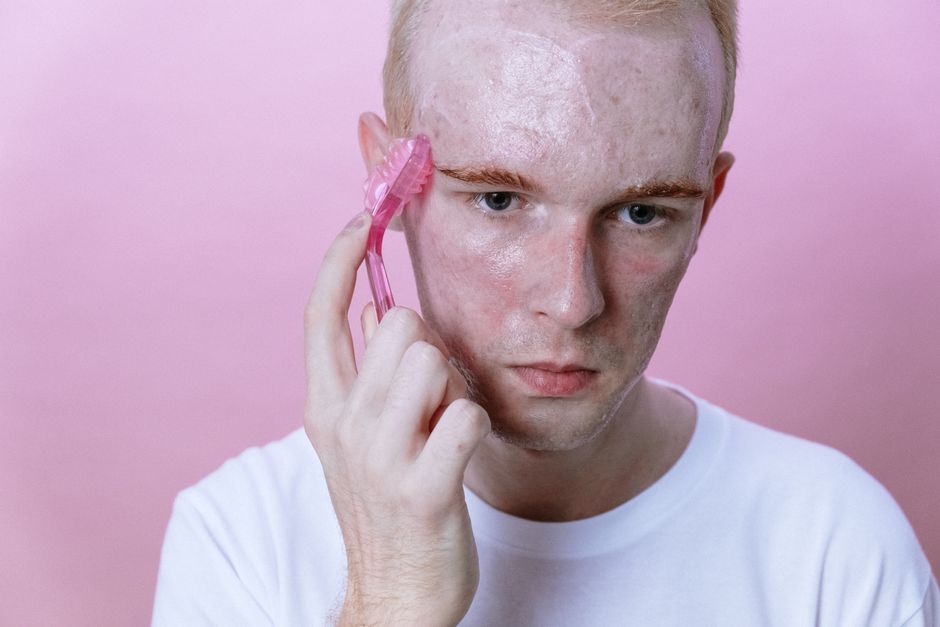
Jawline acne has a distinct pattern, and that pattern points to specific causes. Breakouts along the jaw and lower face are most often driven by hormones, friction from hands and clothing, or hair and skincare products touching the skin. The location matters because the jawline is where several of these triggers overlap. Identifying which one applies to you is the first step toward clearing it.
This type of acne tends to cluster along the lower face, chin, and jaw. It can be deep and tender rather than surface-level whiteheads. That deep, painful quality is a clue. So is timing — breakouts that flare before a period or follow a new product point in different directions. Below is what the evidence supports about causes, and what actually helps.
Why does jawline acne keep coming back in the same spot?
Acne forms when a pore becomes blocked by dead skin cells and oil, and bacteria that normally live on the skin multiply inside the blocked pore. The body responds with inflammation. That is the basic mechanism behind every pimple, wherever it appears.
Why the same spot? Pores that have been inflamed before are more prone to blocking again. The skin in that area may also be subject to the same ongoing trigger — a resting chin on a hand, a phone pressed to the face, a helmet strap, or a collar rubbing the jaw. Remove the trigger and the cycle often breaks.
The jawline is also a common site for deeper, nodular breakouts tied to hormonal shifts. These form lower in the skin and take longer to resolve. A surface cleanser alone rarely clears them because the problem starts beneath the surface.
Why Am I Getting Acne On My Jawline Causes Fixes
Hormones are the most common driver of jawline acne in adults, particularly women. Androgens — hormones present in both men and women — stimulate the oil glands. Oil glands on the lower face are especially sensitive to these signals. When androgen levels shift, or when the skin becomes more responsive to normal levels, the jaw and chin are often the first places to show it.
This is why jawline breakouts often follow a monthly pattern in women. A flare in the days before a period is a well-recognized pattern tied to hormonal cycling. It is not a sign that something is dangerously wrong. It is a sign that the skin is responding to normal hormonal fluctuations.
Conditions like polycystic ovary syndrome (PCOS) can cause more persistent hormonal acne along the jaw, often alongside irregular periods or other signs. If breakouts are severe, sudden, or come with other symptoms, that is worth raising with a clinician. Acne alone does not confirm PCOS, and PCOS does not always cause acne.
Other causes that concentrate on the jawline include:
- Friction and pressure — resting your chin on your hand, tight collars, helmet straps, and phone contact.
- Hair products — oils, pomades, and leave-in conditioners that migrate down to the jaw.
- Comedogenic skincare — heavy creams and makeup that block pores.
- Diet — some evidence links high-glycemic diets and, in some people, dairy to acne, though the effect varies and is not universal.
- Stress and sleep — stress can worsen acne, though the mechanism is indirect and the effect is modest.
One clarification worth making: chocolate and greasy food are widely blamed for acne, but the evidence for chocolate as a direct cause is weak and inconsistent. High-glycemic diets have somewhat better support. The link is not strong enough to call either a proven cause for most people.
Is jawline acne a sign of a hormonal problem?
Sometimes, but not usually. Most jawline acne in adults reflects normal hormonal sensitivity rather than a disorder. The oil glands respond to hormones that are within the normal range. That is a sensitivity issue, not necessarily an abnormal hormone level.
Signs that warrant a medical evaluation include acne that is sudden and severe, acne with irregular or absent periods, excess facial or body hair, or acne that does not respond to standard treatment. In those cases a clinician may check hormone levels. But the majority of people with jawline acne have normal hormone tests.
This is an area where people often assume a hormone imbalance must be present. Usually it is not. The skin is simply reacting to ordinary hormonal cycles.
What actually clears jawline acne?
Treatment depends on whether the acne is surface-level or deep. For mild surface breakouts, over-the-counter ingredients with good evidence include benzoyl peroxide and salicylic acid. Benzoyl peroxide reduces acne bacteria and helps unblock pores. Salicylic acid helps shed dead skin cells inside the pore.
For deeper, tender jawline breakouts, over-the-counter products often fall short. Some clinicians recommend prescription topical retinoids as a first-line option for this pattern, since they address the blocked-pore process directly. For hormonal acne, some clinicians prescribe combined oral contraceptives or a medication called spironolactone. These are prescription decisions made with a clinician, not self-treatment.
A few practical steps that reduce triggers:
- Keep hands off the jaw and chin.
- Clean your phone screen regularly and avoid pressing it to your face.
- Wash pillowcases often.
- Keep hair products away from the jawline.
- Choose non-comedogenic skincare and makeup.
- Be gentle — harsh scrubbing worsens inflammation.
Patience matters. Acne treatments typically take weeks to show clear improvement, and deeper lesions take longer. Stopping a treatment too early is a common reason people conclude “nothing works.”
Does diet or lifestyle make jawline acne worse?
Diet plays a role for some people, but it is not the main driver for most. The strongest dietary signal in the research is for high-glycemic diets — foods that spike blood sugar quickly, like refined carbohydrates and sugary drinks. Some studies suggest reducing these may improve acne. The effect is real in research settings but modest for many individuals.
Dairy has been studied as a possible contributor, with mixed results. Some evidence points to a link, particularly with skim milk, but it is not strong enough to recommend cutting dairy for everyone with acne. If you notice a consistent pattern, it is reasonable to discuss it with a clinician or dietitian rather than eliminating food groups on your own.
Sleep and stress management support general skin health, though their direct effect on acne is modest and hard to measure precisely. They are reasonable to address but should not replace proven acne treatment.
When should you see a doctor about jawline acne?
See a clinician if acne is deep and painful, leaves scars, or does not improve after a reasonable trial of over-the-counter treatment. Deep nodular acne carries a higher risk of scarring, and earlier treatment reduces that risk.
Also seek care if acne appears suddenly in adulthood, comes with other symptoms like irregular periods or excess hair growth, or affects your mental health. Acne can take a real toll on confidence and mood, and that is a legitimate reason to ask for help — not a minor concern.
Prescription options exist for every severity level. The right choice depends on your skin, your history, and whether hormones are involved. A clinician can sort through that far better than trial and error with products.
Frequently Asked Questions
Why is my acne only on my jawline?
The jawline has oil glands that are especially responsive to hormones, and it is also a common site for friction from hands, phones, and clothing. That combination makes it a frequent spot for breakouts.
Is jawline acne always hormonal?
No. Hormones are a common driver, especially in adult women, but friction, hair products, and clogged pores also cause jawline acne. Most people with jawline acne have normal hormone levels.
How long does jawline acne take to clear?
Most acne treatments take several weeks to show clear improvement, and deeper lesions take longer. Consistency matters more than speed, since stopping early is a common reason treatment seems to fail.
Does chocolate cause jawline acne?
The evidence for chocolate as a direct cause is weak and inconsistent. High-glycemic diets have somewhat stronger support, but diet is not the main driver for most people.
