
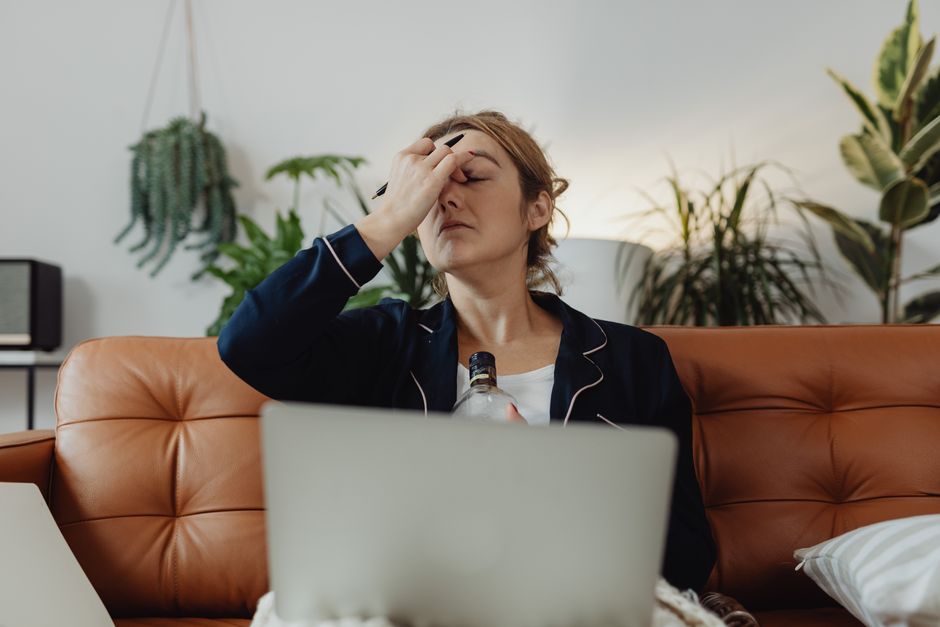
A craving for alcohol when you don’t drink is a real, measurable brain event — not a character flaw or a sign you secretly want to relapse. It usually comes from one of three places: learned reward pathways in the brain that formed during past drinking, a conditioned response to people, places, or emotions tied to alcohol, or the brain’s normal dopamine system reacting to stress, boredom, or low mood. In many cases, the craving is a learned association firing automatically, long after the drinking itself has stopped.
Why Am I Craving Alcohol When I Dont Drink?
The short answer is memory. The brain stores alcohol-related experiences as strong reward memories, and those memories can be triggered years after someone stops drinking.
Alcohol causes the release of dopamine in a region of the brain called the nucleus accumbens. Dopamine is not really a “pleasure” chemical — it is better described as a signal that says “pay attention, this matters, do it again.” When drinking happens repeatedly, the brain links the act of drinking to specific cues: a certain bar, a certain time of day, a certain friend, a certain feeling of relief after a hard day.
Those links are stored as what researchers call incentive salience. The cue itself — not the alcohol — starts to trigger the craving. This is why someone can walk past a familiar pub, smell a specific drink, or hear a song and feel a sudden pull toward alcohol even if they have not had a drink in years.
This is well established in addiction neuroscience. The brain is doing exactly what it was trained to do. The craving is a learned reflex, not a moral failure.
Is It Normal to Crave Alcohol If You Never Drank Heavily?
Yes. Cravings do not require a history of heavy drinking. They require a brain that has learned to associate alcohol with relief, reward, or social ease.
Someone who drank only occasionally for years can still develop strong conditioned responses. The key factor is not how much a person drank — it is how reliably alcohol was paired with a rewarding outcome. If every Friday night for a decade meant wine and relaxation, the brain will keep expecting wine when Friday night arrives.
There is also a separate phenomenon worth naming. Some people crave alcohol without any meaningful drinking history at all. In these cases, the craving is usually not really about alcohol. It is about what alcohol represents: escape, numbness, permission to relax, or a break from mental load. The brain reaches for the most familiar off-switch it knows.
That distinction matters. A craving rooted in emotional relief will not be solved by avoiding bars. It will keep showing up until the underlying need is addressed.
What Triggers Alcohol Cravings in People Who Don’t Drink?
Triggers fall into a few predictable categories. Knowing them makes them easier to recognize in the moment.
- Environmental cues. Places, smells, music, times of day, or people connected to past drinking.
- Emotional states. Stress, loneliness, anger, boredom, or even celebration can trigger a craving.
- Physical states. Hunger, fatigue, and low blood sugar can make the brain more reactive to any reward cue.
- Social pressure. Being around others who are drinking activates learned social scripts.
- HALT states. Hungry, angry, lonely, or tired — a well-known framework in recovery communities for the conditions that raise craving intensity.
The HALT framework is widely used in clinical and peer-support settings. It is not a diagnostic tool, but it reflects a real observation: the brain’s reward system is more reactive when basic needs are unmet.
One underappreciated trigger is positive emotion. Many people expect cravings to come from distress. In practice, good news, a promotion, or the end of a long project can trigger a craving just as reliably, because alcohol was historically paired with celebration.



What Is Happening in the Brain During a Craving?
A craving is a specific neurological event with a beginning, a peak, and an end. Understanding the timeline helps because it shows the craving is not permanent.
When a trigger fires, the brain’s prefrontal cortex — the part responsible for planning and impulse control — sends a signal to the reward system. Dopamine rises in anticipation of the reward, not the reward itself. This is why the craving feels urgent before any drinking happens.
The urge typically rises, plateaus, and falls. Many people in recovery describe cravings as waves. Clinical literature on urge surfing — a technique from relapse prevention — is built on this observation. The craving does not keep climbing forever if it is not acted on.
There is also a stress component. Alcohol withdrawal and repeated drinking alter the brain’s stress response, including the HPA axis and the neurotransmitter systems that regulate anxiety. In people with a history of heavy drinking, this can leave the brain in a state of low-grade stress that makes cravings more frequent and more intense.
This is one reason cravings are often stronger in early recovery and tend to ease over time. The brain is recalibrating. That recalibration is not instant, and the timeline varies widely between individuals.
Can a Craving Mean Something Else Is Going On?
Sometimes. A craving for alcohol can overlap with other conditions that affect mood, reward, and impulse control.
Depression, anxiety disorders, and ADHD are all more common in people who report alcohol cravings, whether or not they currently drink. This is not because these conditions cause cravings directly — it is because they affect the same brain systems involved in reward and self-regulation.
There is also a real phenomenon called transfer addiction, where someone who stops drinking shifts the reward-seeking behavior to food, gambling, shopping, or other substances. The craving for alcohol may fade while a new craving takes its place. This pattern is discussed in addiction medicine, though the research on how often it happens is mixed.
If cravings are frequent, intense, or interfering with daily life, that is worth mentioning to a doctor. It does not mean something is wrong with you. It means the reward system is doing something a clinician can help identify.
What Actually Helps Reduce Alcohol Cravings?
The evidence here is strongest for behavioral approaches. Medication options exist but are not appropriate for everyone, and they require a prescription.
Cognitive behavioral therapy has the most consistent evidence for reducing cravings and preventing relapse in people with alcohol use disorder. The goal is to change how a person responds to a trigger, not to erase the trigger.
Mindfulness-based approaches have shown benefit in some studies, particularly for helping people observe a craving without acting on it. The evidence is promising but not as strong as for CBT.
For people with a diagnosed alcohol use disorder, several medications are FDA-approved to reduce craving or support abstinence. These include naltrexone and acamprosate. Disulfiram is also approved but works differently — it makes drinking unpleasant rather than reducing the urge. Whether any of these is appropriate depends on the individual, and only a clinician can make that call.
For someone without alcohol use disorder who is simply noticing occasional cravings, the practical tools are more basic:
- Identify the trigger and name it out loud.
- Delay — most cravings peak and fade if not acted on.
- Address the underlying state: eat if hungry, rest if tired, call someone if lonely.
- Change the environment if the cue is environmental.
None of these is a cure. They are skills, and like any skill they get easier with repetition.
When Should You Talk to a Doctor About Alcohol Cravings?
Talk to a doctor if cravings are frequent, hard to resist, or tied to a history of heavy drinking. Also talk to a doctor if you have stopped drinking after a period of heavy use, because withdrawal can be medically dangerous and should be managed with clinical support.
There is no lab test for a craving. Diagnosis is based on history, pattern, and how much the craving is affecting daily life. A primary care doctor can do an initial assessment and refer to a specialist if needed.
One thing worth saying plainly: a craving is not proof that you are failing. It is proof that your brain learned something. Learned responses can weaken, but they rarely disappear completely, and they can resurface during stress or major life changes. That is normal, and it is manageable.
Frequently Asked Questions
Why do I crave alcohol when I don’t even drink?
The brain stores alcohol-related memories as reward associations, and those memories can fire years after drinking stops. The craving is a learned response to a cue, not a sign you actually want to drink.
Can you crave alcohol without being an alcoholic?
Yes. Cravings can occur in people with no history of alcohol use disorder, especially when alcohol was paired with relaxation or social ease. Frequency and intensity matter more than the label.
How long do alcohol cravings usually last?
Cravings typically rise, peak, and fade within a relatively short window if not acted on, though the exact timing varies by person and situation. Cravings tend to be more frequent and intense in early recovery and often ease over time.
Do alcohol cravings ever go away completely?
For many people they become much less frequent and less intense, but they can resurface during stress or major life changes. The evidence does not support the idea that cravings always disappear permanently.
