
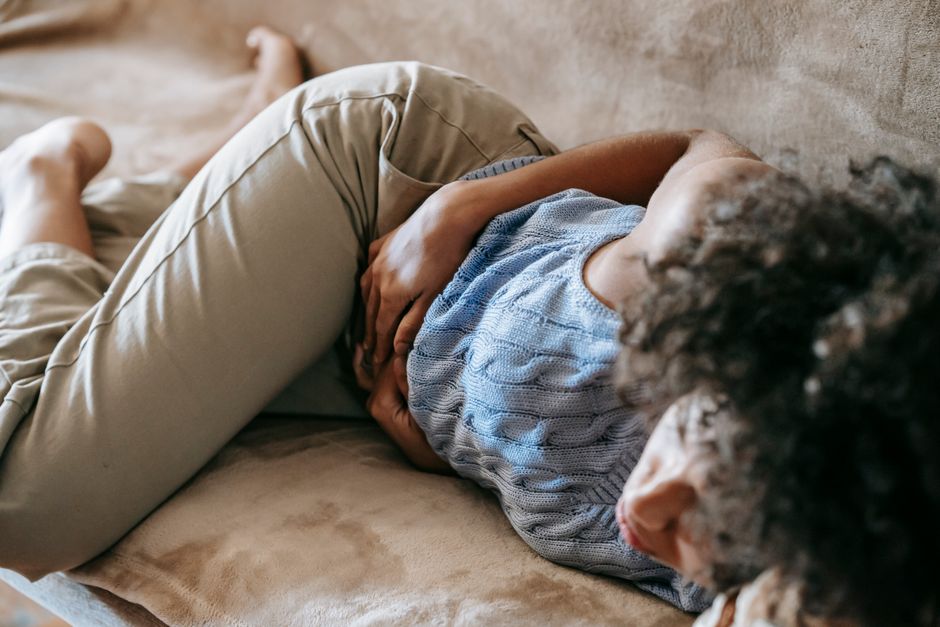
Cramping about two weeks before your period is usually ovulation pain. It happens when a mature egg is released from an ovary, and it is one of the most common reasons for mid-cycle discomfort. For most people, it is mild, lasts a short time, and is not a sign that anything is wrong.
The timing is the giveaway. Ovulation typically occurs around the midpoint of a cycle, which for a 28-day cycle lands near day 14 — roughly two weeks before the next period starts. If your cycles are longer or shorter, that midpoint shifts, but the relationship stays the same: ovulation pain shows up in the middle, not right before bleeding begins.
Why Am I Cramping 2 Weeks Before My Period?
The short answer is that your ovary is releasing an egg, and that release can hurt.
In the first half of your cycle, a follicle in one ovary matures an egg. As it grows, it produces rising amounts of estrogen. When estrogen peaks, it triggers a surge of luteinizing hormone (LH) from the pituitary gland. That surge causes the follicle to rupture and release the egg, usually within a day or two. The egg then travels toward the fallopian tube.
The pain comes from several places. The follicle stretches as it swells, which can cause a dull ache. The rupture itself can produce a sharp twinge. And a small amount of fluid or blood released from the ruptured follicle can irritate the lining of the pelvis, which sometimes causes a lingering ache or a feeling of pressure.
This is called mittelschmerz — German for “middle pain.” It is not a disease. It is a normal event that some people feel and others never notice.
One detail worth knowing: ovulation does not always alternate neatly between ovaries. In any given cycle, either ovary can release the egg, and the side you feel pain on can change from month to month. If the pain is consistently on one side every single cycle, that pattern is worth mentioning to a clinician, because it can sometimes point to something other than normal ovulation.
What Does Ovulation Cramping Actually Feel Like?
Ovulation pain tends to feel different from period cramps, and the difference is usually noticeable.
Period cramps are typically a dull, cramping ache low in the center of the abdomen that builds and fades over hours or days. Ovulation pain is more often a sharp or sudden twinge on one side, though it can also be a dull ache or a feeling of heaviness. It may come and go, or it may last anywhere from a few minutes to a day or two.
Some people also notice:
- Light spotting or a small amount of discharge tinged with blood
- Clear, stretchy cervical mucus, similar to raw egg white
- A slight rise in basal body temperature, detectable only with a thermometer
- Tenderness in the lower abdomen on one side
- A brief increase in sex drive
These signs come from the same hormonal shift that triggers ovulation, not from the pain itself. Tracking them alongside the pain can help you see whether your symptoms line up with your cycle’s midpoint.
Is Mid-Cycle Cramping Normal?
Yes. Ovulation pain is considered a normal, expected part of many menstrual cycles. It is not a sign of illness, and it does not mean your reproductive system is malfunctioning.
That said, “normal” does not mean “always harmless.” Most mid-cycle cramping is benign, but certain patterns deserve a medical evaluation. Those include pain that is severe enough to disrupt your day, pain that lasts more than a couple of days, pain accompanied by fever, nausea, vomiting, or heavy bleeding, or pain that starts suddenly and intensely.
Sudden severe one-sided pain is a specific concern. It can be a sign of an ovarian cyst that has ruptured or a condition called ovarian torsion, where the ovary twists on its blood supply. Ovarian torsion is uncommon, but it is a medical emergency that needs prompt treatment. If pain is sudden, severe, and unlike anything you have felt before, seek care right away rather than waiting to see if it passes.




What Else Can Cause Cramping Around This Time?
Ovulation is the most likely explanation, but it is not the only one. The timing of your pain matters, and so does everything that comes with it.
Other possibilities include:
- Ovarian cysts. Many are harmless and resolve on their own, but larger ones can cause pressure or pain that does not follow a neat cycle pattern.
- Endometriosis. This condition can cause pain at any point in the cycle, including mid-cycle, and the pain is often more intense than typical ovulation discomfort.
- Pelvic inflammatory disease. An infection of the reproductive organs can cause ongoing pelvic pain, often with discharge or fever.
- Digestive issues. Gas, constipation, and irritable bowel syndrome can all produce cramping that has nothing to do with the reproductive system but feels similar.
- Urinary tract problems. A bladder infection can cause lower abdominal pressure that is easy to mistake for cramping.
- Muscular strain. A pulled muscle in the lower abdomen or back can mimic cramping, especially after exercise or lifting.
If your pain consistently appears at mid-cycle and resolves on its own, ovulation is the most probable cause. If it does not follow that pattern, or if it comes with other symptoms, the picture changes.
How Can You Tell Ovulation Pain From Other Cramps?
The most reliable way is to track your cycle over a few months and see where the pain falls. Ovulation pain shows up in the middle of the cycle, roughly two weeks before your next period. Period cramps show up right before or during bleeding.
Tracking can also help you spot the difference between normal ovulation pain and something that needs attention. A simple calendar or a cycle-tracking app is enough. Note the day, the location of the pain, how long it lasts, and what it feels like. Over two or three cycles, a pattern usually emerges.
Some people also use ovulation predictor kits, which detect the LH surge in urine. These can confirm that ovulation is approaching, though they do not confirm that the pain you feel is from ovulation itself. They are a useful tool, not a diagnosis.
If tracking does not clarify things, or if the pain is interfering with your life, a clinician can help sort out the cause. An ultrasound can show whether a follicle is developing, whether a cyst is present, and whether the ovaries look typical.
When Should You See a Doctor About Mid-Cycle Cramping?
See a clinician if the pain is severe, lasts longer than a day or two, or comes with any of the following:
- Fever or chills
- Nausea or vomiting
- Heavy or unusual bleeding
- Pain during sex or when urinating
- Pain that is getting worse over time rather than staying steady
- Sudden, severe pain that comes on without warning
These signs do not automatically mean something serious, but they are reasons to get evaluated rather than wait. Some causes of pelvic pain — including ovarian torsion and certain infections — need treatment sooner rather than later.
It is also reasonable to see a clinician if the pain is mild but persistent and you want to understand what is going on. You do not need to wait for things to become severe before asking questions.
What Helps With Ovulation Cramping?
For mild ovulation pain, most people manage it with simple measures. A heating pad or warm bath can relax the muscles in the area. Over-the-counter pain relievers such as ibuprofen or acetaminophen may help, though it is worth checking with a pharmacist or clinician about which is appropriate for you, especially if you take other medications or have any health conditions.
Rest and gentle movement can both help. Some people find that lying down with knees bent eases the ache, while others feel better after light activity.
If ovulation pain is severe enough to disrupt your life every cycle, that is worth discussing with a clinician. In some cases, hormonal birth control is used to prevent ovulation and, with it, the pain. That is a decision to make with a healthcare provider, not something to start on your own.
What does not have a strong evidence base: most supplements and “hormone-balancing” products marketed for cycle pain. No large human trials have confirmed that these reliably reduce ovulation discomfort. If a product claims to “fix” your cycle, treat that claim with skepticism.
Does Ovulation Pain Mean Anything About Fertility?
Feeling ovulation pain generally suggests that ovulation is happening, which is a normal and necessary part of a cycle. It does not, on its own, tell you anything about your fertility.
Some people assume that if they feel ovulation pain, they must be ovulating normally, and if they do not feel it, they must not be ovulating. Neither is reliable. Many people ovulate regularly without ever feeling pain, and feeling pain does not confirm that the egg was released or that the timing was ideal for conception.
If you are trying to conceive and have concerns about your cycle, that is a conversation for a clinician. Ovulation pain is a clue, not a test.
Frequently Asked Questions
Why am I cramping 2 weeks before my period?
The most common cause is ovulation, which typically happens around the midpoint of the cycle — roughly two weeks before your next period. The pain comes from the follicle releasing an egg and from fluid irritating the pelvic lining.
How long does ovulation cramping usually last?
It varies. Some people feel a brief twinge that lasts minutes, while others have a dull ache for a few hours or up to a day or two.
Can ovulation pain be on both sides?
It is usually felt on one side, the side of the ovary releasing the egg. Pain on both sides at once is less typical and is worth mentioning to a clinician.
Is mid-cycle cramping a sign of pregnancy?
No. Ovulation pain happens before an egg could implant, so it is not a sign of pregnancy. If you are trying to conceive, implantation typically occurs later in the cycle, not at mid-cycle.
