
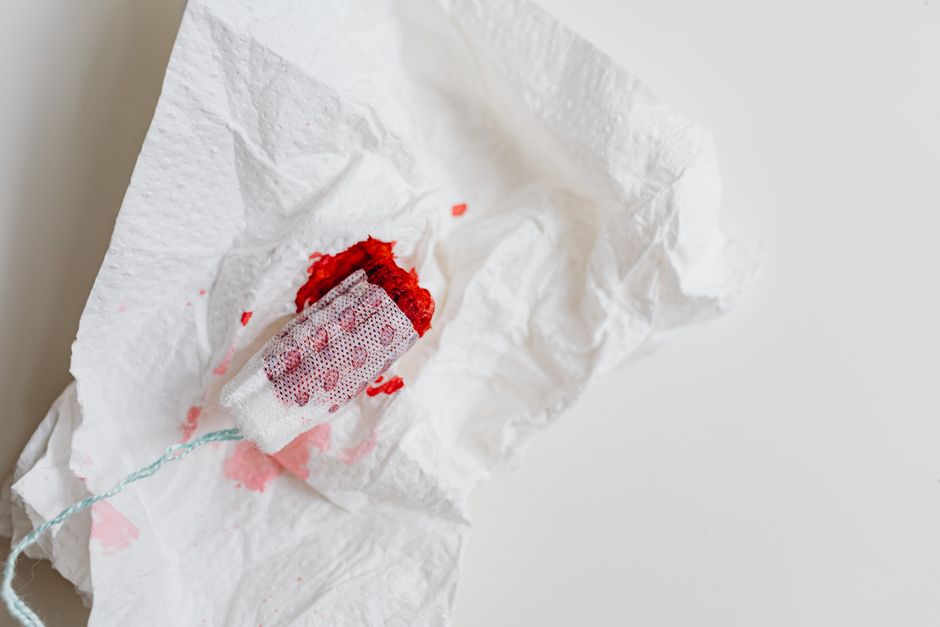
Bleeding two weeks after your last period is most often ovulation bleeding — a small amount of spotting that happens when an egg is released, roughly midway between two periods. It is usually light, brief, and not a sign of a problem. But it has several other possible causes, and some of them need a doctor’s attention.
What separates harmless mid-cycle spotting from something that needs checking is the pattern: how heavy it is, how long it lasts, and whether it keeps happening. A single episode of light spotting in an otherwise regular cycle is common. Bleeding that is heavy, painful, repeated, or new for you is worth investigating.
Why Am I Bleeding 2 Weeks After My Last Period?
The timing is the first clue. In a typical 28-day cycle, ovulation happens around day 14 — which is almost exactly two weeks after the first day of your last period. That midpoint is why this kind of bleeding is often called mid-cycle bleeding.
During ovulation, the ovary releases an egg from a small fluid-filled cyst on its surface. Some researchers think the hormonal shifts around this moment — a brief dip in estrogen followed by a rise in luteinizing hormone — can cause a small amount of the uterine lining to shed. Others point to the physical rupture of the follicle itself. The exact mechanism is not fully settled, and the evidence for ovulation as the cause of mid-cycle spotting rests more on timing patterns than on a proven pathway.
What is well established: mid-cycle spotting is common, and in many cases no cause is ever found. That is not a brush-off. It reflects how often this happens without any underlying disease.
What Else Causes Bleeding Between Periods?
Ovulation is the most common explanation at the two-week mark, but it is not the only one. Doctors call any bleeding between periods intermenstrual bleeding, and the list of causes is long.
- Hormonal contraception. Birth control pills, implants, injections, and hormonal IUDs commonly cause breakthrough bleeding, especially in the first few months of use.
- Infection. Sexually transmitted infections such as chlamydia and gonorrhea, and other infections of the cervix or uterus, can cause spotting.
- Cervical or uterine polyps. These are usually non-cancerous growths that can bleed on their own or after sex.
- Fibroids. Non-cancerous growths in the uterus can cause bleeding, though they more often cause heavy periods than mid-cycle spotting.
- Endometriosis and adenomyosis. Both can cause irregular bleeding and pain.
- Perimenopause. In the years before menopause, hormone levels swing unpredictably and cycles become irregular. Bleeding patterns change along with them.
- Pregnancy. Implantation bleeding can occur around the time a period would be due, and early pregnancy can cause spotting for other reasons.
- Thyroid problems. Both an underactive and an overactive thyroid can disrupt the menstrual cycle.
- Polycystic ovary syndrome (PCOS). This hormonal condition often causes irregular cycles and unpredictable bleeding.
Cancer of the cervix or uterus is a much less common cause, but it is one reason that persistent or unexplained bleeding should not be ignored.
How Do You Tell Ovulation Bleeding From Something Else?
No symptom checklist can diagnose the cause on its own, but a few patterns point in different directions. Ovulation bleeding tends to be light — spotting or a small streak, not a flow. It usually lasts a day or two. It often comes with the other signs of ovulation, such as mild one-sided pelvic pain, clearer and stretchier cervical mucus, or a slight rise in basal body temperature.
Bleeding that is heavier than spotting, lasts several days, happens after sex, or comes with pain, fever, or unusual discharge points away from ovulation and toward another cause. So does bleeding that starts happening every cycle when it never used to.
One detail worth knowing: tracking apps and calendars estimate ovulation, but they do not confirm it. The only way to know ovulation actually happened is through methods like basal body temperature tracking, ovulation predictor kits that detect the luteinizing hormone surge, or ultrasound. If your bleeding lines up with a calendar estimate but not with any physical signs, the timing may be a coincidence.





When Should You See a Doctor About Mid-Cycle Bleeding?
See a doctor if the bleeding is heavy enough to need a pad or tampon, lasts more than a couple of days, or keeps coming back. Also see a doctor if you have bleeding after sex, bleeding that is new for you, or any bleeding after menopause — which is never considered normal and always needs evaluation.
Other reasons to get checked include pelvic pain, pain during sex, fever, unusual vaginal discharge, or a positive pregnancy test alongside bleeding. If you are not sure whether what you are seeing counts as light spotting or something more, that uncertainty alone is a reasonable reason to call your doctor’s office.
When you go, expect questions about your cycle history, the timing and amount of the bleeding, and any medications or birth control you use. Depending on your age, history, and symptoms, a clinician may suggest a pelvic exam, a pregnancy test, swabs for infection, blood tests for hormones or thyroid function, or imaging such as ultrasound.
Could It Be Implantation Bleeding?
Implantation bleeding is possible, but the timing usually does not fit the two-week mark. Implantation — when a fertilized egg attaches to the uterine lining — typically happens about six to twelve days after ovulation. If ovulation occurred around day 14 of your cycle, implantation would fall later than day 14, closer to when your next period is due rather than the midpoint.
That said, cycle timing varies widely from person to person, and ovulation does not always happen on day 14. In shorter or irregular cycles, the math can shift. If there is any chance you could be pregnant, a home pregnancy test is the simplest way to find out. Testing too early can give a false negative, so waiting until around the day your period is due improves accuracy.
Does Two-Week Bleeding Mean Something Is Wrong?
Usually not. In most cases, occasional light bleeding between periods is not a sign of a serious condition. Many people experience it at some point, and often no specific cause is identified.
What matters is the pattern. A one-time episode of light spotting that resolves on its own is generally not concerning. Bleeding that is new, recurring, heavy, or accompanied by other symptoms deserves a medical evaluation — not because it is likely to be something serious, but because the range of possible causes is wide and some of them are treatable.
The evidence on how often mid-cycle bleeding has no identifiable cause is not precise, and estimates vary. What is clear is that the symptom itself is common and that persistent or changing bleeding is the signal to seek care, not the presence of bleeding alone.
Frequently Asked Questions
Is bleeding 2 weeks after your period normal?
Light spotting around two weeks after your period is common and often linked to ovulation. Bleeding that is heavy, lasts more than a couple of days, or keeps returning is not typical and should be checked by a doctor.
How long does ovulation bleeding last?
Ovulation bleeding is usually very light and lasts only a day or two. Bleeding that continues for several days or gets heavier is more likely to have another cause.
Can you bleed 2 weeks after your period and still be pregnant?
It is possible, though the timing usually does not match implantation, which typically occurs six to twelve days after ovulation. A home pregnancy test around the time your next period is due is the most reliable way to know.
What if the bleeding happens every month?
Recurring mid-cycle bleeding is worth discussing with a doctor, even if it is light. A repeating pattern can point to causes such as polyps, fibroids, or hormonal changes that a clinician can evaluate.
