
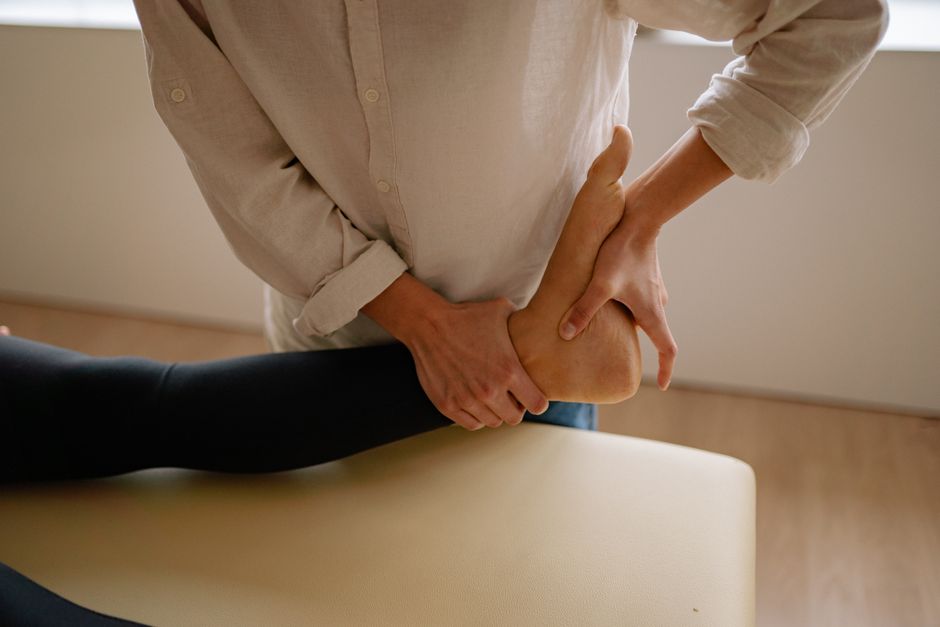
If you are sore after every workout, you are experiencing delayed onset muscle soreness, or DOMS. This is the result of microscopic damage to your muscle fibers and the inflammation that follows. It is a normal response to exercise that your muscles are not used to — especially when you increase intensity, try new movements, or focus on eccentric contractions. Being sore regularly does not automatically mean your training is wrong, but it does raise questions about your recovery and programming.
What Causes Muscle Soreness After Exercise?
Muscle soreness after exercise is caused by microscopic tears in your muscle fibers. This happens most when you lengthen a muscle while it is under tension. That motion is called an eccentric contraction. Examples include lowering a weight during a bicep curl or running downhill.
These microtears trigger an inflammatory response. Your immune system sends cells to repair the damage. That process causes swelling, which presses on nerve endings and creates the feeling of soreness. The pain typically peaks between 24 and 72 hours after exercise. That is why it is called delayed onset muscle soreness.
Soreness is not the same as injury. The damage is small and part of the normal adaptation process. Your muscles repair and grow stronger. But the level of soreness varies depending on the type, intensity, and novelty of your workout.
Why Am I Always Sore After Working Out?
If you are sore after every session, several factors may be at play. The most common is that you are consistently challenging your muscles in ways they are not adapted to. This can happen if you keep increasing weight, volume, or frequency without allowing enough recovery time.
Another reason is that your training program lacks variety in intensity. Doing the same high-effort workout every time does not give your muscles a chance to build tolerance. Periodization — alternating hard and easier days — is a standard approach that can reduce chronic soreness.
Poor recovery habits also contribute. Inadequate sleep, low protein intake, and dehydration all slow the repair process. Without enough resources, your muscles stay inflamed longer. Some research suggests that sleep deprivation specifically impairs muscle recovery and increases perceived soreness.
Overtraining syndrome is another possibility. If soreness is accompanied by fatigue, mood changes, or performance decline, you may be doing more than your body can recover from. This is more common in endurance or high-volume training but can happen with any exercise routine.
Is Being Sore Every Time Normal?
For new exercisers, soreness after most workouts is expected. The muscles are not conditioned, so even moderate effort causes microdamage. Over several weeks, the same workout produces less soreness as your muscles adapt. This is called the repeated bout effect.
For experienced lifters, being sore after every session is not typical. If you have been training consistently for months and still hurt after every workout, something is off. It may be that you never allow full recovery between sessions. It could also mean your workout is too intense relative to your fitness level.
Soreness that lasts more than 72 hours or gets worse instead of better may signal something beyond normal DOMS. If you notice dark urine, severe swelling, or loss of function in a limb, stop exercising and seek medical attention. Those are possible signs of rhabdomyolysis, a serious condition where muscle tissue breaks down and can damage your kidneys.





Does Soreness Mean Muscle Growth?
Many people believe that soreness equals an effective workout. That is not accurate. Muscle growth, or hypertrophy, can happen without any soreness. Some research shows that muscle growth occurs even when workouts produce little to no DOMS.
Conversely, being extremely sore does not guarantee more growth. The soreness is a byproduct of damage and inflammation, not a direct signal that muscles are getting bigger. Over time, you can build muscle with consistent progressive overload even if you rarely feel sore.
The idea that you must be sore to grow is a persistent fitness myth. Some of the most effective strength programs produce minimal soreness because they use controlled progressions and adequate recovery.
How to Reduce Muscle Soreness
No single method eliminates DOMS completely, but several strategies can reduce its intensity and duration.
- Gentle movement. Low-intensity activity like walking, cycling, or swimming increases blood flow to sore muscles. This may help clear waste products and reduce stiffness. It is often called active recovery.
- Hydration. Dehydration can worsen muscle soreness. Drinking enough water supports nutrient transport and waste removal.
- Protein intake. Eating adequate protein after exercise provides amino acids needed for muscle repair. Current guidelines recommend 1.6 to 2.2 grams of protein per kilogram of body weight per day for active adults.
- Sleep. Sleep is when most tissue repair occurs. Seven to nine hours per night is typical for optimal recovery.
- Foam rolling. Some studies suggest foam rolling can temporarily reduce soreness and improve range of motion. The effect is modest and may not last long.
What does not work well? Static stretching before or after exercise shows little to no effect on DOMS. Ice baths and cold water immersion have mixed evidence. Some research finds they reduce soreness but may blunt muscle growth adaptations. The evidence is not conclusive enough to recommend routine use.
Should You Work Out When You Are Sore?
You can work out with mild to moderate soreness, but you should adjust the intensity. If the soreness limits your range of motion or makes you change your technique, it is better to rest or do a light activity.
Training a sore muscle group with heavy weight can increase the risk of injury. The muscle has not fully repaired, and the connective tissue may be more vulnerable. Many fitness professionals recommend at least 48 hours between sessions that target the same muscle group.
Active recovery workouts — such as walking, yoga, or light resistance at lower intensity — can be beneficial. They keep you moving without imposing additional damage. Listen to your body. If pain is sharp or localized, do not push through it.
How to Train So You Are Not Always Sore
If chronic soreness is interfering with your life, your training program likely needs adjustment. The simplest fix is to reduce the intensity or volume of your hardest sessions. Follow a hard-easy pattern. After a challenging workout, do something significantly less demanding the next day.
Gradually increase your training load. The principle of progressive overload applies to volume and intensity. Increasing by no more than 10 percent per week in total volume is a common guideline to avoid excessive soreness.
Include deload weeks. Every three to six weeks, take a week where you cut volume or intensity by about half. This allows full recovery and may prevent overtraining. Many programs built for long-term progress use deload phases specifically to manage cumulative fatigue and soreness.
Frequently Asked Questions
How long does muscle soreness normally last?
DOMS typically peaks 24 to 72 hours after exercise and resolves within five to seven days. If soreness lasts longer or worsens, it may be a sign of injury rather than normal muscle recovery.
Is it bad to work out with sore muscles?
Working out with mild soreness is generally safe if you reduce intensity and avoid the same muscle group. Training with significant soreness increases injury risk and may slow recovery.
Does soreness mean you built muscle?
No. Soreness is not a reliable indicator of muscle growth. You can gain muscle without being sore, and being very sore does not guarantee more growth.
What is the difference between DOMS and an injury?
DOMS causes a dull, diffuse ache in the muscle belly and affects both sides of the body equally. Injury usually causes sharp or localized pain, swelling, and pain during specific movements. If pain is one-sided or sudden, seek medical evaluation.
