
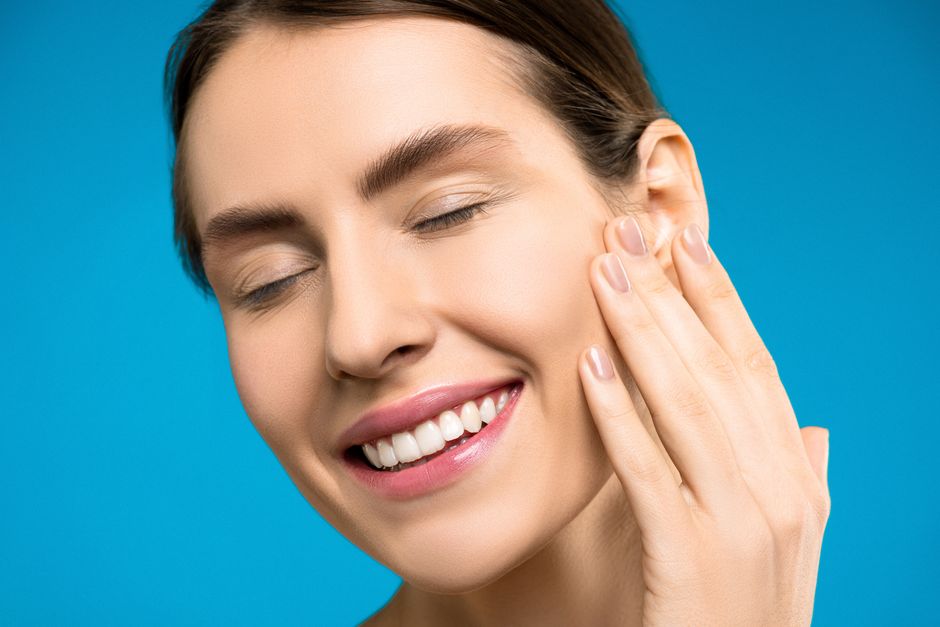
A smile that shows up on its own is usually not a sign that something is wrong with you. Most of the time it reflects ordinary brain activity — spontaneous emotional responses, social reflexes, or even random firing of facial muscles. The key question is whether the smile feels connected to a mood or not. If you feel fine and the smile comes and goes, it is almost always harmless. If it appears without any feeling at all, or only on one side of your face, that is worth mentioning to a doctor.
Why Am I Always Smiling For No Reason?
There are two very different kinds of smiling, and they come from different parts of the nervous system. Understanding this distinction explains most cases of “smiling for no reason.”
The first is a felt smile. It happens when something amuses you, pleases you, or makes you feel connected to another person. It involves the muscles around your mouth and also the muscles around your eyes. This type of smile is driven by emotional circuits in the brain, mainly involving the limbic system.
The second is a social or voluntary smile. You can produce this on command. It uses the motor cortex and a specific nerve called the facial nerve. This smile often does not reach the eyes. It is the polite smile you use in a photo or when greeting someone you do not know well.
When a smile appears “for no reason,” it is usually one of these two systems activating without a clear trigger. That can happen for several ordinary reasons, and a few medical ones. Most people fall into the ordinary category.
What Causes a Smile With No Emotional Trigger?
The most common explanation is spontaneous activity in facial muscles. Muscles do not stay perfectly still. Small involuntary contractions happen throughout the body all day, and the face is no exception. A brief upward pull at the corner of the mouth can be nothing more than a random muscle twitch.
Nerve activity can also produce a smile-like expression. The facial nerve controls the muscles of facial expression. When that nerve fires without a signal from the brain’s emotional centers, the result is a smile that does not match how you feel.
Other everyday causes include:
- Mild muscle spasms or twitching in the face, which are common and usually harmless
- Fatigue, which can make muscle control less steady
- Stress or anxiety, which can tighten facial muscles in unusual patterns
- Reflex responses to physical sensations, like cold air or chewing
- Medication side effects that affect nerve or muscle activity
None of these automatically mean something serious. But a smile that is constant, one-sided, or paired with other symptoms deserves a closer look.
Can a Smile Be a Sign of a Medical Condition?
Yes, in some cases. When a smile appears without any emotional cause and does not go away, it can point to a neurological or muscular issue. This is uncommon, but it is real.
One example is a condition where the facial nerve is overactive, causing involuntary muscle contractions on one side of the face. This can pull the mouth upward into something that looks like a smile. It is often described as a facial spasm.
Another possibility involves damage to the nerve pathways that normally keep facial muscles relaxed. When those pathways are disrupted, muscles can contract on their own.
There are also rare neurological conditions in which emotional expression and facial movement become disconnected. In these cases, a person may smile or laugh without feeling happy, or feel happy without being able to show it. These conditions are not common, and they are diagnosed by a neurologist, not by self-observation alone.
What matters most is the pattern. A smile that:
- Appears only on one side of the face
- Does not go away
- Comes with weakness, twitching, or numbness elsewhere
- Started suddenly
- Is paired with changes in speech, swallowing, or vision
These patterns warrant a medical evaluation. A doctor can examine nerve function and decide whether further testing is needed.





Is Smiling a Reflex or a Choice?
It is both, and that is what makes this confusing. Some smiles are pure reflex. Others are deliberate. Most are a mix.
Newborns smile reflexively, often during sleep, before they have any social awareness. That reflex comes from brainstem activity, not emotion. As people grow, smiling becomes tied to social bonding and emotional expression.
Adults still carry reflex smiling pathways. That is why you might smile when you hear a certain tone of voice, see a familiar face, or even when you are nervous. Nervous smiling is a well-documented social response. It is not a sign of a problem — it is your nervous system managing a social moment.
So when a smile shows up “for no reason,” it may actually have a reason you did not consciously notice. A subtle sound, a memory, a shift in posture, or a passing thought can trigger the reflex without you being aware of the trigger.
When Should You See a Doctor About Uncontrolled Smiling?
See a doctor if the smiling is persistent, one-sided, or comes with other symptoms. That is the clear line.
Specifically, get medical attention if you notice:
- Facial weakness or drooping on one side
- Twitching or spasms that do not stop
- Difficulty speaking, chewing, or swallowing
- Sudden changes in vision
- Smiling or laughing that you cannot control at all
- Smiling that feels completely disconnected from your emotions
Some of these symptoms overlap with serious conditions, including stroke. Sudden facial weakness, especially on one side, is a medical emergency. Do not wait to see if it passes. Call emergency services.
If the smiling is mild, occasional, and you feel otherwise well, it is reasonable to mention it at your next routine checkup rather than making a special appointment. Your doctor can decide whether it needs any follow-up.
What Does It Mean If You Smile but Do Not Feel Happy?
This is a real experience, and it has a name in neurology when it becomes a pattern. But for most people, smiling without feeling happy is simply a social habit or a reflex.
People smile for many reasons that have nothing to do with joy. Politeness, discomfort, habit, and even concentration can all produce a smile. Some people smile when they are anxious or when they are trying to hide how they feel. This is normal social behavior.
If the disconnect feels constant — if you smile often but never feel any emotion behind it, or if you feel emotionally flat in general — that is worth discussing with a doctor or mental health professional. Emotional flatness can be a symptom of several conditions, including depression and some neurological disorders. It is not something to self-diagnose, but it is also not something to ignore.
The important distinction is between a smile that happens alongside your feelings and a smile that replaces them entirely. The first is ordinary. The second deserves attention.
Frequently Asked Questions
Is it normal to smile for no reason?
Yes, occasional smiling with no clear trigger is normal and usually comes from spontaneous muscle activity or a reflex you did not consciously notice. It only becomes a concern if it is constant, one-sided, or paired with other symptoms.
Can anxiety cause you to smile without feeling happy?
Yes, nervous smiling is a well-documented social response, and anxiety can trigger it. The smile is a way the nervous system manages a tense or uncertain moment, not a sign of happiness.
What does it mean if only one side of your face smiles?
A one-sided smile can be a sign of nerve or muscle problems and should be checked by a doctor, especially if it started suddenly. Sudden facial weakness on one side is a medical emergency and needs immediate care.
Is smiling for no reason a symptom of a brain condition?
Rarely, yes — some neurological conditions can cause smiling or laughing that is not tied to emotion. For most people, though, it is not a brain condition, and only a doctor can determine whether testing is needed.
