
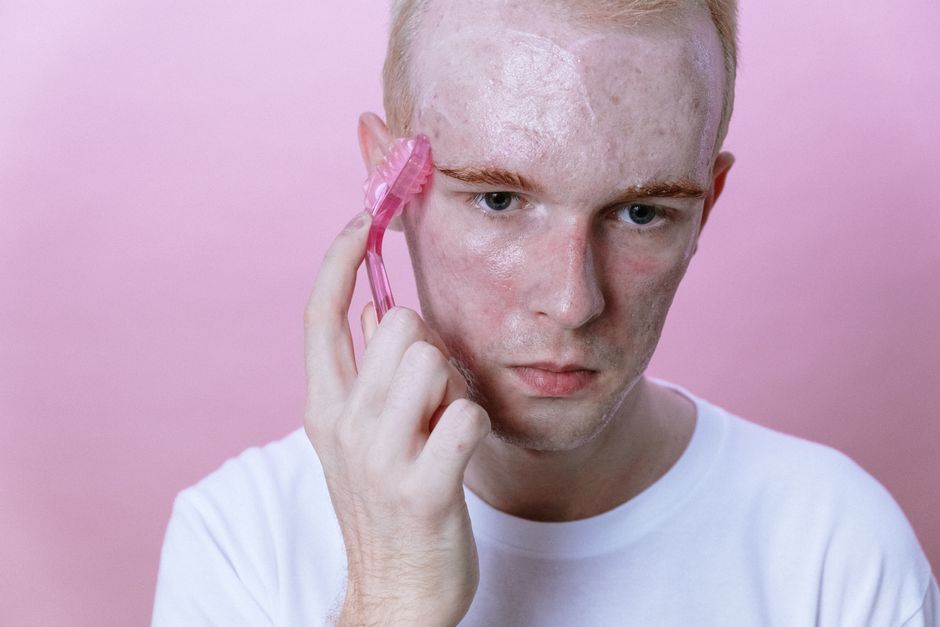
Acne is hard to get rid of because it forms deep inside the pore, not on the surface of your skin. By the time a pimple is visible, a blocked pore has already gone through weeks of change beneath the surface. Most treatments work on the surface, which is why they often seem to fail. And the condition is driven by several factors at once — hormones, skin cell turnover, bacteria, and inflammation — so a single product rarely addresses all of them.
There is also a timing problem. The pimple you see today started forming long before you noticed it. That gap between cause and visible result is the single biggest reason people give up on treatments that are actually working.
Why Acne Is So Hard To Get Rid Of The Real Reasons
Acne begins in the pilosebaceous unit — the hair follicle and its attached oil gland. Four things happen together to produce a pimple.
First, skin cells lining the follicle shed faster than normal and stick together instead of falling away. Second, the sebaceous gland produces more oil, called sebum. Third, the combination of extra cells and extra oil plugs the follicle. Fourth, the bacterium Cutibacterium acnes (formerly Propionibacterium acnes) multiplies in the blocked pore, and the immune system responds with inflammation.
Each of those four steps takes time. The plug forms over days. Inflammation builds after that. A pimple that appears on your face today may have been developing for two to three weeks. That is not a guess about your specific skin — it reflects the general timeline of how comedones and inflammatory lesions develop.
This is why acne resists a quick fix. You are not fighting one problem. You are fighting a process that started before you could see it, and that will keep producing new lesions on its own schedule.
Why Do Acne Treatments Take So Long to Work?
Most acne treatments work by interrupting one of those four steps, and interrupting a process that is already underway takes weeks to show up on your skin.
Topical retinoids, for example, help normalize how skin cells shed inside the follicle. That change happens at the cellular level, and the visible improvement lags behind it. Clinicians commonly tell patients to expect several weeks before real change, and dermatology guidance generally describes improvement over roughly two to three months of consistent use. It is not unusual for skin to look slightly worse before it looks better, because the treatment is changing how the follicle behaves.
The same lag applies to other approaches. Antibiotics and antimicrobial treatments reduce bacterial load, but they do not clear the existing plugged pores. Benzoyl peroxide works on bacteria and inflammation but does not fix the underlying cell-shedding problem. Hormonal treatments change oil production, which also takes time to settle.
Here is the part people rarely hear: stopping a treatment the moment it seems not to work is one of the most common reasons acne appears “impossible” to clear. The treatment may have been doing its job. It just had not finished.
Why Does Acne Keep Coming Back?
Acne returns because the conditions that cause it do not disappear when a crop of pimples clears. If your follicles still shed cells abnormally, if your oil glands are still sensitive to hormones, and if inflammation is still being triggered, new lesions will form.
This is why acne is often described as a chronic condition rather than a one-time event. Many people need ongoing management rather than a short course of treatment. When a treatment is stopped, the underlying process resumes.
Hormones are a major driver for many people. Androgens — hormones present in both men and women — stimulate oil production. That is why acne often flares around puberty, before menstruation, and during other hormonal shifts. It also helps explain why some people have persistent acne well into adulthood even after their teenage years.
There is a detail that surprises many people: adult acne is common, particularly in women, and it often behaves differently from teenage acne. It tends to cluster on the lower face, jawline, and chin, and it can be more persistent. If you had clear skin as a teenager and developed acne in your thirties or forties, you are not an unusual case.
Why Do Some People Get Acne and Others Don’t?
Acne has a strong genetic component. If a parent had significant acne, your risk is higher. Genetics influence how your follicles shed cells, how much oil your glands produce, and how strongly your immune system responds to C. acnes.
Beyond genetics, several factors can influence acne:
- Hormonal changes — puberty, menstrual cycles, pregnancy, and conditions that raise androgen levels can increase oil production.
- Certain medications — some drugs, including certain steroids and some epilepsy medications, can trigger or worsen acne. This is a reason to talk to your prescriber rather than self-treat.
- Pressure and friction — helmets, tight collars, and resting your face on your hands can worsen acne in those areas. This is called acne mechanica.
- Cosmetics and skincare — comedogenic products can contribute to clogged pores. Choosing products labeled non-comedogenic helps, though it is not a guarantee.
- Stress — stress may worsen acne, though the evidence for how much is not fully settled. It is reasonable to consider stress a contributing factor rather than the root cause.
Diet is a topic where the evidence is more mixed than the internet suggests. Some studies suggest that high-glycemic diets and dairy may influence acne in some people, but results vary and the effect is generally modest. No single food has been shown to cause acne in everyone. If you notice a pattern with your own skin, that is worth discussing with a clinician — but extreme elimination diets are not a proven acne treatment.
What Makes Acne Worse Without You Realizing It?
Picking and squeezing is the most common self-inflicted setback. It can push material deeper into the follicle, increase inflammation, and raise the risk of scarring and dark spots. The pimple may look flatter for a few hours, but the underlying lesion is often made worse.
Over-washing is another. Scrubbing aggressively does not clean out a blocked pore — the blockage is deeper than the surface. It can irritate the skin and damage the barrier, which makes inflammation worse. Gentle cleansing twice a day is generally what clinicians recommend.
Switching products too quickly is a quieter problem. People often try a new product every week or two, never giving any of them the weeks they need to work. Then they conclude nothing works, when in fact nothing was given a fair trial.
Another underappreciated factor is sun exposure. Some people find their acne looks better after sun, but tanning can worsen post-inflammatory dark marks and does not treat the underlying process. Sun protection matters, especially when using treatments that increase sun sensitivity.
When Should You See a Doctor About Acne?
Acne that leaves scars, causes significant distress, or does not improve after a reasonable course of over-the-counter treatment is worth a medical visit. So is acne that appears suddenly in adulthood, or that comes with other symptoms such as irregular periods or excess hair growth, which can point to a hormonal cause.
This is not a reason to panic. It is a reason to get a proper assessment. A clinician can identify the type of acne you have — comedonal, inflammatory, hormonal, or a mix — and match treatment to it. That matters because different types respond to different approaches, and using the wrong one is another reason acne can feel impossible to clear.
Prescription options exist for acne that does not respond to over-the-counter care. Which one is appropriate depends on your individual situation, and that decision belongs with a clinician who can see your skin and take your history. No article can make that call for you.
Does Acne Ever Go Away on Its Own?
For many people, acne improves with time, particularly acne that began in the teenage years. But “eventually” is not the same as “on its own without any management,” and for some people acne persists into adulthood.
The honest position is that acne is often manageable but not always curable in the sense of never returning. Many people find a routine that keeps it controlled, and control is a realistic goal. Waiting for it to disappear while it scars is not a good trade.
Frequently Asked Questions
How long does it take for acne treatment to work?
Most treatments take several weeks before visible improvement, and dermatology guidance generally describes meaningful change over roughly two to three months of consistent use. Stopping early is a common reason treatment appears to fail.
Why does my acne keep coming back after it clears?
Acne returns because the underlying conditions — abnormal cell shedding in the follicle, hormone-sensitive oil production, and inflammation — do not disappear when pimples clear. Ongoing management is often needed rather than a short course.
Is acne caused by poor hygiene?
No. Acne is not caused by dirt or poor hygiene, and scrubbing harder does not clear a blocked pore because the blockage is deeper than the surface. Over-washing can irritate skin and worsen inflammation.
Can diet make acne worse?
Some studies suggest high-glycemic diets and dairy may influence acne in some people, but results vary and effects are generally modest. No single food has been shown to cause acne in everyone.
