
If you see dark spots on a wall or smell something musty, you want to know what it is. You can test for mold yourself using a store-bought kit, or you can hire a certified mold inspector. Both can tell you whether mold is present. The real difference is what you do with the result.
Here is the part most people miss. The Centers for Disease Control and Prevention does not recommend routine mold testing in most cases. If you can see or smell mold, you already have your answer. The CDC’s position is that you should clean it up and fix the moisture problem, not spend money confirming what your eyes and nose already told you.
Who Can Test For Mold In Your Home: Pros vs DIY?
A certified mold inspector and a DIY test kit are the two main options. They measure different things and carry different levels of reliability.
A professional inspector typically holds a certification from an organization like the American Council for Accredited Certification or the National Association of Mold Professionals. These are private credentials, not government licenses. No federal agency licenses mold inspectors. A handful of states have their own rules, but most do not. That means anyone can print a business card and call themselves a mold inspector. Checking credentials matters.
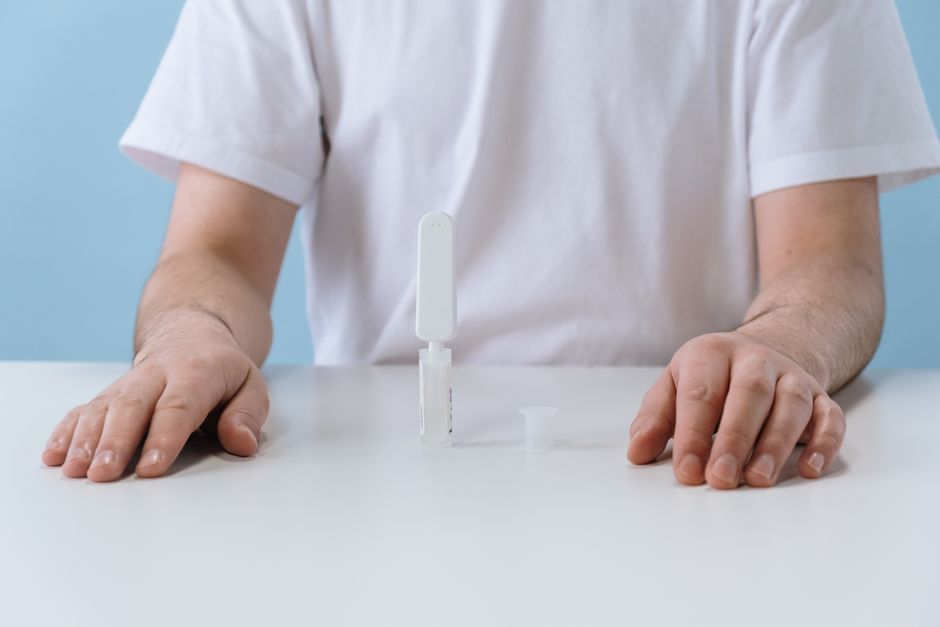
A DIY kit usually involves a petri dish or a strip you leave out for a set time, then mail to a lab. Some kits cost under $50. The problem is what they actually measure. A petri dish sitting open in a room collects whatever spores happen to land on it. Mold spores are everywhere outdoors and indoors, all the time. A dish that grows mold tells you mold spores exist in your air. It does not tell you the source, the species, or whether the level is a health concern.
Professional inspection works differently. It combines a visual survey with moisture meters, thermal imaging, and sometimes air or surface sampling. A good inspector looks for the water problem first. Mold needs moisture. Find the moisture, and you find the mold. The sampling is secondary.
So who can test? Anyone can swab a surface or set out a dish. Getting a result you can actually act on is where the two paths split.
What Does a Professional Mold Inspection Actually Include?
A thorough inspection is a search for water, not just a search for mold. The inspector walks the home looking for leaks, condensation, past flooding, and hidden moisture behind walls or under floors.
Tools matter here. A moisture meter reads water content in building materials. Thermal imaging can reveal temperature differences that suggest trapped moisture. These tools help find problems you cannot see.
Sampling, when done, comes in a few forms:
- Air sampling pulls a measured volume of air and counts spores. It can compare indoor levels to outdoor levels.
- Surface sampling uses a swab or tape lift on a visible spot. It can identify what is growing there.
- Bulk sampling takes a piece of material, like a section of drywall or carpet.
The inspector writes a report describing what was found, where, and often what caused it. A good report points to the moisture source and suggests fixes.
One caution. Air sampling results are easy to misread. There are no federal standards for how many mold spores in air are “safe.” Different labs use different methods and reference ranges. A number on a report is not a health verdict.
Are DIY Mold Test Kits Accurate?
DIY kits can detect that mold spores are present. They are poor at telling you whether you have a problem worth worrying about.
The core issue is the baseline. Mold spores are a normal part of indoor and outdoor air. A settle plate or petri dish will almost always grow something. A positive result is close to meaningless on its own because it does not distinguish a normal background level from a real contamination problem.
Some kits claim to identify toxic mold. This is where marketing outruns evidence. Kits may report a genus like Cladosporium or Penicillium, but species-level identification from a home kit is unreliable. Even when a species is named, the presence of a mold does not by itself prove it is harming anyone in the home.
The term “toxic mold” is itself misleading. Certain molds, including some Stachybotrys species, can produce mycotoxins. But the mold itself is not toxic in the way the phrase suggests. Health effects come from exposure to spores and mold fragments, and the evidence linking specific indoor mold levels to specific illnesses is limited. No clinical test currently confirms mold toxicity in a patient.
A DIY kit is not useless. It can motivate you to look harder for a moisture problem. Just do not treat its result as a medical or diagnostic answer.
When Is Professional Testing Worth the Cost?
Testing earns its keep in specific situations. If you smell mold but cannot find it, an inspector with moisture tools can locate the hidden source. If you are buying a home and suspect a past water problem, an inspection can inform your decision. If you have had a flood or a slow leak behind a wall, professional help can map the extent.
Testing is also reasonable when a landlord or seller disputes that a problem exists. A written report from a qualified inspector carries more weight than a home kit result.
In many other cases, testing adds cost without changing what you do. If you can see mold on a windowsill or smell it in a basement, the fix is the same whether or not you pay for a lab report: remove the mold, find the water, and stop the water.
There is a non-obvious point worth stating. The most useful part of a professional inspection is often the moisture investigation, not the mold sample. The sample confirms what is there. The moisture work tells you why, which is what you actually need to fix.
How Do You Remove Mold Once You Find It?
Cleanup depends on the size and surface. For small areas, a common approach is wiping hard surfaces with a detergent solution and drying the area completely. Bleach is often used on non-porous surfaces, though it works less well on porous materials like wood or drywall.
Porous materials that are heavily contaminated, such as soaked drywall or carpet, usually cannot be cleaned and need to be removed.
For larger areas, the Environmental Protection Agency provides guidance. As a general rule, areas larger than about 10 square feet may call for professional remediation. The EPA also advises that people with mold allergies or immune conditions, and anyone who is pregnant, should not do the cleanup themselves. If you have a health condition, talk with a clinician before deciding how to handle it.
The step people skip is fixing the moisture. Cleaning mold without stopping the water source means it comes back. That is why the CDC frames the whole issue around moisture control rather than testing.
Does Homeowners Insurance Cover Mold Testing or Removal?
Coverage is limited and varies by policy. Most standard homeowners policies exclude mold, or cap what they will pay. Many will cover mold only when it results from a covered event, like a burst pipe, and not from long-term neglect or slow leaks.
Testing is often not covered at all. If you are considering an inspection, ask your insurer what your policy says before you assume it will pay.
This is one area where the DIY versus professional decision can hinge on money rather than accuracy. A homeowner paying out of pocket may reasonably start with a visual check and a moisture meter of their own before hiring anyone.
Frequently Asked Questions
Can I test for mold myself without hiring anyone?
Yes, you can use a store-bought kit or simply look and smell for mold. But DIY kits mostly confirm that mold spores are present, which is true in nearly every home, so the result rarely changes what you should do.
Is a professional mold inspection worth the money?
It can be worth it when you smell mold but cannot find it, when you are buying a home, or when you need documentation for a landlord or seller. If you can already see the mold, testing usually adds cost without changing the fix.
Does the CDC recommend mold testing?
No. The CDC generally does not recommend routine mold testing and instead advises cleaning up visible or smelly mold and fixing the moisture problem that caused it.
What does “toxic mold” actually mean?
Some molds can produce mycotoxins, but the mold itself is not toxic the way the phrase suggests. The evidence linking specific indoor mold levels to specific illnesses is limited, and no clinical test confirms mold toxicity in a person.
