
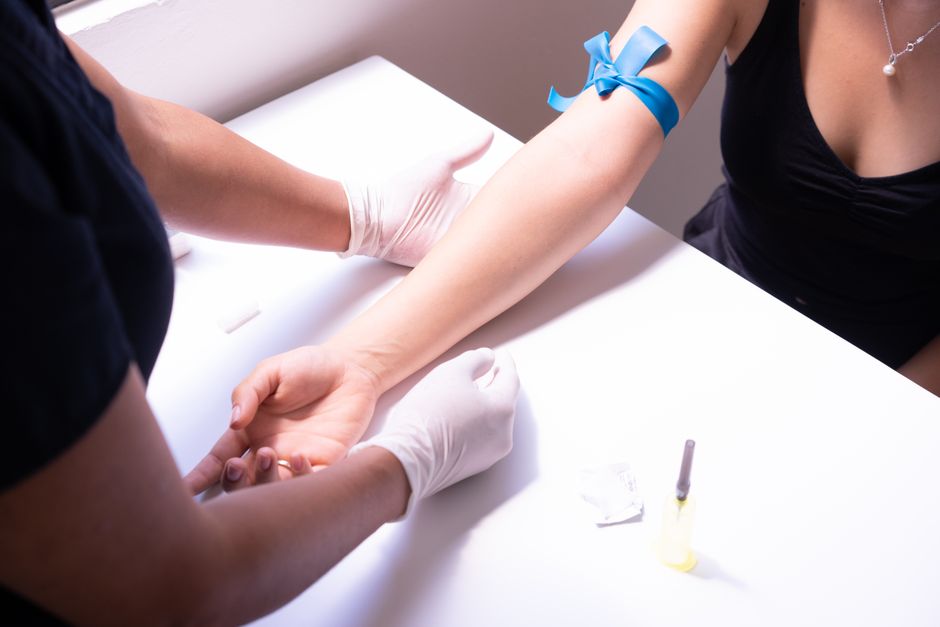
Drawing blood is one of the most common medical procedures in the United States, performed millions of times each year. The people legally allowed to do it are not limited to doctors and nurses. State law decides who can draw blood, and those rules vary widely from one state to the next. Laboratory technicians, phlebotomists, medical assistants, and other trained staff often perform the procedure under specific legal conditions.
Who Can Legally Draw Blood?
The short answer is that it depends on your state’s scope-of-practice laws. There is no single federal rule that says who may draw blood. Each state sets its own requirements through licensing boards and professional regulations.
In most states, the following professionals can legally perform venipuncture (drawing blood from a vein) or capillary puncture (a finger or heel stick):
- Physicians — licensed to perform any procedure within their scope
- Registered nurses (RNs) — venipuncture is typically within their scope of practice
- Licensed practical nurses (LPNs) — allowed in many but not all states
- Phlebotomists — certified or trained specifically for blood collection
- Medical laboratory technicians and technologists — often perform draws in hospital settings
- Medical assistants — permitted in some states, restricted in others
- Emergency medical technicians (EMTs) and paramedics — limited to specific emergency situations
Some states require formal certification for phlebotomists. Others do not. California, for example, requires phlebotomists to be certified through a state-approved program. In states without that requirement, a person may be trained on the job and still legally perform draws.
This patchwork system confuses many people. A phlebotomist who can work freely in one state may need additional credentials to work in a neighboring one.
What Laws and Regulations Apply to Blood Draws?
Several layers of law and regulation govern blood collection in the United States.
State scope-of-practice laws are the primary framework. These laws define what each type of health professional can and cannot do. They are enforced by state licensing boards.
CLIA (Clinical Laboratory Improvement Amendments) is a federal law that sets quality standards for laboratory testing. It does not directly say who can draw blood, but it regulates the laboratories where blood samples are analyzed. Facilities that perform testing must meet CLIA requirements regardless of who collects the sample.
OSHA (Occupational Safety and Health Administration) sets workplace safety rules that apply to anyone performing blood draws. The Bloodborne Pathogens Standard requires employers to provide training, personal protective equipment, and a written exposure control plan. It also requires that needlestick injuries be reported and that safer needle devices be used where feasible.
HIPAA (Health Insurance Portability and Accountability Act) protects the privacy of blood test results and other health information. Anyone who handles blood samples and the data that comes from them must follow HIPAA rules.
Individual healthcare facilities also have their own policies. A hospital may require additional training or competency checks beyond what state law demands.
Is Certification Required to Draw Blood?
Certification requirements vary by state and by employer. There is no universal national requirement.
Several organizations offer phlebotomy certification, including the American Society for Clinical Pathology (ASCP), the National Healthcareer Association (NHA), and the American Medical Technologists (AMT). These certifications typically require a combination of classroom training, supervised clinical practice, and a written exam. Some also require continuing education to maintain the credential.
In states that do not mandate certification, employers may still prefer or require it. Hospitals and reference laboratories often set their own hiring standards. A job candidate without certification may be passed over even where the law allows unlicensed practice.
Some states require a specific number of supervised draws before a person can work independently. These numbers vary. No national standard exists for the minimum number of practice draws.
This is one area where the gap between what is legal and what is common practice can be wide. Legally, a person in some states could be trained informally and start drawing blood. In practice, most employers want documented training and demonstrated competence.
What Safety Rules Protect Patients and Workers?
Safety during blood draws involves protecting both the patient and the person performing the procedure.
For patients, the main risks are bruising, soreness, fainting, and in rare cases nerve injury or infection at the puncture site. Proper technique, using the right needle size, and applying pressure after the draw reduce these risks. Most complications are minor and resolve on their own.
For workers, the primary concern is exposure to bloodborne pathogens such as hepatitis B, hepatitis C, and HIV. OSHA’s Bloodborne Pathogens Standard requires employers to:
- Provide written exposure control plans
- Offer hepatitis B vaccination at no cost to employees with occupational exposure
- Supply gloves, face shields, and other protective equipment
- Use safety-engineered needles and sharps disposal containers
- Train workers on infection control and report needlestick injuries
These rules apply to all workplaces where blood draws occur, including hospitals, clinics, labs, and blood donation centers. Compliance is not optional.
Needlestick injuries remain a real concern. The CDC has reported that while safety devices and training have reduced injuries, they still occur. Prompt reporting and post-exposure evaluation are important for the worker’s health.
Can Untrained People Draw Blood?
No. Drawing blood without proper training or legal authorization is not permitted in any state.
Performing venipuncture without the required credentials can constitute practicing medicine or a health profession without a license. Penalties vary by state and can include fines, criminal charges, or both.
Even in states with fewer formal requirements, some level of documented training is expected. Employers are responsible for ensuring that anyone performing blood draws has been trained and deemed competent. Allowing an untrained person to draw blood creates liability for the employer and risk for the patient.
There is no state where a person with no training at all can legally draw blood in a clinical setting.
What About Home Blood Draws and Mobile Services?
Mobile phlebotomy services have grown in recent years. Companies send phlebotomists to homes, offices, or other locations to collect samples.
The same state laws apply. A mobile phlebotomist must meet the same requirements as one working in a hospital or clinic. The setting changes, but the legal framework does not.
Some states have specific rules about where blood can be drawn outside a licensed facility. Others do not address mobile services directly. This is an area where regulations are still catching up with the business model.
If you use a mobile phlebotomy service, you can ask about the phlebotomist’s credentials and the company’s licensing. Reputable services will provide that information.
The Bottom Line
Who can draw your blood depends on where you live and who is doing the draw. State law sets the rules. Federal regulations add safety and privacy requirements. Certification may or may not be mandatory depending on the state.
The system is not uniform. That can be frustrating for patients and professionals alike. But the core principle is consistent: blood draws should be performed by people with proper training, working within the law, and following established safety protocols.
Frequently Asked Questions
Can a medical assistant legally draw blood?
In many states, yes — medical assistants can perform venipuncture if they have documented training and are working under a licensed provider’s supervision. However, some states restrict this, so the rules depend on where you live.
Do you need a license to be a phlebotomist?
Only some states require a license or certification to work as a phlebotomist. In states without that requirement, employers may still require certification as a condition of employment.
Is it illegal to draw blood without certification?
It depends on the state. In states that mandate certification, drawing blood without it is illegal. In states without that mandate, training and employer authorization are typically required even though a formal certification may not be.
Who is legally allowed to perform a blood draw in a hospital?
Nurses, phlebotomists, physicians, and other trained staff can perform blood draws in hospitals, depending on state law and hospital policy. The specific rules vary by state and by institution.
