
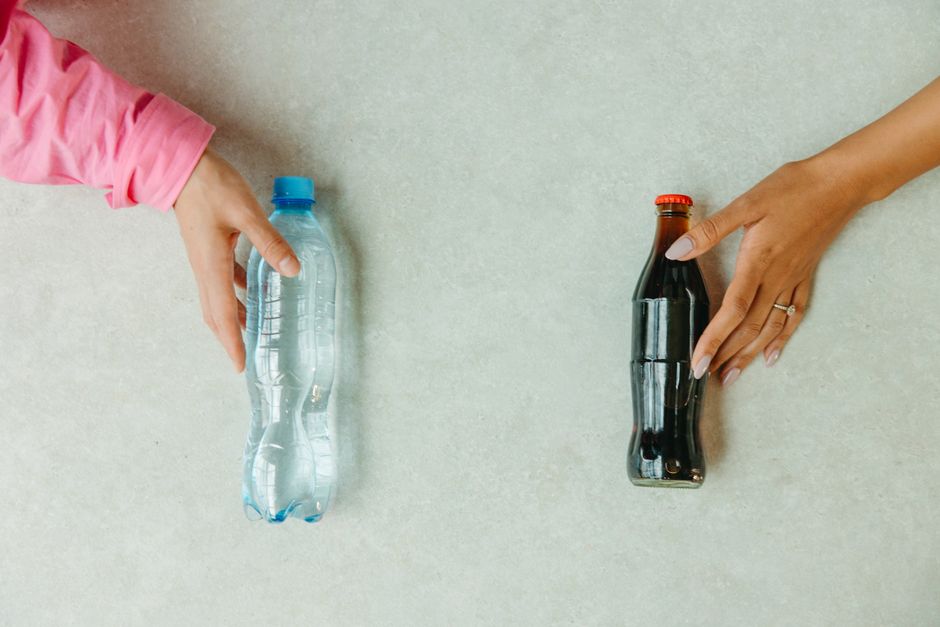
Regular Mountain Dew contains 46 grams of sugar per 12-ounce can, making it the highest-sugar mainstream soda sold in the US. A standard 12-ounce can of regular Coca-Cola has 39 grams, Pepsi has 41 grams, and Dr Pepper has 39 grams. The differences look small on a label, but they add up fast against the daily limits health authorities recommend.
Most people guess Coke or Pepsi when asked which soda has the most sugar. The actual answer is Mountain Dew, and it is not especially close. The gap comes down to how much high-fructose corn syrup each brand packs into the same can size.
Which Soda Has The Most Sugar? Full Comparison
Here is how the major regular sodas stack up per 12-ounce can, based on manufacturer nutrition data. All values are for regular, full-sugar versions — not diet or zero-sugar lines.
| Soda (12 oz can) | Sugar (grams) | Calories |
|---|---|---|
| Mountain Dew | 46 g | 170 |
| Pepsi | 41 g | 150 |
| Coca-Cola | 39 g | 140 |
| Dr Pepper | 39 g | 150 |
| Sprite | 38 g | 140 |
| A&W Root Beer | 45 g | 170 |
| Fanta Orange | 44 g | 160 |
Root beer and fruit-flavored sodas often carry more sugar than colas. A&W Root Beer at 45 grams per can lands just behind Mountain Dew. Fanta Orange sits at 44 grams. The pattern is consistent: citrus and fruit sodas tend to run sweeter than colas, and colas sit in the middle of the pack.
One thing worth knowing: serving size changes everything. A 20-ounce bottle of Coca-Cola contains about 65 grams of sugar. The same soda in a smaller can delivers far less. The brand matters, but the pour size matters more.
How Much Sugar Is In a 20-Ounce Bottle?
A 20-ounce bottle roughly doubles the sugar of a 12-ounce can. Mountain Dew in a 20-ounce bottle delivers about 77 grams of sugar. Coca-Cola in the same size lands around 65 grams. Pepsi comes in near 69 grams.
That 77-gram figure is more than many adults consume in an entire day from all food sources combined. The American Heart Association recommends no more than 36 grams of added sugar per day for adult men and 25 grams for adult women. A single 20-ounce Mountain Dew exceeds both limits by a wide margin.
Fast-food fountain drinks are larger still. A 32-ounce fountain soda can contain well over 100 grams of sugar depending on the brand and ice level. Ice displaces some volume, but the syrup ratio is often set higher in fountain service than in canned product.
Why Do Some Sodas Have More Sugar Than Others?
The sugar difference comes down to the recipe. Each brand balances sweetness against acidity, carbonation, and flavor compounds. Mountain Dew uses more sweetener because its citrus flavor profile needs it — the acidity of the flavoring would otherwise taste harsh.
Colas use phosphoric acid alongside sweetener. The acid cuts perceived sweetness, so colas can taste less sweet than they are. This is why a Dr Pepper at 39 grams can taste sweeter than a Coke at the same 39 grams — the flavor chemistry differs, not the sugar load.
Almost all major US sodas sweeten with high-fructose corn syrup rather than cane sugar. HFCS and table sugar are chemically close — both are roughly half glucose and half fructose — and research has not shown a meaningful health difference between them at typical intake levels. The problem is total sugar volume, not the specific sweetener type.
Some brands sell “real sugar” versions, often in glass bottles. These are not lower in sugar. A cane sugar Coca-Cola contains about the same 39 grams per 12 ounces. The switch changes flavor, not sugar content.
How Does Soda Sugar Compare To Daily Limits?
One regular soda can use up most or all of a day’s added sugar allowance. For adult women, the American Heart Association’s limit of 25 grams of added sugar per day is exceeded by every soda on the comparison list. For adult men at 36 grams, only the lowest-sugar options come close to fitting.
The World Health Organization goes further. It recommends that added sugars make up less than 10% of total daily calories, with additional health benefits suggested below 5%. For a 2,000-calorie diet, 10% works out to 50 grams of sugar. A single Mountain Dew at 46 grams nearly fills that entire allowance.
These are population-level guidelines, not personal prescriptions. Individual needs vary with age, activity level, and overall diet. But the arithmetic is hard to argue with: a daily soda habit can push added sugar intake well past recommended limits before any other food is counted.
Does Soda Sugar Cause Health Problems?
Regular soda consumption is consistently linked with weight gain, type 2 diabetes, and dental cavities in large observational studies. Liquid sugar is absorbed quickly and does not trigger the same fullness signals as solid food, which is part of why sugary drinks are associated with excess calorie intake.
The evidence on type 2 diabetes is particularly strong. Research published in the BMJ found that each additional daily serving of sugar-sweetened beverage was associated with a higher risk of type 2 diabetes, even after adjusting for body weight. The relationship held across multiple large cohort studies.
Dental effects are well established. Sugar feeds cavity-causing bacteria in the mouth, and the acid in soda adds a second layer of enamel erosion. Sipping soda slowly throughout the day is harder on teeth than drinking it quickly with a meal.
What the evidence does not support is the idea that any soda is “healthy” because it contains vitamins or real sugar. No mainstream regular soda provides meaningful nutritional benefit. Some are simply less harmful than others by virtue of containing less sugar.
Are Diet Sodas a Better Choice?
Diet sodas contain no sugar and no calories from sweeteners. That makes them lower in sugar than every regular soda on the list — by definition. Whether they are a better choice for health overall is a separate question with a less settled answer.
Artificial sweeteners like aspartame, sucralose, and acesulfame potassium are approved by the FDA and considered safe at typical consumption levels. The evidence on whether diet drinks help with weight control is mixed. Some trials show modest benefit when they replace sugary drinks; other research suggests compensatory eating can offset the calorie savings.
Some studies have raised questions about diet soda and metabolic health, but the findings are inconsistent and often confounded by the fact that diet soda drinkers differ from non-drinkers in many other ways. No clinical evidence currently confirms that diet soda causes the same metabolic harms as regular soda.
For someone drinking multiple regular sodas a day, switching to diet or water reduces sugar intake substantially. That is a straightforward arithmetic fact. Whether it translates to better long-term health outcomes depends on what replaces the soda and what the rest of the diet looks like.
What Is the Lowest-Sugar Regular Soda?
Among mainstream regular sodas, the lowest sugar options hover around 35 to 39 grams per 12-ounce can. Ginger ale and some lemon-lime sodas tend to sit at the lower end. Sprite at 38 grams and most colas at 39 grams are typical.
Smaller cans make a bigger difference than brand choice. A 7.5-ounce mini can of any regular soda delivers roughly 60% of the sugar of a 12-ounce can. Switching from a 20-ounce bottle to a 12-ounce can cuts sugar by about 40% without changing brands at all.
Sparkling water with no added sugar contains zero grams. So does plain seltzer. These are not sodas in the traditional sense, but they satisfy the carbonation craving without the sugar load. For anyone trying to cut back, the size of the container and the frequency of the habit matter more than which brand ends up in the cart.
Frequently Asked Questions
Which soda has the most sugar per can?
Mountain Dew has the most sugar among mainstream regular sodas at 46 grams per 12-ounce can. A&W Root Beer is close behind at 45 grams.
Does Coke or Pepsi have more sugar?
Pepsi has more sugar than Coca-Cola — 41 grams versus 39 grams per 12-ounce can. The difference is small but consistent across standard sizes.
How much sugar is in a 20 oz Mountain Dew?
A 20-ounce Mountain Dew contains about 77 grams of sugar. That is more than double the American Heart Association’s daily added sugar limit for adult women.
Is there a soda with zero sugar?
Diet and zero-sugar sodas contain no sugar, using artificial or natural non-caloric sweeteners instead. Regular sodas all contain sugar unless labeled diet or zero sugar.
