

Meiosis is the process that makes genetic diversity possible. It is a special type of cell division that produces reproductive cells — sperm and eggs — each carrying half the usual number of chromosomes. During meiosis, chromosomes are shuffled and recombined so that every sperm or egg carries a unique mix of genetic material. That shuffling is why siblings raised in the same home can look and behave so differently.
Most cells in your body divide through mitosis, which makes identical copies. Meiosis does the opposite. It deliberately creates cells that are genetically different from each other and from the parent cell. Two mechanisms drive that difference: crossing over during the first round of division, and the random way chromosomes line up and separate. Together, these produce the variation that natural selection acts on.
What Is Meiosis and How Does It Work?
Meiosis is a two-stage division process that starts with one diploid cell and ends with four haploid cells. Diploid means the cell has two full sets of chromosomes — one from each parent. In humans, that is 46 chromosomes. Haploid means one set — 23 chromosomes.
The process runs through two consecutive divisions, called meiosis I and meiosis II. No DNA replication happens between them. That detail matters because it is what allows the chromosome number to be halved.
Here is the sequence in plain terms:
- Before division: The cell copies all its DNA, so each chromosome now has two identical sister chromatids joined together.
- Meiosis I: Homologous chromosomes — the matching pair, one from each parent — pair up and then separate. Each daughter cell gets one chromosome from each pair.
- Meiosis II: Sister chromatids separate, similar to what happens in mitosis. The result is four haploid cells.
In males, all four products become sperm. In females, the division is uneven. One cell gets most of the cytoplasm and becomes the egg. The other three, called polar bodies, break down. This asymmetry gives the egg the resources it needs after fertilization.
The chromosome number matters here. If meiosis halved the count incorrectly, fertilization would produce a cell with the wrong number of chromosomes. Most such errors are not compatible with life. A few, like trisomy 21, result in conditions that can be lived with but carry significant health effects.
How Does Crossing Over Create Genetic Diversity?
Crossing over is the exchange of DNA between paired homologous chromosomes during meiosis I. It is the single biggest source of new gene combinations in sexually reproducing organisms.
Here is what happens. During the pairing stage, homologous chromosomes lie close together and form a structure called a tetrad — four chromatids in total. At points along the chromosomes, the DNA strands break and rejoin with the matching strand on the partner chromosome. The result is a chromosome that carries some DNA from each parent.
This is why you are not simply a blend of your mother and father. A single chromosome you inherited from your mother may contain stretches of DNA that originally came from her father and stretches from her mother. The chromosome is a patchwork.
The points where exchange happens are not entirely random. Research has shown that recombination is more common in some regions of the genome and less common in others. The reasons are still being studied, but the pattern is consistent across many species.
One clarification worth making: crossing over is not the same as mutation. Mutation creates brand-new genetic variants. Crossing over rearranges variants that already exist. Both contribute to diversity, but they work in different ways.
How Does Independent Assortment Add More Variation?
Independent assortment is the random alignment and separation of homologous chromosomes during meiosis I. It works alongside crossing over to multiply the possible combinations.
When the homologous pairs line up at the center of the cell, each pair orients independently of the others. Which chromosome from a given pair ends up in a particular daughter cell is essentially a coin flip. With 23 pairs in humans, the number of possible combinations from alignment alone is 2 raised to the 23rd power — over 8 million. That number does not even account for crossing over, which multiplies the possibilities far beyond that.
The word “independent” is important. The alignment of one pair does not influence the alignment of another. This is why two siblings can inherit completely different mixes of chromosomes from the same two parents.
Some textbooks describe independent assortment and crossing over as if they are separate events. They are separate mechanisms, but they happen in the same cell at roughly the same stage. Their combined effect is what makes each gamete genetically unique.



Which Process Makes Diversity Possible — Meiosis and More?
Meiosis is the process that makes diversity possible, but it does not act alone. Several related processes work together to generate and maintain genetic variation in a population.
Here is how they compare:
| Process | What It Does | When It Happens |
|---|---|---|
| Crossing over | Exchanges DNA between homologous chromosomes | Meiosis I |
| Independent assortment | Randomly aligns and separates chromosome pairs | Meiosis I |
| Random fertilization | Any sperm can fuse with any egg | At conception |
| Mutation | Creates new genetic variants | Any time DNA is copied |
| Migration and gene flow | Moves variants between populations | Ongoing |
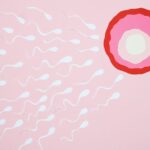
Random fertilization is easy to overlook. Even after meiosis produces a unique sperm and a unique egg, which sperm reaches the egg first is a matter of chance. That adds another layer of unpredictability.
Mutation is the original source of all new genetic material. Without mutation, there would be nothing new for meiosis to shuffle. But mutation rates are low, and most mutations have no effect or are harmful. Meiosis takes the small number of useful variants and combines them in countless ways.
Migration and gene flow matter at the population level. When individuals move between groups and reproduce, they introduce variants that were not present before. This is one reason genetic diversity tends to be higher in larger, more connected populations.
Why Does Genetic Diversity Matter for Health?
Genetic diversity matters because it affects how populations respond to disease, environmental change, and other pressures. The same principle applies at the level of individual health.
When a population has a wide range of genetic variants, it is more likely that some individuals will carry versions of genes that offer protection against a particular threat. If a new pathogen emerges, a diverse population has a better chance that some members will be resistant. A genetically uniform population is more vulnerable — if one individual is susceptible, all are.
This is not just theory. Certain genetic conditions are more common in populations that have historically been small or isolated, because a harmful variant can become more frequent when the gene pool is limited. Examples include Tay-Sachs disease in Ashkenazi Jewish populations and sickle cell trait in regions where malaria has been common. Sickle cell trait is a case where a variant that causes disease in some contexts offers protection in others — a reminder that “harmful” and “beneficial” depend on environment.
At the individual level, genetic diversity within your own cells is generally low. Your cells are mostly identical copies. The diversity that matters for reproduction happens in the germline — the cells that become sperm or eggs.
One point that often gets confused: diversity is not the same as health. A genetically diverse population is not automatically healthier than a less diverse one. Diversity is a buffer against certain risks, not a guarantee of good outcomes.
What Happens When Meiosis Goes Wrong?
Errors in meiosis can produce gametes with the wrong number of chromosomes. These errors are called nondisjunction, and they are relatively common.
Nondisjunction happens when chromosomes fail to separate properly during meiosis I or meiosis II. The result is a gamete with an extra chromosome or a missing one. If that gamete is involved in fertilization, the resulting embryo has an abnormal chromosome number.
Most embryos with abnormal chromosome numbers do not survive to birth. Some do, and the resulting conditions include Down syndrome (trisomy 21), Edwards syndrome (trisomy 18), and Patau syndrome (trisomy 13). The risk of nondisjunction increases with maternal age, particularly for trisomy 21. The reasons are not fully understood, but they involve the long pause in meiosis that occurs in eggs before ovulation.
In females, meiosis begins before birth and is not completed until ovulation — potentially decades later. This long arrest is thought to contribute to the higher rate of nondisjunction in older eggs. In males, meiosis happens continuously from puberty onward, and the error rate is lower.
Other errors can happen during crossing over. If chromosomes exchange unequal amounts of DNA, or if the exchange goes wrong, it can lead to structural changes in chromosomes. Some of these changes cause genetic disorders; others have no noticeable effect.
How Is Meiosis Different From Mitosis?
Meiosis and mitosis are both forms of cell division, but they serve different purposes and produce different results.
Mitosis produces two genetically identical daughter cells. It is how your body grows, repairs tissue, and replaces worn-out cells. The chromosome number stays the same — diploid cells make more diploid cells.
Meiosis produces four genetically different daughter cells, each with half the chromosome number. It is how reproductive cells are made. The chromosome number is halved so that fertilization can restore it.
Another key difference is that mitosis involves one division, while meiosis involves two. Mitosis also does not involve crossing over or independent assortment of homologous chromosomes. Those events are unique to meiosis.
Both processes are tightly regulated. Cells have checkpoints that monitor whether division is proceeding correctly. When those checkpoints fail, the result can be uncontrolled cell division — which is one of the hallmarks of cancer.
Frequently Asked Questions
What is the main process that makes genetic diversity possible?
Meiosis is the main process. It creates genetic diversity through crossing over and independent assortment, which shuffle and recombine chromosomes before reproductive cells are formed.
How many chromosomes do human gametes have after meiosis?
Human gametes have 23 chromosomes — half the 46 found in most body cells. This halving ensures that fertilization restores the full chromosome number.
Does crossing over happen in mitosis?
No, crossing over does not happen in mitosis. It occurs only during meiosis I, when homologous chromosomes pair up and exchange DNA.
Why does genetic diversity matter for a species?
Genetic diversity gives a population a better chance of surviving disease outbreaks and environmental changes. If some individuals carry protective variants, the population is less likely to be wiped out by a single threat.
