
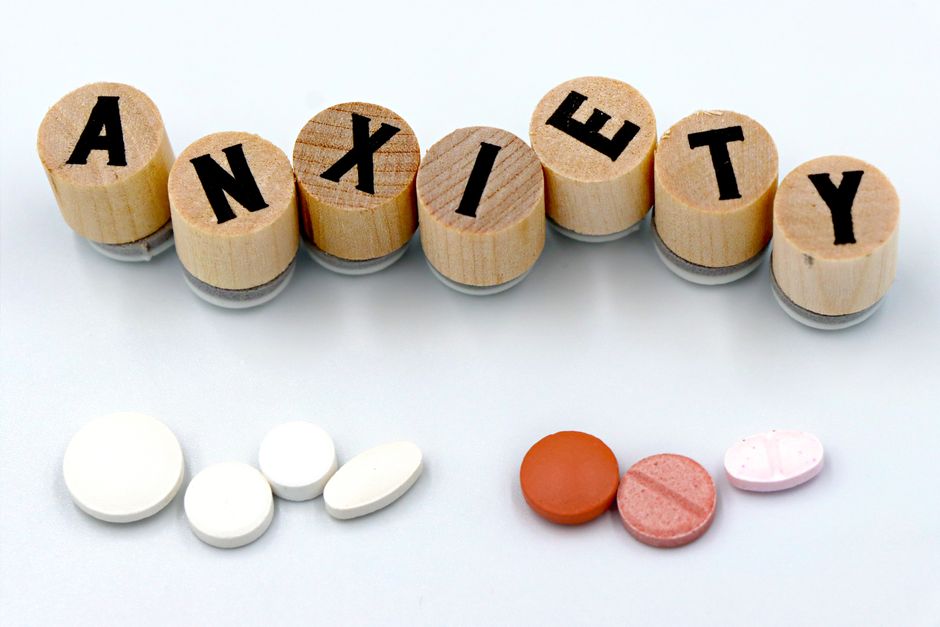
Anxiety disorders are the most common group of mental health conditions in the United States, affecting roughly 40 million adults. When people are asked “which of the following is not an anxiety disorder,” the answer usually comes down to one clear distinction: depression is not an anxiety disorder. It is a mood disorder. Other conditions that are sometimes mistaken for anxiety disorders — such as obsessive-compulsive disorder, post-traumatic stress disorder, and bipolar disorder — are also classified separately, though they can share overlapping symptoms with anxiety.
Knowing what belongs in the anxiety disorder category and what does not matters. It affects how these conditions are diagnosed, which treatments are used, and how people understand their own mental health.
What Counts as an Anxiety Disorder?
Anxiety disorders share a core feature: excessive fear or worry that is out of proportion to the actual situation and that interferes with daily life. The fear can be about a specific object, a social situation, a future event, or it can appear without a clear trigger.
The main anxiety disorders recognized in standard diagnostic manuals include:
- Generalized anxiety disorder (GAD) — persistent, hard-to-control worry about many areas of life, lasting at least six months
- Panic disorder — repeated unexpected panic attacks and ongoing fear of having another one
- Social anxiety disorder — intense fear of social or performance situations where a person might be judged
- Specific phobias — marked fear of a particular object or situation, such as heights, flying, or needles
- Agoraphobia — fear of situations where escape might be difficult, like crowds or public transport
- Separation anxiety disorder — distress about being away from attachment figures, diagnosed in children and also recognized in adults
These conditions are grouped together because they respond to similar treatments and involve similar brain circuits — particularly the amygdala and related fear-processing pathways. But they are distinct diagnoses with different triggers and patterns.
Which of the Following Is Not an Anxiety Disorder?
Depression is not an anxiety disorder. Major depressive disorder is classified as a mood disorder, not an anxiety disorder, because its defining feature is persistent low mood or loss of interest — not excessive fear or worry.
That said, depression and anxiety overlap heavily. Many people have both at the same time. Research consistently shows that having one roughly doubles the risk of having the other. But overlap in symptoms does not mean they are the same category of illness.
Here is how the two compare:
| Feature | Anxiety Disorder | Depression (Mood Disorder) |
|---|---|---|
| Core symptom | Excessive fear or worry | Persistent low mood or loss of interest |
| Physical signs | Racing heart, sweating, restlessness | Fatigue, slowed movement, appetite changes |
| Typical thought pattern | Anticipating threat | Hopelessness, worthlessness, guilt |
| Diagnostic category | Anxiety disorders | Depressive disorders |
Other conditions also fall outside the anxiety disorder category:
- Obsessive-compulsive disorder (OCD) — involves unwanted intrusive thoughts and repetitive behaviors. It has its own diagnostic category.
- Post-traumatic stress disorder (PTSD) — follows exposure to trauma. It is classified as a trauma- and stressor-related disorder.
- Bipolar disorder — involves episodes of depression and elevated mood. It is a mood disorder.
These conditions can involve anxiety-like symptoms. A person with OCD may feel intense anxiety about their obsessions. Someone with PTSD may be hypervigilant. But the underlying mechanism and diagnostic criteria place them in different groups.
Why Do People Confuse Anxiety Disorders With Other Conditions?
The confusion is understandable. Anxiety symptoms show up in many mental health conditions. Sleep problems, trouble concentrating, irritability, and physical tension appear in anxiety, depression, PTSD, and OCD alike.
Another reason is that the word “anxiety” is used loosely in everyday language. People say they are anxious when they mean they are stressed, nervous, or worried. That is different from an anxiety disorder, which requires symptoms that are persistent, excessive, and impairing.
A third factor is that many people have more than one diagnosis at once. This is called comorbidity, and it is common. Someone can have generalized anxiety disorder and major depressive disorder simultaneously. When that happens, it can be hard to tell where one ends and the other begins.
Here is a distinction that often gets missed: a person can feel anxious without having an anxiety disorder, and a person can have an anxiety disorder without feeling anxious all the time. Anxiety disorders are defined by patterns of fear and avoidance that disrupt functioning — not by how often someone feels nervous.
How Are Anxiety Disorders Diagnosed?
There is no blood test or brain scan that diagnoses an anxiety disorder. Diagnosis relies on a clinical interview with a qualified professional — a psychiatrist, psychologist, or other licensed mental health clinician.
The clinician asks about the duration, intensity, and pattern of symptoms. They also check whether the symptoms are better explained by another condition, a medication side effect, or a medical issue such as an overactive thyroid.
Standard diagnostic criteria require that symptoms cause significant distress or impairment in social, occupational, or other important areas of functioning. Feeling anxious before a big presentation is not a disorder. Avoiding all social contact for years because of fear of judgment might meet the criteria for social anxiety disorder.
Getting the diagnosis right matters because treatment differs. Antidepressant medications are used for both anxiety and depression, but the type, dose, and duration may vary. Cognitive behavioral therapy is effective for anxiety disorders, and it is also effective for depression — but the focus of therapy differs. For anxiety, therapy often targets avoidance and catastrophic thinking. For depression, it often targets hopelessness and behavioral withdrawal.
Can Anxiety Disorders and Depression Occur Together?
Yes, and they often do. Research consistently shows high rates of overlap between anxiety disorders and depressive disorders. Some studies suggest that more than half of people with one will experience the other at some point.
When both are present, symptoms tend to be more severe and the course tends to be longer than either condition alone. Treatment usually addresses both at once rather than treating them separately.
This overlap is one reason the question “which of the following is not an anxiety disorder” can feel tricky. If someone has both anxiety and depression, they may describe their experience as anxiety, even though depression is technically a separate diagnosis.
What About Stress and Normal Worry?
Stress and worry are normal parts of life. They become a concern when they are excessive, persistent, and interfere with daily functioning. That is the line between ordinary anxiety and an anxiety disorder.
Stress is a response to an external pressure — a deadline, a conflict, a financial problem. It usually eases when the situation resolves. Anxiety disorders involve fear or worry that persists even when there is no immediate threat, or that is far out of proportion to the actual risk.
Normal worry tends to be specific and temporary. It focuses on a real problem and prompts action. Anxiety disorder worry tends to be diffuse, repetitive, and hard to control. It often leads to avoidance rather than problem-solving.
Another practical distinction: normal anxiety does not usually stop someone from working, socializing, or caring for themselves. An anxiety disorder often does.
When Should Someone Seek Help?
Anyone who feels that anxiety is interfering with their daily life should consider talking to a doctor or mental health professional. That includes trouble sleeping, difficulty concentrating, avoiding situations that used to be manageable, or feeling on edge most days.
There is no threshold of severity that must be reached before seeking help. Early support tends to be more effective than waiting until things feel unmanageable.
If someone is having thoughts of harming themselves or others, that is a medical emergency. In the US, the 988 Suicide and Crisis Lifeline is available by calling or texting 988.
Treatment for anxiety disorders is well established. Cognitive behavioral therapy has strong evidence behind it. Certain antidepressant medications, particularly SSRIs and SNRIs, are also well supported. Many people benefit from a combination of both.
Recovery is not about eliminating all anxiety. It is about reducing symptoms enough that they no longer run your life.
Frequently Asked Questions
Is depression an anxiety disorder?
No, depression is a mood disorder, not an anxiety disorder. It is classified separately because its core feature is persistent low mood or loss of interest, not excessive fear or worry.
Is OCD an anxiety disorder?
No, obsessive-compulsive disorder has its own diagnostic category separate from anxiety disorders. It can involve anxiety-like symptoms, but it is classified and treated as a distinct condition.
Is PTSD an anxiety disorder?
No, PTSD is classified as a trauma- and stressor-related disorder. It shares some symptoms with anxiety disorders, such as hypervigilance, but it has its own diagnostic criteria.
Can you have anxiety and depression at the same time?
Yes, and it is common. Research consistently shows high overlap between anxiety disorders and depressive disorders, and having both tends to make symptoms more severe.
