
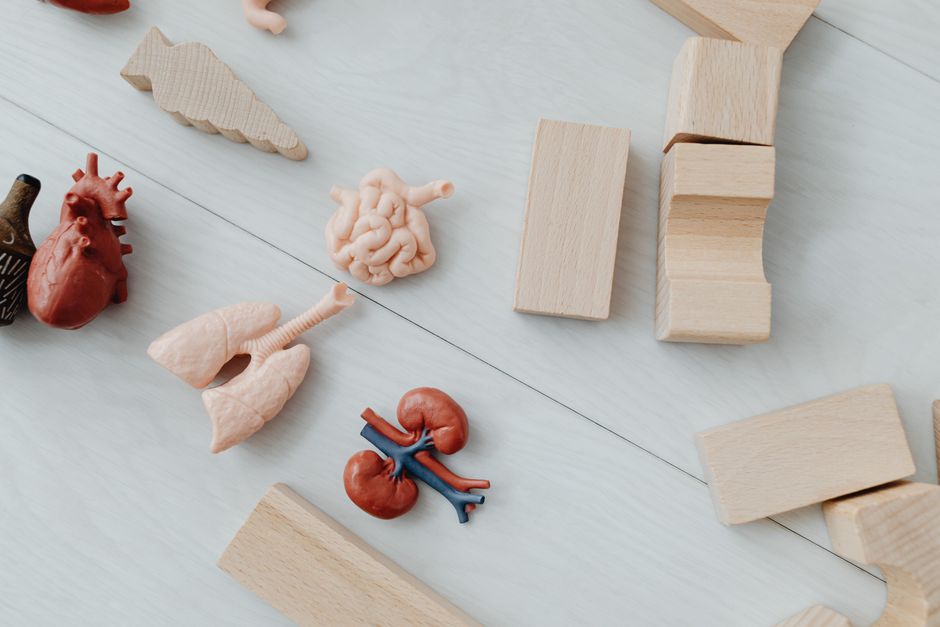
The kidney does not make red blood cells. That job belongs to your bone marrow. The kidney makes a hormone called erythropoietin that signals the marrow to produce them, but the organ itself does not manufacture red blood cells. This is one of the most common points of confusion about kidney function, and it matters because kidney disease can cause anemia without the marrow being at fault.
Your kidneys are two bean-shaped organs, each about the size of a fist, sitting near the middle of your back below the rib cage. They filter roughly half a cup of blood every minute. They also balance water, salts, and acids, release hormones, and help control blood pressure. Knowing what the kidney does not do is just as useful as knowing what it does.
Which Is Not The Function Of Kidney?
The kidney does not produce red blood cells, digest food, or pump blood. Those tasks belong to the bone marrow, the digestive tract, and the heart. This question usually comes up on health quizzes and biology tests, and the answer hinges on a simple distinction: the kidney sends a signal for red blood cell production, but it does not carry out the production itself.
Here is where people slip up. The kidney does make a hormone called erythropoietin, often shortened to EPO. When oxygen levels in your blood drop, the kidney releases EPO into the bloodstream. EPO travels to the bone marrow and tells it to make more red blood cells. So the kidney is the manager giving the order, not the factory doing the work.
This distinction has real clinical meaning. In chronic kidney disease, damaged kidneys often produce less EPO. The result is anemia, a shortage of red blood cells. The marrow is usually capable of making red blood cells, but it is not getting the signal. This is why some people with kidney disease need treatments that replace or stimulate EPO. The problem starts in the kidney, not the marrow.
Other functions that are sometimes wrongly attributed to the kidney:
- Producing red blood cells (bone marrow does this)
- Breaking down food into nutrients (the digestive system does this)
- Circulating blood through the body (the heart and blood vessels do this)
- Storing bile (the gallbladder does this)
- Producing insulin (the pancreas does this)
If you see a multiple-choice question listing kidney functions, the wrong answer is usually the one describing a job performed by a different organ. The kidney’s real work is filtering, balancing, and signaling.
What Are The Actual Functions Of The Kidney?
The kidney filters blood, removes waste, balances fluids and electrolytes, and releases several hormones. These jobs happen continuously and mostly without you noticing. Understanding them helps you see why kidney disease causes the symptoms it does.
Filtration and waste removal
Each kidney contains about a million tiny filtering units called nephrons. Blood flows into a cluster of capillaries called a glomerulus, where waste products and excess water pass into a tubule. The tubule reabsorbs what your body needs and lets the rest leave as urine. Waste products removed this way include urea and creatinine, both of which build up in the blood when kidneys fail.
Fluid and electrolyte balance
The kidney decides how much water to keep and how much to send out. It also fine-tunes levels of sodium, potassium, calcium, phosphorus, and magnesium. This balance keeps your heart rhythm steady, your muscles working, and your nerves firing. When kidneys lose this ability, electrolyte levels can swing dangerously.
Acid-base balance
Your body needs to keep blood pH within a narrow range. The kidney removes excess acid and reabsorbs bicarbonate, a base that buffers acid. In kidney disease, acid can build up, a condition called metabolic acidosis.
Blood pressure regulation
The kidney releases an enzyme called renin when it senses low blood pressure or low sodium. Renin sets off a chain of events that narrows blood vessels and prompts the body to hold onto sodium and water. This raises blood pressure. The kidney also adjusts how much sodium and water leave the body, which affects blood volume and pressure directly. Kidney disease and high blood pressure are tightly linked in both directions.
Hormone production
The kidney makes several hormones and hormone-like substances:
- Erythropoietin (EPO) signals the bone marrow to make red blood cells
- Renin helps regulate blood pressure
- Calcitriol is the active form of vitamin D, which helps the body absorb calcium
The kidney also clears many hormones and drugs from the blood. When kidney function drops, medications can build up to harmful levels, which is why doctors adjust doses for people with kidney disease.
Why Do People Confuse Kidney Functions With Other Organs?
People confuse kidney functions because the kidney works through messengers. It influences red blood cells, blood pressure, and bone health without doing those jobs directly. That indirect role is easy to blur into direct responsibility.
The EPO example is the clearest. Because the kidney controls red blood cell production through a hormone, it is tempting to say the kidney makes red blood cells. It does not. The same logic applies to vitamin D. The kidney does not make vitamin D. Your skin makes a precursor when exposed to sunlight, and your liver and kidney convert it into the active form. The kidney is one step in a chain, not the source.
Another source of confusion is that kidney problems cause symptoms in other systems. Anemia, high blood pressure, and bone weakness all show up in kidney disease, so people assume the kidney is responsible for those systems all the time. In reality, the kidney is one contributor among several.
This kind of thinking has a name in reasoning research: the confusion of correlation with causation, or of control with production. A traffic controller directs cars but does not build them. The kidney directs several body processes but does not perform all of them.
What Happens When The Kidney Stops Working?
When kidney function declines, waste products build up, fluid accumulates, and hormone production falls. The symptoms that follow reflect the kidney’s real jobs, not the ones people mistakenly assign to it.
Early kidney disease often causes no symptoms at all. This is why it can go unnoticed for years. As function drops, people may notice fatigue, swelling in the legs and ankles, shortness of breath, and changes in urination. These symptoms are not specific to kidney disease, which is another reason it can be missed.
Anemia is a common complication. Because the kidney makes less EPO, red blood cell production falls. The result is tiredness, weakness, and pale skin. This is a direct consequence of the kidney’s signaling role, not a sign that the marrow has failed.
Blood pressure often rises as kidney function falls. The kidney’s ability to regulate sodium and water weakens, and the renin system can become overactive. High blood pressure then damages the kidneys further, creating a loop that is hard to break without treatment.
Bone problems also develop. The kidney converts vitamin D into its active form, and it helps balance phosphorus and calcium. When this system breaks down, bones can weaken over time. This is sometimes called renal bone disease, and it develops slowly.
People with advanced kidney disease may need dialysis or a kidney transplant. Dialysis does some of the kidney’s filtering work but does not replace its hormone production. This is why people on dialysis often still need treatment for anemia and bone health.
How Can You Tell If A Function Belongs To The Kidney?
You can tell by asking whether the kidney performs the job itself or simply influences it. If the job involves filtering blood, balancing fluids, or releasing a hormone that acts elsewhere, it belongs to the kidney. If the job involves making cells, digesting food, or pumping blood, it belongs to another organ.
A useful test: does the kidney have the physical machinery to do this? The kidney has filters, tubules, and hormone-producing cells. It does not have the stem cells that make blood, the enzymes that digest food, or the muscle that pumps blood. That physical mismatch is a reliable clue.
Another approach is to look at what happens when kidneys fail. If a function disappears when kidneys fail, the kidney likely performs it. If it continues but at a reduced level, the kidney probably influences it rather than performs it. Red blood cell production continues in kidney failure, but at a lower rate because the signal is weaker. That pattern points to influence, not production.
For health quizzes, the wrong answer is usually the one describing a job done by a different organ system. For real-life health decisions, the distinction matters less than knowing your kidney function. A simple blood test for creatinine and a urine test for protein can tell you a lot about how well your kidneys are working. If you have diabetes, high blood pressure, or a family history of kidney disease, those tests are worth discussing with your doctor.
Frequently Asked Questions
Which is not a function of the kidney?
Producing red blood cells is not a function of the kidney. The bone marrow makes red blood cells, while the kidney produces erythropoietin, a hormone that signals the marrow to do so.
Does the kidney make red blood cells?
No, the kidney does not make red blood cells. It releases erythropoietin, which prompts the bone marrow to produce them, so kidney damage can cause anemia by reducing that signal.
What are the main functions of the kidney?
The kidneys filter waste from blood, balance fluids and electrolytes, regulate acid-base balance, help control blood pressure, and produce hormones including erythropoietin and active vitamin D.
Can you live with one kidney?
Yes, most people can live a normal life with one kidney because the remaining kidney usually adapts to handle the workload. Regular monitoring of blood pressure and kidney function is still recommended.
