
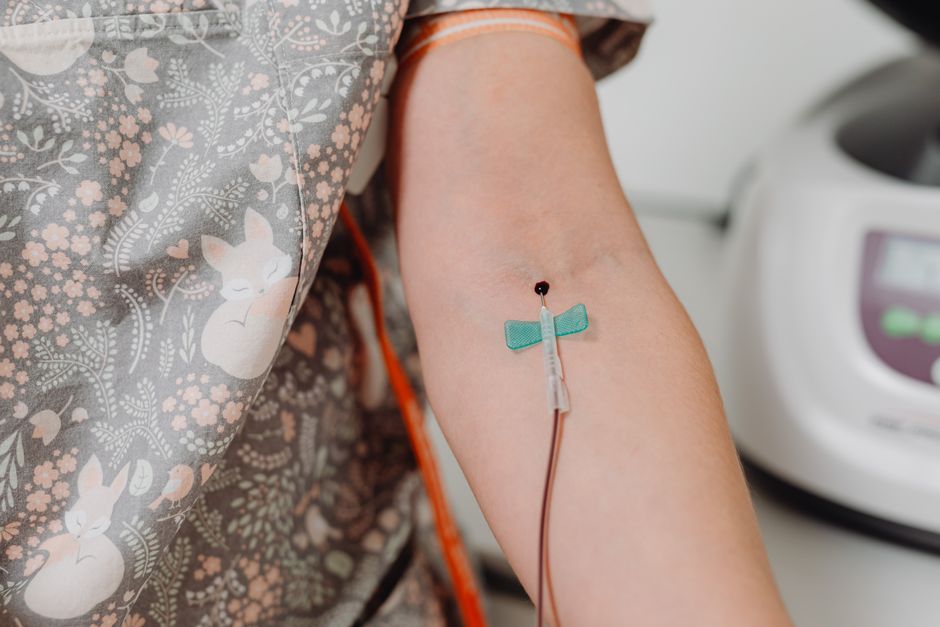
Blood type O is the most common blood group worldwide. In the United States, O positive is the single most frequent blood type, found in about 38% of people. Globally, roughly 45% of people have type O blood, with O positive being the most common Rh-positive type.
What Determines Your Blood Type?
Your blood type is inherited from your parents. It is based on two systems: the ABO system and the Rh system.
The ABO system has four main groups: A, B, AB, and O. These are determined by the presence or absence of certain antigens on the surface of your red blood cells. Type A has the A antigen, type B has the B antigen, type AB has both, and type O has neither.
The Rh system adds a plus or minus sign. If you have the Rh factor (a protein), you are Rh positive. If you do not, you are Rh negative.
This combination gives eight possible blood types: A+, A-, B+, B-, AB+, AB-, O+, and O-.
How Common Are Different Blood Types?
Blood type frequencies vary by region and ethnicity. But some general patterns are well established.
In the United States, the American Red Cross provides these estimates:
- O positive: 38%
- A positive: 28%
- B positive: 9%
- AB positive: 3%
- O negative: 7%
- A negative: 5%
- B negative: 2%
- AB negative: 1%
O positive is clearly the most common single type. When you combine positive and negative, type O makes up about 45% of the U.S. population.
Globally, type O also leads. Research consistently shows that type O blood appears in about 45% of people worldwide. Type A is second at roughly 40% in some regions, but in others it is lower. Type B accounts for about 10% globally, and AB is the rarest at around 4%.
Which Is Most Common Blood Group by Region?
The answer changes depending on where you are. In Europe, type A is actually more common in some countries. For example, in Norway and Sweden, around 47% of people have type A blood. Type O is still common but not the majority.
In East Asia, type B is more prevalent than in other parts of the world. In parts of China and India, type B can reach 20–30%. Type O remains common but may not be the top type in every area.
In Central and South America, type O is extremely common. In some indigenous populations, it can be over 90%. This is thought to be related to ancient migration patterns.
If the question is “Which Is Most Common Blood Group” overall, the answer remains O. But if you are asking about a specific region or ethnic group, the answer can be different. Always consider the population being discussed.





Why Does Blood Type Matter?
Blood type is critical for blood transfusions. If you receive blood that does not match your type, your immune system may attack it. This can cause a severe, life-threatening reaction.
Type O negative blood is the universal donor. It can be given to anyone in an emergency because it has no A, B, or Rh antigens. This makes it the most valuable blood type for hospitals. Only about 7% of people have it, so supplies are often low.
Type AB positive is the universal recipient. People with AB+ blood can receive any type of blood. This is because their immune system does not make antibodies against A or B antigens.
Blood type may also have some connection to health risks. Some studies have found that type O people have a lower risk of developing blood clots but a higher risk of stomach ulcers caused by H. pylori. Type A has been linked to a slightly higher risk of certain cancers and heart disease. However, these associations are not strong enough to change medical recommendations. The evidence is mixed, and lifestyle factors are far more important.
Blood type is also used for paternity testing and forensic science, though DNA testing is now much more common.
Can Your Blood Type Change?
Your blood type is fixed from birth. It is determined by your genes and does not change naturally over time.
There are very rare exceptions. A bone marrow transplant can sometimes change a person’s blood type if the donor has a different type. This is because the transplanted stem cells produce new blood cells with the donor’s antigens.
Certain illnesses, such as some cancers like leukemia, can temporarily alter the amount of antigen present on red blood cells. But the underlying genetic type does not change.
Claims that diet, stress, or lifestyle can change your blood type are false. No clinical evidence supports this. If someone tells you their blood type changed naturally, that is either a lab error or a misunderstanding.
What About the Rh Factor?
The Rh factor is the second major system. Being Rh positive is far more common than Rh negative. About 85% of people in the U.S. are Rh positive.
Rh negative blood is less common but important. It is more frequent in people of European descent. About 15% of Caucasians are Rh negative. In African and Asian populations, the rate is much lower, often below 5%.
The Rh factor matters most during pregnancy. If an Rh-negative mother carries an Rh-positive baby, her immune system can produce antibodies that attack the baby’s red blood cells. This is called Rh incompatibility. It can cause hemolytic disease of the newborn. Routine screening and an injection called RhoGAM (Rh immunoglobulin) prevent this in nearly all cases.
Blood banks specifically track Rh-negative units because they are less available but often needed for trauma patients and pregnant women.
Frequently Asked Questions
Is O positive the most common blood type?
Yes, in the United States and globally, O positive is the most common single blood type. About 38% of Americans and roughly 37% of people worldwide have O positive blood.
What is the rarest blood type?
AB negative is the rarest of the eight common blood types, found in about 1% of the U.S. population. However, some very rare blood types exist beyond the ABO and Rh systems that affect only a few thousand people worldwide.
Can two O parents have a child with A blood?
No. If both parents are type O, they can only pass on the O gene. Their child will always be type O. To have type A blood, the child must inherit an A gene from at least one parent.
Why is O negative called the universal donor?
O negative blood has no A, B, or Rh antigens on the red blood cells. This means the recipient’s immune system will not recognize it as foreign. It can be given safely to almost anyone in an emergency.
