
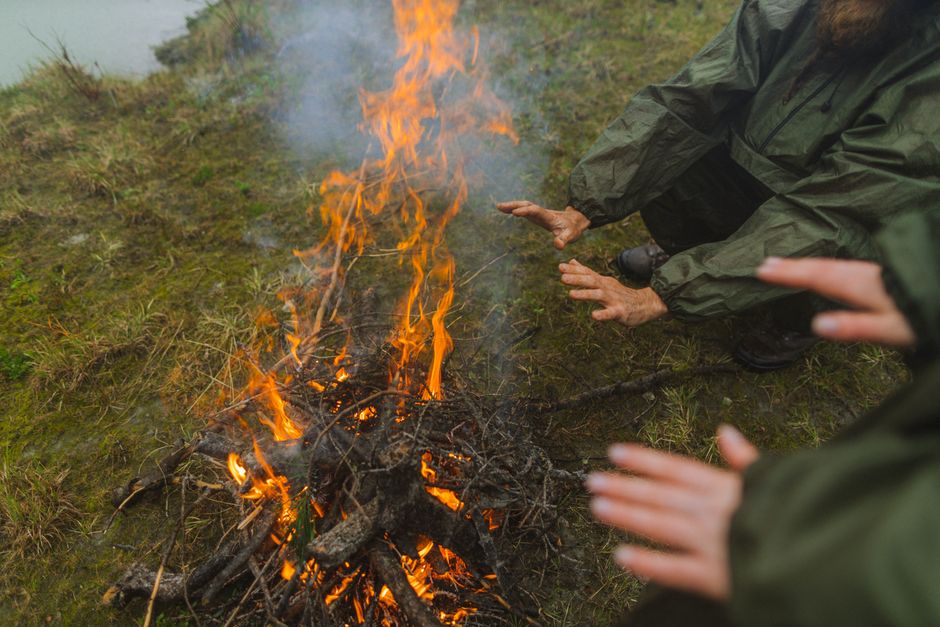
Fire use is one of the oldest questions in human origins research, and the answer is not a single species. The evidence points to several hominins, with the strongest early case resting on Homo erectus in Africa roughly 1.5 million years ago. Controlled use of fire — not just opportunistic burning — is harder to prove, and scientists still debate exactly when and where it became routine.
This guide separates what the archaeological record shows from what remains uncertain. It covers the earliest claimed sites, the difference between fire use and fire making, and why the question is genuinely difficult to answer with confidence.
Which Hominins Discovered How To Use Fire?
The strongest early evidence is associated with Homo erectus, a species that lived in Africa and later spread into Eurasia. At a site called Wonderwerk Cave in South Africa, researchers reported burned plant material and bone fragments alongside stone tools in layers dated to roughly 1.5 million years ago. That finding, published in the journal Proceedings of the National Academy of Sciences, is one of the most cited early cases.
Other hominins enter the picture later. Homo neanderthalensis used fire routinely across Europe and western Asia, and the evidence there is much stronger than for the earliest African sites. Homo sapiens used fire in a controlled way well before written history, and later practices such as hearth construction, heat treatment of stone, and cooking are widely documented.
One clarification matters here. “Discovering how to use fire” is not the same as “discovering how to make fire.” Using naturally occurring fire — from lightning strikes or volcanic activity — is a different skill from deliberately producing a spark or friction flame. The earliest evidence generally supports use of natural fire. Deliberate fire-making appears much later in the record, and pinning down exactly when is an active research problem.
What Is the Earliest Evidence of Fire Use?
The earliest claimed evidence is fragmentary and heavily debated. Several African sites have produced what look like burned sediments or heated stone, but natural processes can also produce similar traces. Wildfires, lightning strikes, and even mineral oxidation can leave marks that mimic human fire use.
Wonderwerk Cave stands out because the burned material was found deep inside a cave, far from where a natural wildfire would easily reach. That context strengthens the case for deliberate use. Even so, some researchers argue that the evidence at any single early site is not conclusive on its own.
In Eurasia, the picture is clearer at later dates. Sites in Israel, Spain, and other parts of Europe have yielded hearths and burned material associated with hominin occupation. The evidence becomes much more abundant and much less ambiguous after roughly 400,000 years ago.
This pattern — sparse and contested early, abundant and clear later — is exactly what you would expect if fire use spread gradually rather than being invented once and immediately adopted everywhere.
How Do Scientists Tell Fire Use From Natural Burning?
Distinguishing deliberate fire from natural burning is the central technical challenge in this field. Researchers look for several lines of evidence together rather than relying on a single sign.
- Location: Burned material deep inside a cave is harder to explain by natural wildfire than burned material at an open-air site.
- Association with tools: Burned material found alongside stone tools in the same layer suggests hominin activity.
- Alteration of stone: Stone that has been heated changes in measurable ways, which can be detected in the lab.
- Structure: A hearth has a defined shape and a concentrated area of burning, unlike scattered natural charring.
- Repeated use: Multiple burned layers stacked over time suggest habitual behavior rather than a one-off event.
No single one of these is decisive. The case for fire use at a site becomes convincing when several lines agree. This is why the same site can be interpreted differently by different research teams, and why the debate has lasted so long.
Did Homo erectus Use Fire for Cooking?
This is one of the most interesting and least settled questions in the field. The idea that cooking drove major changes in human evolution — smaller teeth, shorter gut, more energy available to the brain — is widely discussed. It is also not fully proven.
Some researchers argue that evidence of heated food remains at early sites supports cooking. Others point out that the earliest strong evidence for controlled fire is sparse, and that evidence specifically for cooking is sparser still. Heat-altered bone and plant remains can be produced by natural fires as well as by deliberate cooking.
The honest position is that cooking probably became important at some point, but the timing is uncertain. Claims that Homo erectus routinely cooked food are plausible but not established beyond dispute. The evidence is suggestive, not conclusive.
This is a case where biological reasoning and archaeological evidence do not fully line up yet. The anatomy of later hominins is consistent with a diet that included cooked food. The archaeological record does not yet pin down when that began.
Why Did Fire Use Matter for Human Evolution?
Fire changed what hominins could do and where they could live. These effects are well established in principle, even where the exact timing is debated.
Fire provided warmth, which allowed occupation of colder environments. It offered protection from predators at night. It made possible the heat treatment of stone, which improves the quality of raw material for toolmaking — a technique documented at later sites. And it likely played a role in food preparation, though as noted, the timing of cooking is uncertain.
Fire also changed social life. A hearth is a gathering point. Extended daylight hours around a fire may have supported more complex communication and social interaction. These ideas are reasonable but hard to test directly from the archaeological record.
What is clear is that fire use is associated with the expansion of hominins out of Africa and into cooler regions. Whether fire enabled that expansion or followed it is a question researchers continue to work on.
When Did Fire Making Begin?
Deliberate fire making — producing a flame on demand — appears later than fire use and is harder to date. The techniques involved, such as striking stone against a mineral like pyrite or using friction, leave little direct trace in the archaeological record.
Some researchers argue that if hominins were occupying cold environments and using fire regularly, they must have had some way to make fire rather than waiting for a lightning strike. That reasoning is logical, but logical inference is not the same as direct evidence. The earliest clear evidence for fire-making tools is much later than the earliest evidence for fire use.
This gap between using fire and making fire is a genuine puzzle. It is possible that early hominins maintained fire from natural sources, or that fire-making techniques existed but left no durable trace. At present, no consensus exists on exactly when deliberate fire making began.
What the Evidence Does and Does Not Show
The evidence supports several conclusions with reasonable confidence. Fire was used by multiple hominin species. The earliest strong claims involve Homo erectus in Africa around 1.5 million years ago. Neanderthals and Homo sapiens used fire routinely. The evidence for controlled fire grows much stronger after roughly 400,000 years ago.
The evidence does not settle several important questions. Exactly when hominins first controlled fire is disputed. When cooking began is uncertain. When deliberate fire making started is not established. Whether Homo erectus routinely cooked food is plausible but unproven.
Anyone who tells you these questions are fully resolved is overstating the science. The field is active, new sites and new dating methods keep changing the picture, and reasonable researchers disagree. That is not a weakness in the science — it is how a genuinely hard question looks while it is still being worked out.
Frequently Asked Questions
Which hominin species first used fire?
The strongest early evidence is associated with Homo erectus, with a key site in South Africa dated to roughly 1.5 million years ago. The evidence is debated, and some researchers argue for earlier or less certain claims.
Did Neanderthals use fire?
Yes. Neanderthals used fire routinely across Europe and western Asia, and the archaeological evidence for their fire use is generally stronger and clearer than for the earliest African sites.
Did early humans use fire before they could make it?
The evidence suggests they likely used naturally occurring fire before they could produce it on demand. The timing of deliberate fire making is uncertain because the techniques leave little direct archaeological trace.
Is there proof that Homo erectus cooked food?
No, not conclusive proof. Heat-altered food remains have been found at early sites, but natural fires can produce similar traces, so the case for routine cooking by Homo erectus remains unproven.
