
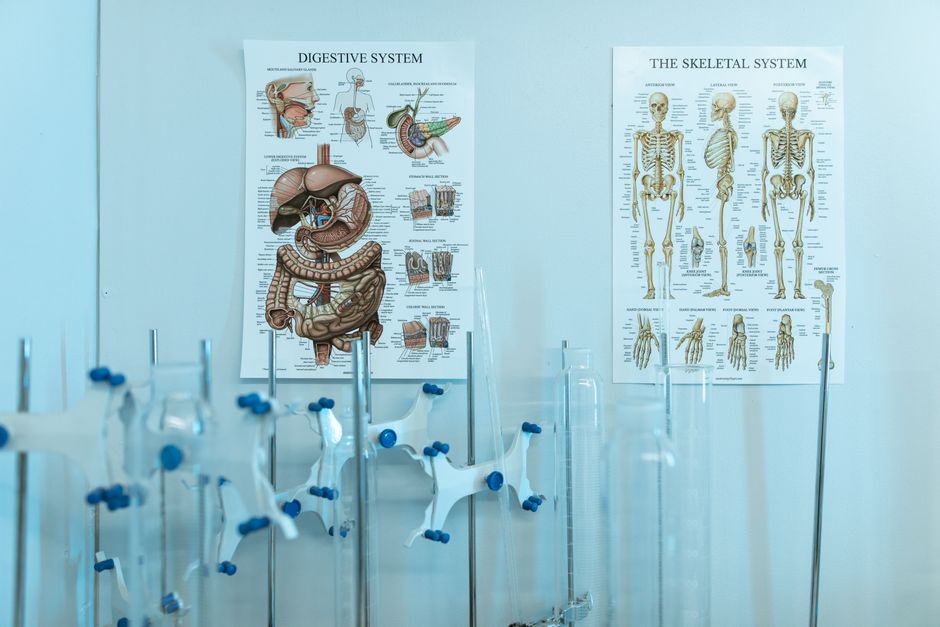
When you eat a meal containing fat, your body needs a way to break that fat into pieces small enough to absorb. The exocrine structure involved in the digestion of fat is the pancreas. It releases pancreatic lipase and other fat-digesting enzymes into the small intestine, where most fat breakdown actually happens. The liver and gallbladder assist by supplying bile, but the pancreas is the organ that produces the enzymes that chemically split fat molecules apart.
What Does “Exocrine” Mean in the Digestive System?
Exocrine glands release their products through ducts onto a surface or into a cavity. That is the key difference from endocrine glands, which release hormones directly into the bloodstream.
The pancreas is unusual because it works both ways. Its endocrine portion makes insulin and glucagon and sends them into the blood. Its exocrine portion makes digestive enzymes and sends them through a duct into the small intestine.
This is why the pancreas counts as the exocrine structure for fat digestion. The enzymes it makes do not travel through your blood. They travel through the pancreatic duct and empty into the duodenum, the first section of the small intestine, right where digested food arrives from the stomach.
Other exocrine glands in the digestive tract include the salivary glands and the glands in the stomach lining. None of them play a major role in breaking down fat. Salivary glands produce amylase for starch and lingual lipase in small amounts, but fat digestion depends mostly on what the pancreas delivers downstream.
How Does the Pancreas Digest Fat Step by Step?
Fat digestion is a team effort, but the pancreas provides the actual enzymes that do the chemical work.
The process unfolds in a clear sequence:
- Fat enters the mouth and stomach largely intact. Very little chemical breakdown happens there.
- In the stomach, mechanical churning mixes fat with gastric juices and breaks it into smaller droplets.
- When fat reaches the duodenum, the gallbladder releases bile. Bile is not an enzyme. It acts like a detergent, breaking large fat globules into tiny droplets in a process called emulsification.
- The pancreas releases pancreatic lipase into the duodenum. Lipase can only work on the surface of fat droplets, so emulsification gives it far more surface area to act on.
- Pancreatic lipase splits each triglyceride into two free fatty acids and one monoglyceride.
- These smaller molecules are absorbed through the wall of the small intestine.
The pancreas also makes colipase, a small protein that helps lipase attach to fat droplets coated with bile salts. Without colipase, bile salts can actually get in lipase’s way. The pancreas also produces phospholipase and cholesterol esterase, which handle other types of dietary fat.
One detail worth knowing: the pancreas releases its enzymes in inactive forms so they do not digest the pancreas itself. An enzyme called trypsin activates the others once they reach the intestine. This protective step matters because premature activation inside the pancreas is part of what happens in pancreatitis.
What Is the Role of Bile If the Pancreas Makes the Enzymes?
Bile is made by the liver and stored in the gallbladder, and it is essential for fat digestion. But bile is not an enzyme and does not chemically break fat down.
Think of it this way. Pancreatic lipase is the scissors that cut fat apart. Bile is what separates the fat into small enough pieces for the scissors to reach. Both jobs are necessary, but they are different jobs.
Bile does two things. First, bile acids emulsify fat, turning one large droplet into many tiny ones. This multiplies the surface area available to lipase. Second, bile acids form micelles, tiny transport packages that carry the breakdown products of fat to the intestinal wall so they can be absorbed.
If the gallbladder is removed or bile flow is blocked, fat digestion usually still happens, but it can become less efficient. Many people notice no difference at all. Others may have looser stools after fatty meals. The pancreas can often compensate by continuing to supply lipase, though the lack of bile’s emulsifying effect can reduce how completely fat is absorbed.




Which Enzymes Break Down Fat?
Several enzymes from the pancreas and small intestine work on fat, but pancreatic lipase does most of the heavy lifting.
- Pancreatic lipase — breaks triglycerides into fatty acids and monoglycerides. This is the main fat-digesting enzyme in adults.
- Colipase — helps lipase bind to fat droplets in the presence of bile salts.
- Phospholipase A2 — splits phospholipids, a type of fat found in cell membranes.
- Cholesterol esterase — breaks down cholesterol esters from food.
- Lingual and gastric lipase — made in the mouth and stomach. These play a minor role in adults but matter more in newborns, whose pancreatic function is not fully mature.
Lingual lipase is an interesting case. It was long taught as important in infants, and some research supports that. But its contribution in adults is small compared to pancreatic lipase. Most fat digestion in adults depends on the pancreas.
What Happens When the Pancreas Cannot Digest Fat Properly?
When the exocrine pancreas does not make enough enzymes, fat is not fully broken down or absorbed. This condition is called exocrine pancreatic insufficiency, or EPI.
The classic sign is steatorrhea — stools that are pale, greasy, bulky, and unusually foul-smelling. They may float because of trapped fat. Weight loss and deficiencies in fat-soluble vitamins A, D, E, and K can follow, since those vitamins need fat to be absorbed.
EPI is most often linked to chronic pancreatitis, cystic fibrosis, pancreatic cancer, or surgery on the pancreas or stomach. It can also occur in celiac disease and other conditions that affect digestion.
Diagnosis usually involves stool tests that measure fat or pancreatic enzyme levels, and sometimes blood tests or imaging. Treatment typically involves pancreatic enzyme replacement therapy taken with meals, along with managing the underlying condition. Some clinicians also recommend acid-reducing medication, because stomach acid can break down replacement enzymes before they reach the intestine. This is common practice, though how much it helps varies by patient.
If you notice persistent greasy stools, unexplained weight loss, or oily droplets in the toilet after fatty meals, that is worth a medical evaluation. It does not confirm EPI on its own — several conditions can cause similar symptoms — but it is a pattern doctors take seriously.
Does the Stomach or Small Intestine Digest Fat Too?
The stomach and small intestine contribute to fat digestion, but neither is the main source of fat-digesting enzymes.
The stomach handles mechanical breakdown and produces gastric lipase. That enzyme does act on some fat, particularly short- and medium-chain triglycerides like those in butter and coconut oil. But its overall contribution in adults is modest.
The small intestine is where absorption happens, not where most enzymes are made. Its lining does produce some enzymes, but for fat, the small intestine mostly relies on what the pancreas sends it. The intestinal cells also reassemble absorbed fats into new molecules and package them for transport through the lymphatic system and into the blood.
So the division of labor looks like this. The stomach churns. The liver makes bile. The gallbladder stores and releases bile. The small intestine absorbs. The pancreas supplies the enzymes that actually break fat apart.
Why This Matters for Everyday Health
Understanding which structure does what explains a lot of everyday experiences.
People who have had their gallbladder removed often ask why they still digest fat at all. The answer is that the pancreas is still making lipase. Bile’s emulsifying help is reduced, but the enzymes are still there.
People with chronic pancreatitis may be told to limit fat, not because fat is inherently harmful, but because their pancreas cannot produce enough lipase to handle a large fat load at once. Enzyme replacement changes that picture, which is why it is taken with meals rather than at random times.
And the popularity of digestive enzyme supplements deserves a plain answer. Some products contain lipase. Whether they meaningfully improve fat digestion in people with a healthy pancreas is not established by strong clinical evidence. For diagnosed EPI, prescription pancreatic enzyme replacement is the standard approach, and over-the-counter enzyme supplements are not a substitute.
Frequently Asked Questions
Which exocrine structure is involved in the digestion of fat?
The pancreas is the exocrine structure responsible for producing the enzymes that digest fat, mainly pancreatic lipase. The liver and gallbladder support the process by supplying bile, but the pancreas makes the fat-splitting enzymes.
Is the pancreas an exocrine gland?
Yes, the pancreas has both exocrine and endocrine functions. Its exocrine portion releases digestive enzymes through a duct into the small intestine, while its endocrine portion releases hormones like insulin into the blood.
What enzyme digests fat in the small intestine?
Pancreatic lipase is the main enzyme that breaks down fat in the small intestine, splitting triglycerides into fatty acids and monoglycerides. Colipase, also made by the pancreas, helps lipase work in the presence of bile salts.
Can you digest fat without a gallbladder?
Yes. The pancreas still produces lipase, so most fat digestion continues. Some people have looser stools or mild digestive changes after fatty meals, but many notice no difference at all.
