
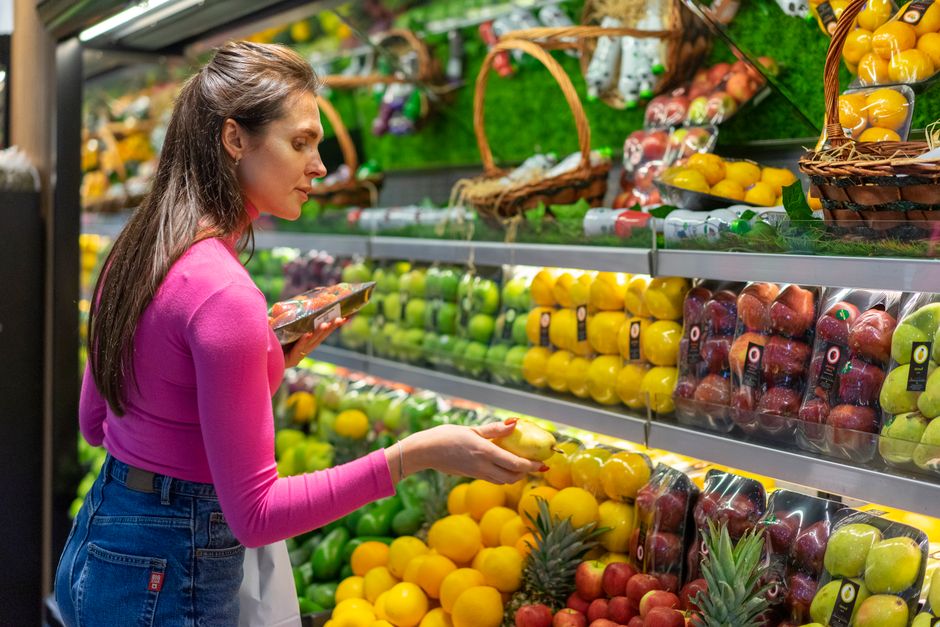
Most of the food in a US grocery store is not grown on a single farm and shipped straight to the shelf. It moves through a supply chain with several hands, and often several countries, before it reaches your cart. A tomato might be grown in Mexico, packed in a facility that handles thousands of tons a day, trucked across the border, and sold under a store’s own label. The same store might also be selling tomatoes from a farm two hours away. Both are normal.
The scale is hard to picture. The US food system produces and imports an enormous variety of products year-round, and the average item in a supermarket has traveled through a distributor, a processor, or both. Understanding that chain explains why prices shift after a drought in another country, why some produce is seasonal and some is not, and why a label like “product of USA” can mean less than you think.
Where Your Grocery Stores Food Really Comes From
It comes from a mix of domestic farms, imports, and processed-food manufacturing, routed through distributors and warehouses. No single answer covers a whole store. The produce aisle and the center aisles have very different supply chains.
Fresh produce is the most visible part. The US grows a large share of its own fruits and vegetables, but imports fill gaps, especially in winter. Mexico is a major source of fresh vegetables, and countries in South America supply fruit during the US off-season. The US Department of Agriculture tracks this trade closely. When you buy berries in January, they almost certainly came from outside the country.
Center-aisle items like cereal, canned goods, and snacks are usually made by large food manufacturers from agricultural ingredients sourced globally. A single product can contain wheat from one country, sugar from another, and flavorings from a third. The package tells you where the product was made, not where each ingredient was grown.
Meat, dairy, and eggs are more domestic on average, but not exclusively. The US produces most of its own beef, pork, poultry, and milk, and also imports and exports large volumes. Seafood is the outlier: a large share of seafood sold in the US is imported, and much of it is farmed rather than wild-caught.
How Does Food Get From a Farm to the Grocery Shelf?
It usually passes through at least one middle step before it reaches the store. Very few farms sell directly to supermarkets.
For fresh produce, the path often looks like this:
- Farm: The crop is grown and harvested.
- Packer or shipper: Produce is cleaned, sorted, packed, and cooled. Large operations may handle millions of pounds.
- Distributor or wholesaler: A regional company buys from many farms and sells to many stores, balancing supply and demand.
- Retail distribution center: The chain’s own warehouse receives truckloads and sends mixed loads to individual stores.
- Store: Staff receive, display, and sell the product.
This structure exists for a reason. A single store needs hundreds of products from dozens of suppliers every week. No store can coordinate directly with every farm. Distributors solve that problem by aggregating supply.
Processed foods add more steps: milling, cooking, canning, freezing, and packaging, often at separate facilities. Each step is regulated and inspected, and each adds time and cost to the final price.
How Much of US Food Is Imported?
The US imports a meaningful and growing share of its food, but it also produces most of what it eats. The exact split varies by food category, and it changes from year to year.
Some categories are heavily import-dependent. Seafood is the clearest example, with a large majority of what Americans eat coming from abroad. Fresh vegetables and fruit are also significantly imported, especially out of season. Others, like corn, soybeans, and much of the meat and dairy supply, are overwhelmingly domestic.
Two things are true at once. The US is a major food exporter and a major food importer. A country does not import food only when it runs short. It imports because other countries can grow certain crops more cheaply, or because consumers want variety and year-round availability. That is trade, not shortage.
A non-obvious point: “imported” does not automatically mean lower safety or quality. Imported food must meet US requirements, and imported produce is subject to federal inspection and border screening, though the volume is enormous and sampling is not universal. The origin of a food is not by itself a reliable signal of how safe it is.
What Does “Product of USA” Actually Mean?
It means less than most shoppers assume. The label rules for country of origin are narrow and have been the subject of debate and regulatory change.
For many foods, a “Product of USA” label can apply when the food was processed or packaged in the US, even if the ingredients were grown elsewhere. Meat labeling in particular has been contested, and the rules have shifted over time. The safest way to read these labels is with caution: they tell you where a product was made or processed, not necessarily where every ingredient was grown.
Country-of-origin labeling is mandatory for some foods and not others. Fresh fruits and vegetables, fish, and certain meats typically carry origin information. Many processed foods do not. If origin matters to you, the label may not give you the full picture, and the store may not either.
How Do Seasonal and Year-Round Produce Differ?
Seasonal produce is grown when and where it naturally grows. Year-round produce is either grown in a climate that allows it, stored, or imported.
When a fruit or vegetable is out of season locally, the store sources it from somewhere it is in season. That is why strawberries in February usually come from a different region or country than strawberries in June. Both are real strawberries. The difference is where and when they grew.
Storage matters too. Apples, potatoes, onions, and winter squash can be held for months under controlled temperature and humidity, so they appear fresh long after harvest. Some produce is also grown in greenhouses, which extends the season but changes cost and energy use.
Seasonality affects price more than most shoppers realize. When a crop is abundant and close to home, it is usually cheaper. When it has to travel far, the cost of shipping and cooling is built into the price. Buying in season is one of the few grocery habits that reliably saves money without any trade-off.
Why Does Food Travel So Far?
Food travels because it is often cheaper to grow it somewhere else and move it than to grow it nearby year-round. Climate, labor costs, land, and scale all play a role.
Modern shipping and refrigeration made long-distance food practical. A refrigerated container can move produce across an ocean and keep it cold the entire way. That infrastructure is why a US shopper can buy fresh fruit in winter at a reasonable price.
There is a trade-off. Long supply chains use energy and can be fragile. A port disruption, a drought in a growing region, or a spike in fuel prices can ripple through the system and show up as higher prices or empty shelves. The COVID-19 pandemic made this visible when disruptions hit both processing plants and shipping.
Some shoppers assume local food is always better for the environment. The evidence is more mixed than the slogan suggests. Transportation is only one part of a food’s environmental footprint, and production methods can matter as much or more. Local food has real benefits for freshness and for supporting regional farms, but “local” and “lower impact” are not automatically the same thing.
How Can You Tell Where Your Food Comes From?
You can often find the origin, but not always, and not always completely. The label is the first place to look.
Fresh produce usually carries a sticker or sign with the country of origin. Packaged foods list the manufacturer’s location, which tells you where it was made, not where the ingredients were grown. Seafood should be labeled with origin and whether it was farmed or wild-caught. Meat labeling varies by type and by current rules.
If a label does not answer your question, the store may. Many grocers can tell you the region a produce item came from, and some post it on signs. Farmers markets and community-supported agriculture programs connect you directly to growers, which removes most of the guesswork. For shoppers who want certainty, buying directly from a farm is the most reliable route.
What you cannot reliably do is assume. A low price does not tell you the origin. A “fresh” label does not tell you the distance. And a store brand does not tell you the farm. The supply chain is designed to be efficient, not transparent, and reading labels carefully is the practical way to close some of that gap.
Frequently Asked Questions
What percentage of US food is imported?
It varies widely by food type, with seafood heavily imported and staples like corn and most meat largely domestic. There is no single figure that applies to a whole grocery store.
Does “Product of USA” mean the food was grown in the US?
Not necessarily. The label can apply to food processed or packaged in the US even when ingredients were grown elsewhere.
Is imported produce less safe than domestic produce?
No, origin alone does not determine safety. Imported food must meet US requirements, though border inspection relies heavily on sampling rather than checking every shipment.
Why is some produce available all year?
Because stores source it from regions where it is in season, from storage, or from greenhouses. Year-round availability reflects supply chains, not year-round local growing.
