
You can find a local blood drive by searching the website of a major blood collector, such as the American Red Cross, America’s Blood Centers, or your local hospital blood bank. Most centers let you enter a ZIP code and see upcoming drives within a set radius. You can also call a collection center directly, check community calendars, or watch for mobile bloodmobiles at workplaces, schools, and places of worship.
Finding a drive is usually the easy part. Deciding whether you are eligible, and knowing what to expect, is where most people get stuck. This guide covers both — where to look, what the requirements actually are, and what happens once you sit down in the chair.
Where To Donate Blood Find A Local Drive Near You
The most reliable route is to start with the organization that collects blood in your area. In the United States, blood collection is handled by a mix of national and regional groups, and the right one depends on where you live.
- The American Red Cross runs drives across most of the country and has a searchable drive locator by ZIP code.
- America’s Blood Centers is a network of independent, community-based blood centers. Many regions are served by a local member rather than the Red Cross.
- Hospital blood banks at larger medical centers often collect directly. Call the hospital and ask for the blood bank or donor center.
- Mobile bloodmobiles visit workplaces, colleges, churches, and community events. These are often listed on local news sites and community calendars.
A quick call to a nearby hospital is a good fallback if online searches come up empty. Staff there usually know which organization serves your area and can point you to the nearest permanent donation site.
What Are the Basic Requirements to Donate Blood?
You generally need to be at least 16 or 17 years old, depending on your state and the collecting organization, and weigh at least 110 pounds. You also need to be in good general health and feel well on the day you donate.
The 110-pound minimum is not arbitrary. Donating a standard unit — roughly 450 to 500 milliliters, or about one pint — removes a meaningful share of your blood volume. Below a certain body weight, the risk of a drop in blood pressure and fainting during or after donation rises. This is why the weight cutoff exists.
Age rules vary. Some states allow 16-year-olds to donate with signed parental consent. Others set the minimum at 17 with no exception. There is no upper age limit for whole blood donation in most US guidelines, though donors over a certain age may be asked about their health status.
Beyond age and weight, eligibility depends on your health history, medications, travel history, and recent procedures. The screening process is designed to protect both you and the person who receives your blood.
What Health Conditions or Medications Can Disqualify You?
Many common conditions do not disqualify you, but some do — and the list changes over time. It is worth checking with the collecting organization directly rather than relying on old information or what a friend was told years ago.
Conditions that typically require a deferral or further review include:
- An active infection or fever on the day of donation
- Recent surgery or a recent transfusion
- Certain cancers, with deferral periods that vary by type and treatment
- Heart disease or a recent heart attack, which usually requires clearance
- Uncontrolled high blood pressure or certain blood disorders
- Recent travel to areas with specific infectious disease concerns
Medications matter too. Some are disqualifying, while many common ones — including many blood pressure medicines and antidepressants — are not. Antibiotics for an active infection usually mean waiting until you have finished the course and feel well.
The honest position: the rules are detailed and updated periodically. A quick call or an online eligibility check with the specific collecting organization is more reliable than general guidance, including this article.
How Often Can You Donate Blood?
Whole blood donation is generally allowed every 8 weeks, or 56 days. This interval gives your body time to rebuild red blood cells and restore iron stores.
Other donation types have different schedules. Platelet donation, which uses a process called apheresis to collect platelets and return the rest of the blood, can often be done more frequently — commonly every 7 days, up to a limited number of times per year. Plasma donation has its own interval.
The 56-day rule for whole blood is a well-established standard. It reflects the physiology of red cell recovery, which takes weeks, not days. Your body replaces the plasma volume within about 24 to 48 hours, but the red blood cells take longer to fully regenerate.
What Should You Do Before and After Donating?
Eat a normal meal and drink extra fluids before you donate. Being well hydrated and not arriving on an empty stomach are the two most consistent recommendations, and both reduce the chance of feeling lightheaded.
Before donation:
- Drink water in the hours beforehand
- Eat a meal that includes iron-rich foods if possible
- Avoid alcohol in the hours before donating
- Bring a photo ID and a list of medications if you take any
- Get a good night’s sleep
After donation, keep the bandage on for a few hours and avoid heavy lifting or strenuous exercise for the rest of the day. Drink extra fluids. If you feel faint, sit or lie down with your legs elevated.
Iron is worth a specific note. Each whole blood donation removes a meaningful amount of iron, and regular donors — especially menstruating women — can develop low iron stores over time. Some collecting organizations now check hemoglobin before every donation, and some offer iron advice to frequent donors. If you donate regularly and feel unusually tired, ask your doctor about checking your iron levels.
Does Donating Blood Have Health Benefits for the Donor?
The main benefit of donating blood is to the person who receives it. Claims that donation “detoxifies” the body or provides a proven health benefit to the donor are not supported by strong evidence.
Some research has looked at whether regular blood donation affects cardiovascular risk or iron status in donors. The evidence is mixed and does not support donation as a treatment for any condition. Biological reasoning — for example, that lowering iron might reduce oxidative stress — is not the same as demonstrated clinical benefit.
What is well established: donated blood is used for trauma, surgery, cancer treatment, childbirth complications, and chronic conditions like sickle cell disease and thalassemia. A single donation can be separated into components — red cells, plasma, and platelets — that may help more than one patient.
What Happens During and After a Blood Donation?
The whole process usually takes about an hour, though the actual draw is only around 8 to 10 minutes. The rest is registration, a mini health screening, and a short rest period afterward.
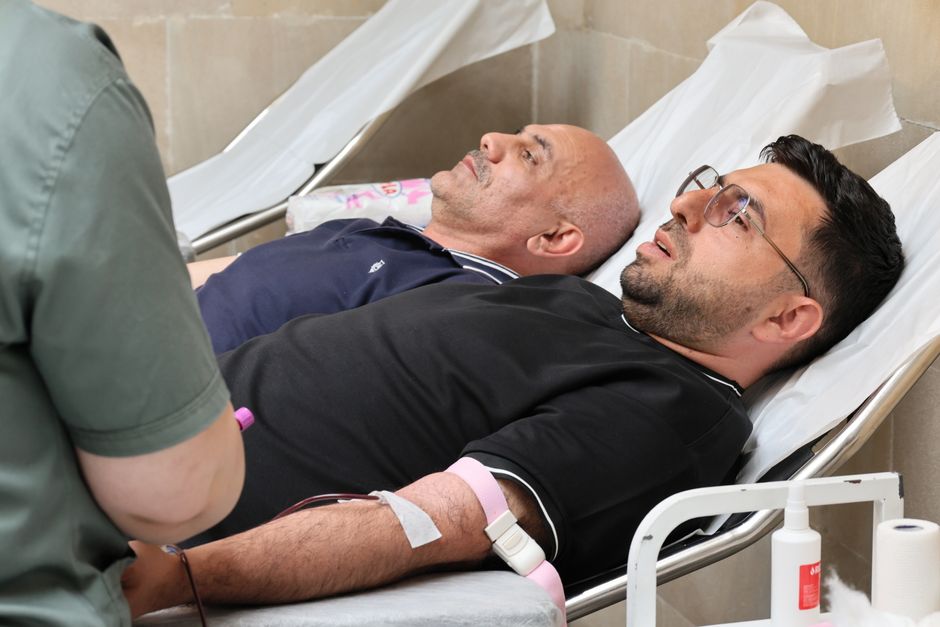
You will answer a health questionnaire and have your temperature, blood pressure, pulse, and hemoglobin checked. A small finger prick is used to test hemoglobin. If you pass, you sit or lie in a chair while a needle is placed in a vein in your arm.
Afterward, you rest for a short time and have a snack and drink. Most people feel fine and can return to normal activities, though some feel tired for a day. Serious reactions are uncommon, but lightheadedness and bruising at the needle site can happen.
If you feel unwell during or after donation, tell staff right away. They are trained to manage fainting and other reactions.
Frequently Asked Questions
How do I find a blood drive near me?
Search the American Red Cross or America’s Blood Centers website with your ZIP code, or call a nearby hospital blood bank. Many mobile drives are also listed on local community calendars.
What is the minimum weight to donate blood?
You generally need to weigh at least 110 pounds to donate whole blood. This cutoff exists to reduce the risk of fainting from the drop in blood volume.
Can I donate blood if I take medication?
Many common medications, including many blood pressure drugs and antidepressants, do not disqualify you. Check with the specific collecting organization, because some medications do require a deferral.
How long does it take to donate blood?
Plan for about an hour from arrival to finish. The actual blood draw takes only around 8 to 10 minutes.
