
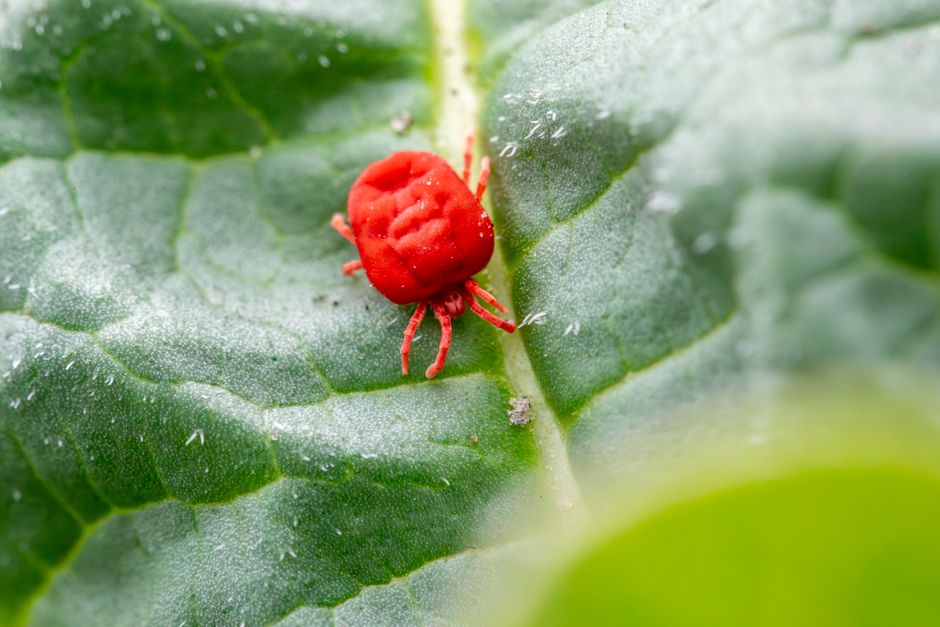
Red mites are tiny eight-legged pests that feed on blood, and they come from the environment around us — soil, plants, bird nests, and other animals. They get indoors by hitchhiking on people, pets, clothing, and secondhand items, or by crawling in through cracks and gaps when their usual hosts move on. Unlike some pests that live only on a single species, red mites are opportunists. When their normal food source disappears, they look for the next available one, and that is often where humans and their homes come in.
What Exactly Are Red Mites?
Red mites are not insects. They are arachnids, which puts them in the same broad group as spiders and ticks. That matters because it explains why many insect sprays do not work well against them. Their body structure, life cycle, and behavior are different.
The name “red mite” gets applied to several different organisms, and this is where a lot of confusion starts. The most common ones people encounter are:
- Poultry red mite (Dermanyssus gallinae) — a blood-feeding mite that infests birds, especially chickens
- Clover mite — a plant-feeding mite that turns reddish and wanders indoors in large numbers, but does not bite people
- Spider mite — a tiny plant pest that damages gardens and houseplants, harmless to humans
- Rodent mite — lives on rats and mice, and will bite humans when the rodent host dies or leaves
This distinction is not academic. Clover mites and spider mites do not feed on blood and do not bite. Poultry mites and rodent mites do. If you are being bitten, you are dealing with one of the blood-feeding types, and the source is almost always an animal nearby.
Where Do Red Mites Come From And How Do They Get In?
Blood-feeding red mites come from a host animal. They do not spontaneously appear, and they do not breed in clean or dirty homes for no reason. They need a bird or a rodent to feed on. When that animal is present — in a nest, a coop, a wall void, or an attic — the mites multiply nearby. When the host leaves or dies, the mites go looking for a replacement.
That search is how they get into living spaces. The most common routes are:
- Bird nests near windows, eaves, or vents. This is one of the most frequent sources. When chicks fledge and leave the nest, the mites left behind migrate — often toward the nearest structure.
- Rodents in walls or attics. Mice and rats carry their own mites. If a rodent dies inside a wall, its mites move outward looking for a meal.
- Pets that go outdoors. Dogs and cats can pick up mites from grass, soil, or contact with infested animals.
- Secondhand furniture, bedding, and clothing. Mites can survive off a host for a period, and used items can carry them.
- Direct contact with infested birds or poultry. Anyone who keeps chickens or handles wild birds can carry mites indoors on clothing.
One detail worth knowing: red mites are very small, often under a millimeter, and they are often pale or gray until they have fed. After a blood meal they turn red or dark. That is why people sometimes notice “red specks” only after the mites have already bitten them.
Why Do Red Mites Suddenly Appear Indoors?
Red mites do not usually appear suddenly for no reason. Something changed. The most common trigger is the loss of their original host.
Think about what happens to a bird nest. Eggs hatch, chicks grow, and within a few weeks the whole family leaves. The mites that were feeding on those birds are still there, and now they have no food. Their instinct is to move toward warmth, carbon dioxide, and movement — the signals of a potential host. A nearby bedroom window or an attic vent leads them straight to people.
The same thing happens with rodents. A mouse that dies inside a wall leaves behind its mites. Those mites follow air currents and warmth into the room.
Season matters too. In many regions, red mite problems peak in late spring and summer, when birds are nesting and rodent activity is high. But indoor infestations can occur year-round if the host animal is inside the structure.
Do Red Mites Live On Humans?
Red mites bite humans, but they do not live on us. This is an important distinction. Human skin is not a suitable long-term habitat for poultry mites or rodent mites. They feed, then retreat to cracks, crevices, bedding seams, or baseboards to digest and lay eggs.
That is why the bites often appear in lines or clusters. A single mite may bite several times in one area before moving on. Bites can look like small red bumps, sometimes with a tiny central mark, and they itch. Reactions vary widely from person to person. Some people show almost no reaction, while others develop significant irritation.
Because the mites do not stay on the body, you will not usually find them crawling on you during the day. They tend to feed at night or when the host is still. This is one reason infestations can go unrecognized for a while — people assume the bites are from mosquitoes, fleas, or an allergic reaction.
How Can You Tell Red Mites Apart From Bed Bugs or Fleas?
This is one of the most common points of confusion, and getting it wrong leads to the wrong treatment. Here is how the three compare on the features that matter most.
| Feature | Red Mites | Bed Bugs | Fleas |
|---|---|---|---|
| Body type | Eight legs (arachnid) | Six legs (insect) | Six legs (insect) |
| Size | Often under 1 mm | About 5–7 mm as adults | About 1.5–3 mm |
| Where they hide | Cracks, nests, bedding seams, wall voids | Mattress seams, furniture, baseboards | Carpets, pet bedding, upholstery |
| Main host | Birds and rodents | Humans | Animals, especially pets |
| Do they live on people? | No | Yes | No, but they bite |
| Typical sign | Bites plus nearby bird or rodent activity | Bites plus visible bugs or dark spots | Bites, often on ankles, plus pet scratching |
The single most useful clue is the presence of a bird nest or rodent problem. If bites are happening and there is an active or recently abandoned nest near a window, vent, or roofline, red mites are a strong possibility. If there is no animal source anywhere nearby, red mites become much less likely.
What Should You Do If You Think You Have Red Mites?
The first step is to find the source. Treating bites or spraying the bedroom will not solve the problem if mites are still coming from a nest or a rodent. The source has to be dealt with first.
In practical terms, that usually means:
- Checking for and removing bird nests near windows, doors, eaves, and vents — after confirming the nest is empty and no eggs or chicks are present. In some areas, removing active nests of protected bird species is restricted, so check local rules first.
- Addressing any rodent problem in walls, attics, or crawl spaces.
- Washing bedding and clothing in hot water and drying on high heat.
- Vacuuming cracks, baseboards, and seams thoroughly, then disposing of the vacuum bag or emptying the canister outside.
- Sealing gaps around windows, doors, and utility entries to reduce future entry.
For bites, over-the-counter anti-itch creams and oral antihistamines are commonly used, and some clinicians recommend them for symptom relief. If bites are severe, spreading, or showing signs of infection, that warrants medical attention. There is no strong evidence that any home remedy eliminates an infestation on its own — source removal is the part that actually matters.
If the source cannot be identified or the problem persists, a licensed pest control professional is the appropriate next step. Mites are small, and confirming the species matters for choosing the right approach.
Can Red Mites Spread Disease?
The evidence here is limited and mixed. Poultry red mites are known to carry various bacteria, and research has looked at whether they can transmit disease to humans. So far, there is no strong confirmation of common human disease transmission from red mite bites. The main documented effect on people is skin irritation and allergic reaction, not infection.
That said, this is an area where certainty is genuinely incomplete. Some studies suggest a possible role in transmitting certain pathogens, but the evidence is not strong enough to state that red mites routinely spread disease to humans. The honest position is that bites are primarily a nuisance and an allergic problem, and disease transmission is not well established.
This is different from ticks, which are closely related arachnids and are well-documented disease vectors. The similarity in body type does not mean the risk is the same.
How Do You Prevent Red Mites From Getting In?
Prevention comes down to removing the conditions that bring mites near your home. Since mites depend on birds and rodents, keeping those animals away from the structure is the core strategy.
- Inspect and clear nests from eaves, vents, window ledges, and rooflines at the end of nesting season.
- Keep gutters and roof areas free of debris that attracts nesting birds.
- Seal cracks and gaps around windows, doors, and where pipes and wires enter the building.
- Store birdseed and pet food in sealed containers to avoid attracting rodents.
- Check secondhand furniture and bedding before bringing it inside.
- If you keep chickens, inspect coops regularly — poultry red mite is a well-known problem in flocks and can spread from coop to home on clothing.
None of these steps is complicated, but they work best as a habit rather than a one-time fix. Red mites are persistent, and the conditions that invite them return every nesting season.
Frequently Asked Questions
Where do red mites come from in the first place?
Blood-feeding red mites come from a host animal, most often birds or rodents. They multiply near that host and move toward people when the host leaves or dies.
How do red mites get into a house?
They usually crawl in from nearby bird nests or rodent areas, or hitchhike on pets, clothing, or secondhand items. Sealing gaps and removing nests are the main ways to block entry.
Do red mites live on humans?
No, red mites bite humans but do not live on us. They feed and then retreat to cracks, bedding seams, or wall voids.
Are red mites the same as bed bugs?
No, red mites are arachnids with eight legs, while bed bugs are insects with six legs. Red mites depend on birds or rodents, whereas bed bugs feed on humans.
Can red mites spread disease to people?
The evidence is limited and no strong confirmation exists that red mites routinely transmit disease to humans. Their main effect is skin irritation and allergic reaction from bites.
