
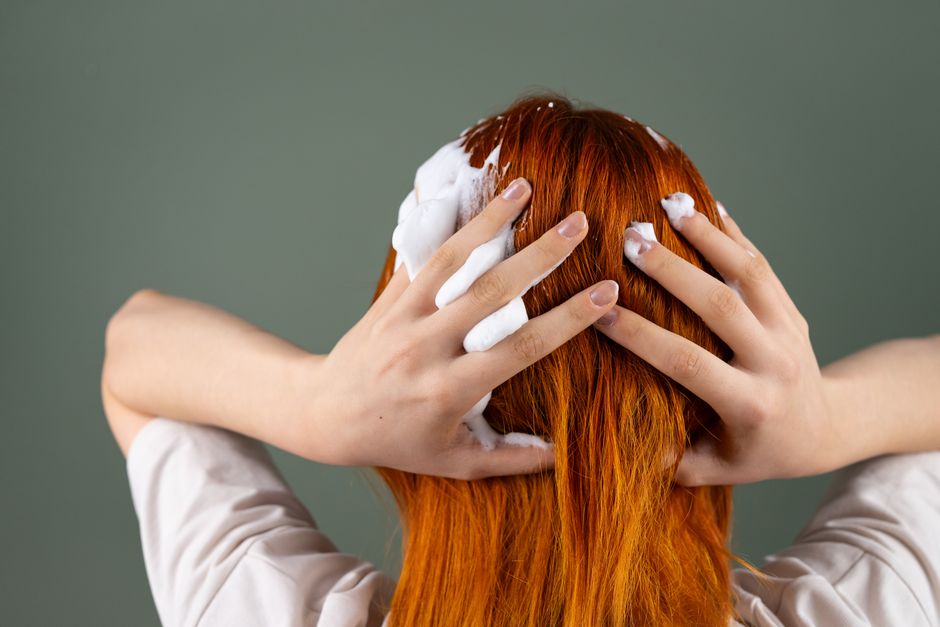
Red hair comes from a genetic variation that changes how the body makes melanin, the pigment that gives color to hair, skin, and eyes. People with red hair usually carry two copies of a variant in a gene called MC1R. That variant tells pigment cells to produce more of a red-yellow pigment called pheomelanin and less of the brown-black pigment called eumelanin. It is inherited, it is rare, and it shows up most often in people of Northern and Western European ancestry.
What Actually Causes Red Hair?
Hair color is not a single switch. It is the result of several genes working together, and the biggest single influence on red hair is MC1R.
Here is the basic biology. Special cells called melanocytes sit in your hair follicles. They make two kinds of pigment:
- Eumelanin — brown and black pigment
- Pheomelanin — red and yellow pigment
Most people make a mix of both. The MC1R gene acts like a traffic signal. When it works normally, it pushes melanocytes toward making more eumelanin. When it carries certain variants, that signal is weakened. The cells default to making more pheomelanin instead. The result is red hair.
This is why red hair is not just “a color.” It reflects a real difference in how pigment cells behave. That same difference helps explain why many redheads have fair skin that burns easily and freckles.
It is worth being clear about one thing: MC1R is the main player, but it is not the only one. Researchers have identified other genes that influence red hair, and the trait can appear in people who do not carry the classic MC1R variants. The genetics are more layered than the simple version suggests.
How Is Red Hair Inherited?
Red hair follows a recessive pattern, which is why two parents without red hair can still have a red-haired child.
Each person has two copies of the MC1R gene — one from each parent. To have red hair, a person generally needs to inherit a red-hair variant from both parents. Someone who inherits just one copy usually does not have red hair, but can pass the variant on.
This is the classic “carrier” situation. Two brown-haired parents can each carry one copy. Each child then has a chance of inheriting the variant from both sides. When that happens, the child has red hair.
This pattern is real, but it is not perfectly predictable. Because several genes are involved, the odds are not a clean coin flip. Two carrier parents have a higher chance of a red-haired child than parents without the variant, but no simple percentage captures every family.
One common myth is that red hair can skip many generations and then “return.” Genes do not skip generations — they are simply passed on or not. A variant can stay hidden in carriers for a long time and then appear when two carriers have a child together.
Where Did Redheads Come From The Science Of Red Hair?
Red hair is most common in people whose ancestry traces to Northern and Western Europe, especially Ireland, Scotland, and parts of England. But the trait did not originate in one single place.
The MC1R variants linked to red hair are old. They predate modern national borders and modern populations. The reason red hair clusters in certain regions is a mix of ancestry, migration, and population history — not because red hair “started” in Ireland.
Some researchers have suggested that fair skin, which often travels with red hair, may have been advantageous in parts of Europe where sunlight is weaker. Lighter skin makes it easier for the body to produce vitamin D from sunlight. That idea is plausible and widely discussed, but it is not fully settled. Other factors, including random genetic drift, likely played a role too.
So the honest answer is this: red hair is an inherited trait that became more common in certain populations over thousands of years. It was not invented in one country, and it is not a single “redhead gene.” It is a set of genetic variants that cluster where the right ancestry and history came together.
Why Do Redheads Often Have Fair Skin and Freckles?
The same pigment shift that causes red hair also affects skin. When MC1R signaling is reduced, the skin makes less eumelanin, which is the pigment that helps protect against ultraviolet (UV) radiation.
Less eumelanin means less natural sun protection. That is why many people with red hair have skin that burns easily and tans poorly. Freckles are clusters of pigment that form in response to sun exposure, and they tend to show up more in people with this pigment profile.
This is not just a cosmetic detail. It has a real health implication. People with red hair and fair skin tend to be more sensitive to UV radiation, which raises the risk of sunburn and skin damage over time. That is a well-established link, and it is one reason sun protection matters more for this group.
Not every redhead has fair skin. Red hair can appear alongside darker skin, especially in people of mixed ancestry. The trait and skin tone are related, but they are not locked together.
Does Red Hair Affect Pain, Anesthesia, or Health?
This is where claims often outrun the evidence. There is genuine research interest here, but the findings are not as clean as headlines suggest.
Some studies have suggested that people with red hair may need slightly different amounts of certain anesthetics, and some research has looked at differences in pain sensitivity. But the results across studies are mixed. Not all research agrees, and the effect — if real — is not large enough to justify treating redheads differently in routine medical care.
Anesthesia dosing is based on many factors: body weight, age, health status, the procedure, and the individual patient. Hair color is not one of the standard variables clinicians use to decide a dose. If you have red hair, that alone is not a reason to expect different care.
The stronger and better-supported health connection is the skin one. Fair skin and increased UV sensitivity are well established. The pain and anesthesia questions remain open, with some evidence pointing one way and some the other.
It is also worth separating fact from folklore. Claims that redheads bruise more, bleed more, or heal differently are often repeated but not firmly established. If the evidence is thin, it is better to say so than to repeat it as fact.
How Common Is Red Hair?
Red hair is rare worldwide. It is most concentrated in parts of Northern and Western Europe, where it makes up a noticeable share of the population. In most of the world, it is uncommon.
Exact percentages vary by source and by how “red” is defined, so it is better not to treat any single number as precise. What is clear is the pattern: red hair is far more common in some European regions than in others, and rare almost everywhere else.
This uneven distribution is exactly what you would expect from a trait shaped by ancestry and population history. It is not random, and it is not a sign of anything beyond genetics and geography.
Can Red Hair Change or Fade?
Hair color can shift over a lifetime, and red hair is no exception. Many redheads notice their hair deepening, darkening, or turning more brown as they get older. Some children born with bright red hair grow into a more muted shade.
This is normal. Hair color is influenced by the pigment your follicles produce, and that production can change with age. It is not a sign of a health problem.
What does not happen is red hair turning into a different color overnight. Gradual change over years is expected. Sudden changes in hair color or texture are worth mentioning to a doctor, because they can sometimes reflect other issues.
Frequently Asked Questions
Can two parents without red hair have a redheaded child?
Yes. Red hair is recessive, so both parents can carry one copy of the variant without having red hair themselves. If each parent passes that copy on, the child can have red hair.
Is there a single “redhead gene”?
No. MC1R is the main gene involved, but several genes influence red hair. That is why the trait does not follow a perfectly simple pattern.
Do redheads really need more anesthesia?
The evidence is mixed and not strong enough to change routine care. Anesthesia dosing is based on factors like weight, age, and health, not hair color.
Why do redheads often burn easily in the sun?
Red hair is linked to lower production of eumelanin, the pigment that helps block UV radiation. Less eumelanin means less natural sun protection and a higher risk of burning.
