
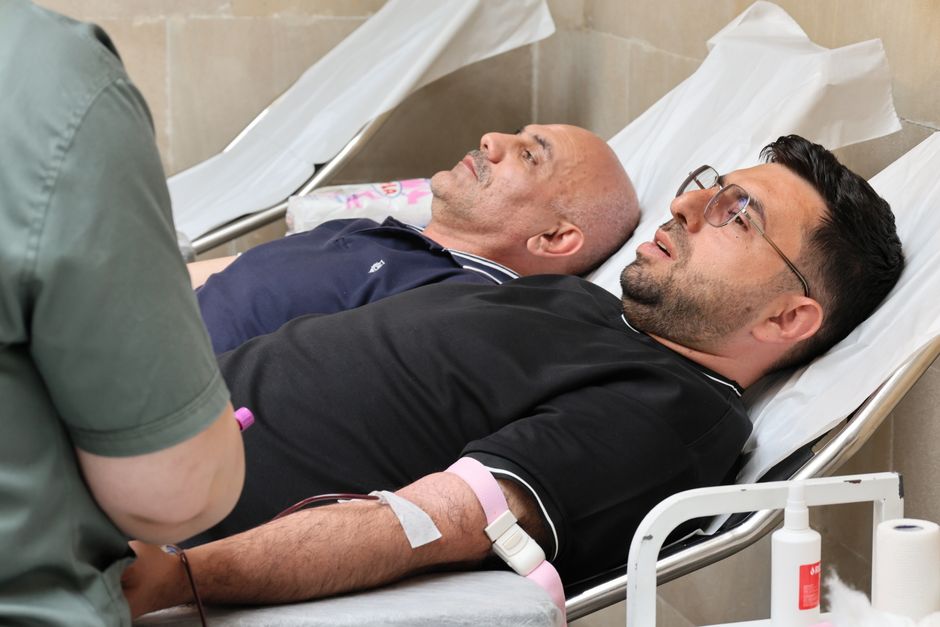
You can get paid to donate plasma at licensed plasma collection centers across the US, and in a small number of states you can be paid for whole blood. Most blood banks do not pay cash for blood donations — they rely on volunteers. Plasma is different. It is collected by for-profit companies, and paying donors is standard practice in that industry.
The money is real but modest. Most centers pay per donation, and new donors often earn more through introductory offers. Where you live decides what is legally allowed, and your health decides whether you qualify at all.
Where Can You Get Paid To Donate Blood Or Plasma?
Paid plasma donation is widely available. Large national chains run hundreds of centers, and most mid-size cities have at least one. You donate plasma — the liquid part of blood — through a process called plasmapheresis. A machine separates the plasma from your blood cells and returns the cells to your body.
Paid whole blood donation is much rarer. Federal rules allow compensation for blood donation, but most blood banks are nonprofit and built around volunteer donors. A small number of states and private companies do pay for whole blood, usually for research or specialized manufacturing rather than hospital transfusion supply.
Here is the practical split:
- Plasma centers: Payment is standard. These are FDA-regulated facilities that collect plasma for medicines and therapies.
- Nonprofit blood banks: Almost always volunteer-only. You may get a t-shirt, snacks, or a gift card, not cash.
- Hospital donation programs: Volunteer-based. No payment.
- Research studies: Some pay for blood samples, but these are studies, not routine donation.
If you want cash in hand, plasma is the realistic path. Whole blood payment exists but is uncommon and depends heavily on where you live.
How Much Do Plasma Centers Actually Pay?
Payment varies by company, location, and demand. There is no national fixed rate. Centers set their own fees, and they change them.
What you can generally expect:
- Donors are usually paid per donation, often loaded onto a prepaid debit card rather than handed cash.
- New donor promotions tend to pay more for the first several donations to attract people in.
- Returning donors typically earn less per visit than first-time donors.
- Some centers pay a bonus for a second donation in the same week.
I am deliberately not quoting dollar figures. Published rates shift often and differ by region, so any number I give could be wrong by the time you read it. Check the specific center’s website or call before you go. Ask three things: the current new-donor offer, the standard returning-donor rate, and how payment is delivered.
One detail worth knowing: because payment often loads onto a card, some donors find the money less convenient to access than cash. Read the card terms before your first visit.
What Are The Eligibility Requirements To Donate Plasma For Money?
You must be in good health and meet standards set by the FDA and the collecting center. These rules exist to protect both you and the people who receive plasma-based medicines.
Common requirements include:
- Being within a certain age range — many centers accept adults roughly 18 to 69, though exact limits vary by center and state.
- Weighing at least 110 pounds (50 kg). This is a long-standing standard tied to donation safety.
- Passing a health screening and a physical exam at the center.
- Providing valid government photo ID and proof of address.
- Passing screening for certain infections, including HIV and hepatitis.
You will also answer questions about medications, recent travel, tattoos, and medical history. Some medications disqualify you. Some health conditions do too. The center makes the final call, and it can differ from one company to another.
Do not assume you qualify based on a friend’s experience. Requirements are applied individually, and a center can defer you for reasons that would not affect someone else.
How Often Can You Donate Plasma, And Is It Safe?
Federal rules limit plasma donation to no more than twice in a seven-day period, with at least 48 hours between donations. This limit is well established and enforced by collection centers.
Plasma is mostly water and protein, and your body replaces it faster than it replaces whole blood. That is why plasma can be donated more often than whole blood. Whole blood donation typically requires about 8 weeks between donations.
Is it safe? For healthy eligible donors, plasma donation is considered generally safe when centers follow proper procedures. The main risks are typical of any needle stick:
- Bruising or soreness at the needle site
- Lightheadedness or fainting, especially if you are dehydrated or have not eaten
- Rarely, citrate reactions — tingling around the mouth or fingers — from the anticoagulant used during the process
Citrate reactions are worth explaining. The machine uses a chemical to keep blood from clotting in the tubing. That chemical can temporarily lower calcium levels in your bloodstream, which causes the tingling. It usually resolves when the donation slows or stops. Tell staff right away if it happens.
Frequent donation can affect your protein levels and iron status over time. Centers monitor this with periodic blood tests and will defer you if levels fall outside range. This is one reason the twice-weekly limit matters — it is not just about comfort.
What Should You Know Before Your First Paid Donation?
Preparation affects how the visit goes. Plasma donation takes longer than whole blood — often around an hour or more including screening, with the collection itself taking a significant portion of that time. Plan for a longer first visit because of the intake process.
Practical steps:
- Eat a normal meal beforehand. Donating on an empty stomach raises your risk of feeling faint.
- Drink water in the hours before you go. Hydration makes the process easier and lowers the chance of lightheadedness.
- Avoid alcohol the day of donation.
- Bring your ID and proof of address.
- Wear short sleeves or loose sleeves so staff can access your arm.
Be honest on the health questionnaire. Answering accurately protects you and the people who receive plasma-derived medicines. Plasma from donors is used to make treatments for immune disorders, bleeding disorders, and other serious conditions. The screening is not bureaucracy — it is the safety layer for real patients.
One clarification that surprises people: the plasma you donate is usually not transfused directly. It is pooled and processed into medicines. That is why the industry can pay donors — the plasma becomes a manufactured product, not a donated unit of blood for transfusion.
Why Don’t Regular Blood Banks Pay You?
Most blood banks are nonprofits that depend on volunteer donors, and the blood they collect goes directly to hospitals for transfusion. Paying donors for that supply is legal but uncommon in the US.
The reasoning is partly practical. Volunteer systems have historically been able to meet hospital demand, and many blood banks argue that paying donors could reduce the pool of volunteers or encourage people to donate when it is not safe for them. Whether that concern is fully supported is debated, but it shapes how most blood banks operate.
So the short answer: if you want payment, go to a plasma center. If you want to give blood for transfusion, expect to do it as a volunteer. Both are legitimate choices. Neither is better than the other — they serve different purposes.
Are There Risks To Donating For Money?
The main risk is not medical — it is financial pressure. Payment can encourage people to donate more often than is good for them, or to hide disqualifying information to get paid. Centers screen for this, but the incentive exists.
If you are donating to pay bills, keep the frequency within the allowed limits and do not skip meals or hydration to save time. Do not donate if you feel unwell. And do not treat plasma payment as a reliable income source — rates change, and centers can defer you at any time based on your health screening.
For most healthy eligible adults, occasional plasma donation is low risk. The evidence does not support claims that it is dangerous for healthy donors following the rules. It also does not support treating it as risk-free for everyone. People with certain health conditions, or those who donate at the maximum allowed frequency, should discuss it with a clinician.
Frequently Asked Questions
Can you get paid to donate blood at a regular blood bank?
Usually no. Most US blood banks are nonprofit and use volunteer donors, so they do not pay cash. A small number of states and private companies allow payment for whole blood, but it is uncommon.
How much does plasma donation pay?
Rates vary by company and location, and they change often. New donor promotions usually pay more than returning-donor rates. Check with a specific center for current figures rather than relying on general numbers.
How often can you donate plasma for money?
Federal rules allow no more than twice in a seven-day period, with at least 48 hours between donations. Centers enforce this limit.
Do you need an appointment to donate plasma?
Many centers accept walk-ins, but first-time donors often need more time for screening. Scheduling ahead can shorten the wait, and some centers require it for new donors.
