
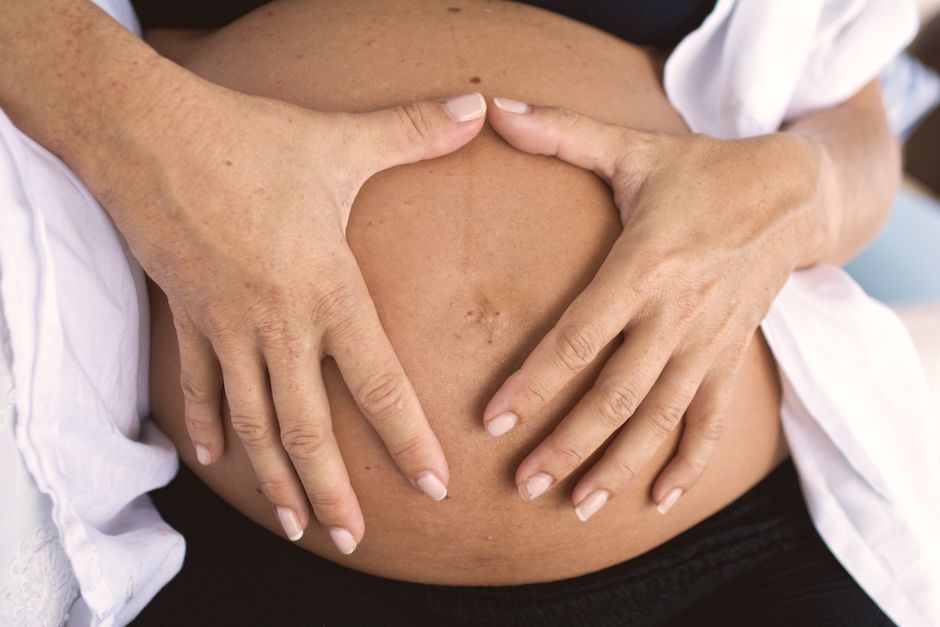
Your belly button can pop outward during pregnancy, and it happens to a lot of women. It is usually caused by your growing uterus pushing against the abdominal wall, which flattens and eventually pushes the navel outward. It is not a sign that anything is wrong, and in most cases the belly button returns to its normal shape after delivery.
If you are pregnant and your belly button is changing, you are not alone. This is one of those pregnancy changes nobody warns you about, like thicker hair or looser joints. Here is what is actually happening, when it tends to occur, and when it deserves a closer look.
When Your Pregnant Does Your Belly Button Pop Out?
Most women notice their belly button flattening or popping outward sometime in the second or third trimester. The timing depends on your body, your height, how many pregnancies you have had, and how your baby is positioned.
Here is the mechanism. Your belly button is essentially a scar. It marks where the umbilical cord attached you to your mother. Underneath that scar, the abdominal wall has a natural gap or weak spot called the umbilical ring. As your uterus grows upward and outward, it puts pressure on the entire abdominal wall. That pressure pushes against the umbilical ring from the inside.
In some women, the tissue holds firm and the navel just flattens. In others, the pressure pushes the navel outward until it protrudes. This is sometimes called an “outie” during pregnancy.
Shorter women and women carrying multiples often notice it earlier. That is not a rule, just a pattern. A smaller torso means less room for the uterus to expand, so the pressure against the abdominal wall builds sooner. Women who have been pregnant before may also notice it earlier because the abdominal muscles have already been stretched once.
There is no specific week when this happens for everyone. Some women see it at 20 weeks. Others never see it at all, even at 40 weeks. Both are normal.
Is a Popping Belly Button During Pregnancy Normal?
Yes. A protruding belly button during pregnancy is a normal physical change for many women. It is not a medical problem on its own.
The navel does not actually “pop” like a balloon. It gradually flattens and then pushes outward as pressure increases. Some women describe a slight pulling or tingling sensation around the navel as it stretches. Others feel nothing at all.
What matters is whether the protrusion is accompanied by other symptoms. A belly button that pushes out without pain, without redness, and without a bulge that gets worse when you cough or strain is generally just a cosmetic change of pregnancy.
One detail worth knowing: the belly button is not a muscle. It is a point where the abdominal wall comes together. So it cannot be “strengthened” back into place with exercise during pregnancy. The change is driven by internal pressure, not by muscle weakness.
Can a Popped Belly Button Be an Umbilical Hernia?
Sometimes a protruding navel during pregnancy is an umbilical hernia. This is when a small section of tissue or intestine pushes through the umbilical ring. It is more common in pregnancy because of the increased pressure inside the abdomen.
An umbilical hernia usually looks like a soft bulge near the navel. It may get bigger when you cough, sneeze, laugh, or strain. It may go away when you lie down. Many small hernias cause no pain at all.
Symptoms that suggest a hernia rather than a simple pregnancy outie include:
- A bulge that changes size depending on your position or activity
- Aching or discomfort at the navel, especially when straining
- A visible lump that feels soft and can be gently pushed back in
Most umbilical hernias during pregnancy are not dangerous. They are monitored, and many shrink or resolve after delivery once the pressure is gone. Some do not resolve and may need surgical repair later, but that is typically a conversation for after pregnancy and recovery.
There is one situation that is a genuine emergency. If the bulge becomes firm, very tender, discolored, or cannot be pushed back at all, and you have severe pain, nausea, or vomiting, seek medical care immediately. This could mean the tissue is trapped, which is called strangulation. It is uncommon, but it needs urgent attention.




Does a Protruding Belly Button Mean Anything About Your Baby?
No. The shape of your belly button has nothing to do with your baby’s health, size, or position. It is purely a reflection of how your abdominal wall responds to pressure.
Some people believe an “outie” means you are having a boy, or that it predicts an early delivery. There is no evidence for either claim. Belly shape and belly button changes vary too much from person to person to predict anything about the baby.
Your baby’s position does affect how your belly looks overall. A baby positioned further forward can make the belly appear more pointed. But the belly button itself is responding to internal pressure, not to the baby’s gender or birth timing.
Will Your Belly Button Go Back to Normal After Birth?
For most women, yes. After delivery, the uterus shrinks back down and the pressure on the abdominal wall drops. The belly button usually returns to its pre-pregnancy appearance within weeks to a few months.
It may not return to exactly the same shape. Some women find their navel looks slightly different afterward. It might be a bit wider, or flatter, or have a slightly different depth. This is common and usually not something that needs treatment.
If you had an umbilical hernia during pregnancy, it may or may not resolve on its own. Small ones often do. Larger ones, or ones that cause discomfort, may need to be repaired surgically. This is typically addressed after you have recovered from delivery and finished breastfeeding if applicable, since surgery and anesthesia during breastfeeding involve considerations your surgeon will discuss with you.
Abdominal exercise after you are cleared by your doctor can help restore core strength, but it will not change the shape of the belly button itself. The navel is a scar, not a muscle.
When Should You Talk to Your Doctor About Your Belly Button?
Bring it up at a routine visit if you notice a bulge that gets bigger with coughing or straining, or if you feel aching around the navel. These are worth mentioning even if they seem minor.
Seek care sooner if you have:
- Severe or worsening pain at the belly button
- A bulge that becomes firm and cannot be pushed back
- Redness, warmth, or discoloration over the bulge
- Nausea or vomiting along with the bulge
These symptoms could point to a strangulated hernia, which needs urgent medical evaluation. This is rare, but it is the one scenario where a popping belly button is not just a normal pregnancy change.
For the vast majority of women, a protruding belly button during pregnancy is simply one more way the body adapts to growing a baby. It is temporary, it is common, and it does not mean anything is wrong.
Frequently Asked Questions
When does your belly button pop out during pregnancy?
Most women notice it in the second or third trimester, though some never experience it. The timing depends on your body size, how many pregnancies you have had, and how your baby is positioned.
Does your belly button stay popped out after pregnancy?
For most women, the belly button returns to its normal shape within weeks to a few months after delivery. Some women find it looks slightly different afterward, which is common and usually not a concern.
Is a popped belly button a sign of a hernia?
Sometimes. An umbilical hernia can cause a bulge near the navel that gets bigger when you cough or strain. If the bulge becomes firm, painful, or cannot be pushed back, seek medical care right away.
Can you prevent your belly button from popping out during pregnancy?
No. The change is caused by internal pressure from your growing uterus, not by muscle weakness. No exercise or cream has been shown to prevent it.
