
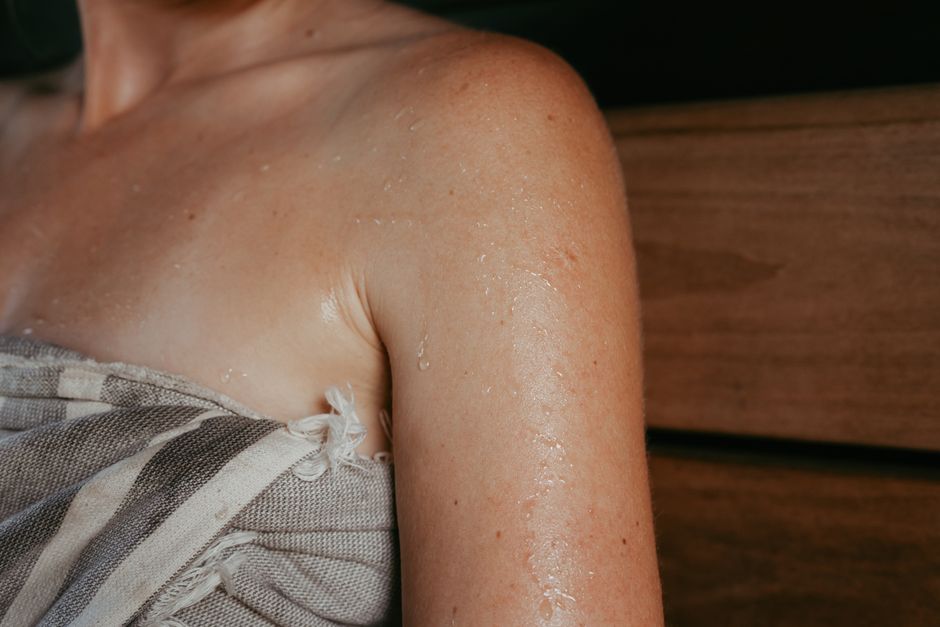
Sweating is your body’s cooling system, not a fuel gauge. When you sweat, you are losing water and electrolytes, not fat. The fat you burn is converted into carbon dioxide and water through a chemical process, and most of it leaves your body when you exhale. Sweat is not a direct measure of calories burned or fat lost, and a heavy sweat does not mean a heavy fat burn.
What Actually Happens When You Sweat?
Sweat is produced by glands in your skin. Your brain triggers sweating when your core temperature rises. The sweat evaporates off your skin, and that evaporation pulls heat away from your body. That is the entire job of sweat — temperature regulation.
You can sweat for many reasons that have nothing to do with exercise. Heat, humidity, spicy food, stress, and hormonal changes all cause sweating. None of those situations burn meaningful amounts of fat. Sweating is a sign that your body is working to stay cool, not a sign that fat is being burned.
Where Does Burned Fat Actually Go?
When your body uses fat for energy, it breaks fat molecules apart. The byproducts are carbon dioxide and water. The carbon dioxide is exhaled through your lungs. The water mixes into your body’s fluids and is eventually lost through urine, sweat, or breath.
This is a common point of confusion. Because water is a byproduct of fat metabolism, some people assume sweating equals fat loss. But the water produced from fat burning is a tiny fraction of what your body produces. The weight you lose from sweating is water weight, and it comes back as soon as you drink fluids.
Does Sweating More Mean You Burn More Fat?
No. The amount you sweat does not correlate with the number of calories you burn. Two people doing the same workout can sweat very different amounts. Fitness level, genetics, body size, and the temperature of the room all affect how much you sweat.
In fact, people who are more physically fit often start sweating earlier and sweat more efficiently. Their bodies are better at cooling down, so they sweat sooner during exercise. A fit person may sweat more than an unfit person doing the same activity, but both are burning a similar number of calories for that activity.
Exercise intensity matters for calorie burn. Higher intensity exercise burns more calories per minute. But that has nothing to do with sweat rate. A slow walk in a hot, humid room can produce heavy sweating while burning very few calories.



Why the Scale Drops After a Sweaty Workout
Weighing yourself after a heavy sweat session can be misleading. You have lost water, and water has weight. A liter of water weighs about 2.2 pounds. Heavy sweating can easily cause you to lose a liter or more of water during a long workout.
That weight loss is temporary. When you drink fluids and eat food, your body replaces the water and restores its normal balance. The scale will go back up. This is why fitness professionals often recommend weighing yourself at the same time each day, usually in the morning before eating or drinking.
Dehydration from excessive sweating can be dangerous. It can cause dizziness, confusion, and heat exhaustion. Replacing fluids after exercise is essential, especially in hot environments.
What Does Burning Fat Actually Feel Like?
Fat burning does not have a specific sensation. You cannot feel fat leaving your body. The idea that a “fat burn” feeling exists is not supported by physiology.
What you do feel during exercise is your muscles working, your heart rate rising, and your breathing deepening. These are signs that your body is using energy. That energy comes from a mix of carbohydrates and fat, and the ratio depends on exercise intensity and duration.
At lower intensities, your body uses a higher percentage of fat for fuel. At higher intensities, it relies more on carbohydrates. But total fat burned depends on total calories burned. A moderate-intensity workout of 45 minutes will burn more total fat than a five-minute sprint, even though the sprint uses a higher percentage of carbohydrate.
How to Actually Burn Fat
Fat loss happens when you consistently burn more calories than you consume. That is the fundamental equation. No amount of sweating changes that math.
To burn fat effectively, focus on these factors:
- Caloric deficit: Eating fewer calories than your body uses is the only proven way to lose fat.
- Consistent exercise: Regular physical activity increases total calorie burn and supports fat loss.
- Strength training: Building muscle increases your resting metabolic rate, meaning you burn more calories at rest.
- Protein intake: Adequate protein helps preserve muscle mass while you lose fat.
- Sleep: Poor sleep disrupts hormones that regulate appetite and metabolism.
These factors are supported by decades of research. Sweating is not on this list because it is not a mechanism of fat loss.
Sauna Suits and Sweat Wraps: Do They Work?
Products that make you sweat more — sauna suits, sweat wraps, and plastic clothing — do not increase fat loss. They increase water loss. The weight you lose with these products is water weight, and it returns when you rehydrate.
Some people use sauna suits to cut weight quickly for sports like wrestling or boxing. This is a temporary water cut, not fat loss. It can be dangerous. Dehydration impairs physical performance and can lead to heat injury.
Marketing that claims sweat wraps “melt fat” is not supported by any clinical evidence. No study has shown that increasing sweat production in a specific area reduces fat in that area. Spot reduction of fat through sweating is a myth.
Can You Sweat Out Toxins?
The idea that sweating detoxifies your body is popular but not accurate. Your liver and kidneys are the primary organs that process and remove waste from your body. Sweat is mainly water and electrolytes, with trace amounts of other substances.
Research does show that some environmental compounds can be detected in sweat. But the amounts are so small that sweating is not considered a meaningful detoxification pathway. Your body does not rely on sweat to remove toxins.
Claims that saunas or sweat treatments “flush toxins” overstate what the evidence shows. If your liver or kidneys are not functioning properly, sweating will not compensate for that.
The Bottom Line on Sweat and Fat
Sweat is not fat. Sweating is your body’s cooling mechanism. The number on the scale after a sweaty workout reflects water loss, not fat loss.
Fat loss is a slow, metabolic process that happens over weeks and months. It requires a sustained caloric deficit and consistent physical activity. There is no shortcut through sweat.
The next time you finish a workout soaked in sweat, understand what it means: your body did its job regulating your temperature. That is worth celebrating. But it is not the same as burning fat.
Frequently Asked Questions
Does sweating burn calories?
Sweating itself burns very few calories. The calories you burn during exercise come from your muscles working, not from the sweat your body produces.
Why do I weigh less after sweating?
You have lost water weight. Sweat is mostly water, and that water loss temporarily lowers your weight until you rehydrate.
Does sweating in a sauna burn fat?
No. Sauna use causes water loss, not fat loss. Any weight lost in a sauna is water weight that returns when you drink fluids.
Is sweating a sign of a good workout?
Not necessarily. Sweating indicates your body is cooling itself, but workout quality depends on intensity, duration, and the type of exercise you do.
