
Ovulation usually happens about 14 days before your next period begins — not 14 days after your last one. That single fact trips up more people than almost any other piece of reproductive health information. If your cycle runs 28 days, ovulation tends to land near day 14. If it runs 32 days, it lands closer to day 18. The count goes backward from the next period, not forward from the last.
When Will Ovulation Occur in a Typical Cycle?
Ovulation is the release of a mature egg from an ovary. In a textbook 28-day cycle, that release typically occurs around day 14. But the textbook cycle is not the average experience for most people.
Cycle length varies widely. A 2022 analysis of data from more than 600,000 menstrual cycles, published in npj Digital Medicine, found that cycle length ranged from 15 to 50 days across participants, with only a minority falling into the classic 28-day pattern. That matters because the timing of ovulation shifts with cycle length.
The luteal phase — the stretch from ovulation to the start of the next period — is the more stable part. It usually lasts around 12 to 14 days, though it can range from roughly 11 to 16 days. The follicular phase, which runs from the first day of bleeding to ovulation, is where most of the variation happens. A longer cycle usually means a longer follicular phase, not a longer luteal phase.
So the practical rule is this: take your usual cycle length, subtract 14, and you get a rough estimate of your ovulation day. A 30-day cycle points to around day 16. A 24-day cycle points to around day 10. This is an estimate, not a prediction. It assumes your luteal phase is close to 14 days, which is not true for everyone.
Can You Ovulate on a Different Day Each Month?
Yes. Ovulation timing can shift from cycle to cycle, even in people with regular periods. The follicular phase is sensitive to sleep, stress, illness, travel, and weight change. Any of these can delay or speed up egg maturation.
Occasional anovulatory cycles — cycles where no egg is released — also happen. They are more common at the start of reproductive life and again in the years leading up to menopause. A period can still occur after an anovulatory cycle, which is one reason calendar-based tracking is unreliable on its own.
This is where a lot of ovulation apps fall short. Most use an algorithm based on average cycle length. Some research suggests these predictions can be off by several days or more, especially for people with irregular cycles. An app can give you a window. It cannot tell you with certainty that you ovulated on a specific day.
What Are the Signs That Ovulation Is Happening?
The body gives several physical signals as ovulation approaches. None of them is perfectly reliable alone, but together they narrow the window.
- Cervical mucus changes. As estrogen rises, mucus becomes clearer, wetter, and stretchier — often compared to raw egg white. This typically peaks in the days right before ovulation.
- Basal body temperature shift. After ovulation, progesterone raises resting body temperature slightly, usually by about 0.5 to 1 degree Fahrenheit. The catch: this confirms ovulation after it has already happened. It does not predict it.
- Mittelschmerz. Some people feel a mild twinge or ache on one side of the lower abdomen around ovulation. It is not dangerous, but it is not a dependable marker either — many people never feel it.
- Luteinizing hormone (LH) surge. Ovulation typically follows a surge in LH by about 24 to 36 hours. Ovulation predictor kits detect this surge in urine.
The LH surge is the most useful predictive signal available at home. That said, kits can produce false positives in people with conditions like polycystic ovary syndrome (PCOS), where LH levels are often elevated at baseline.





How Do You Track Ovulation Accurately?
No single method is perfect. Combining two or more gives a clearer picture.
| Method | What It Detects | Predicts or Confirms? |
|---|---|---|
| Calendar math | Estimated window based on cycle length | Predicts (roughly) |
| Cervical mucus | Rising estrogen | Predicts |
| LH urine kits | LH surge | Predicts (24–36 hours ahead) |
| Basal body temperature | Progesterone rise | Confirms (after the fact) |
| Mid-luteal progesterone blood test | Progesterone level | Confirms |
| Transvaginal ultrasound | Follicle development and rupture | Both |
A mid-luteal progesterone blood test is the standard clinical way to confirm that ovulation occurred. It is usually drawn about 7 days before the expected next period. A transvaginal ultrasound can track a follicle as it grows and then show it collapse after release, which is the most direct method available.
For most people trying to conceive at home, combining cervical mucus observation with LH kits covers the practical need. Temperature tracking adds confirmation but arrives too late to act on that cycle.
When Does Ovulation Happen if Your Cycles Are Irregular?
Irregular cycles make prediction much harder. When cycle length swings by more than a week or two from month to month, calendar math becomes close to useless.
Irregular ovulation is common in several situations:
- PCOS. This is one of the most frequent causes of irregular ovulation. Elevated androgens and insulin resistance can disrupt follicle development.
- Perimenopause. In the years before menopause, cycles often shorten, lengthen, or skip entirely as ovarian function declines.
- Thyroid disorders. Both an underactive and overactive thyroid can affect ovulation timing.
- Significant weight loss or gain. Extreme energy restriction or rapid weight change can suppress ovulation.
- High stress or intense exercise. Both can disrupt the hormonal signals that trigger egg release.
If cycles are consistently shorter than 21 days, longer than 35 days, or absent for three months or more, that is worth a conversation with a clinician. These patterns can point to a treatable underlying cause.
Does Ovulation Timing Change With Age?
Yes, and the change is not subtle. Ovulation tends to become less predictable as people move through their thirties and into their forties.
The number of eggs remaining in the ovaries declines with age, and the eggs that remain are less responsive to the hormonal signals that drive maturation. The result is a shorter follicular phase in some cycles and a longer one in others. Cycle length may shorten first, then become erratic.
This does not mean ovulation stops at a specific age. It means the timing becomes harder to pin down. Anyone tracking ovulation in their late thirties or forties should expect more cycle-to-cycle variation than they saw in their twenties.
What Happens During Ovulation?
Understanding the mechanics helps explain why timing matters so much.
Each cycle, a group of follicles in the ovaries begins to mature. Usually one becomes dominant. As it grows, it produces estrogen, which thickens the uterine lining and triggers the cervical mucus changes described earlier.
When estrogen reaches a high enough level, it triggers a sharp release of luteinizing hormone from the pituitary gland. Roughly 24 to 36 hours later, the dominant follicle ruptures and releases the egg.
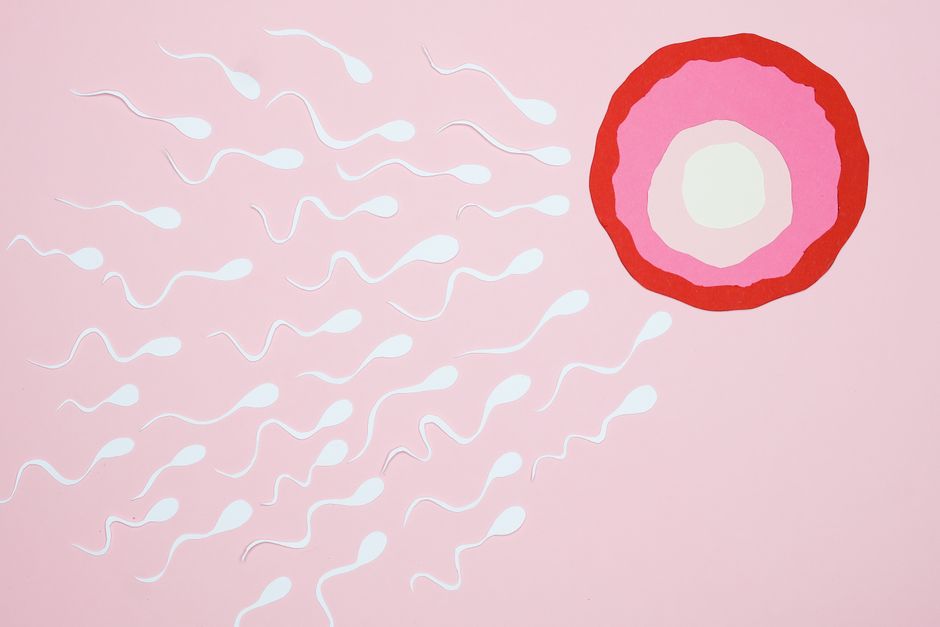
The egg then travels into the fallopian tube. If sperm are present, fertilization typically occurs in the tube. The egg remains viable for roughly 12 to 24 hours after release. Sperm can survive in the reproductive tract for up to about 5 days under favorable conditions.
That overlap is why the fertile window is wider than ovulation day itself. The days leading up to ovulation — not the day after — are when conception is most likely.
Frequently Asked Questions
How many days after your period do you ovulate?
Ovulation usually occurs about 14 days before your next period, not a fixed number of days after your last one. In a 28-day cycle, that falls near day 14, but the exact day shifts with cycle length.
Can you ovulate without knowing it?
Yes. Many people ovulate with no noticeable symptoms at all. Mild cramping, mucus changes, and temperature shifts are common but not universal.
How long does ovulation last?
The release of the egg itself is a brief event, and the egg remains viable for roughly 12 to 24 hours. The broader fertile window lasts about 5 to 6 days because sperm can survive several days in the reproductive tract.
Can you get pregnant after ovulation?
Conception is very unlikely more than 24 hours after ovulation, because the egg does not survive beyond that. Pregnancy is more likely from intercourse in the days just before ovulation.
