
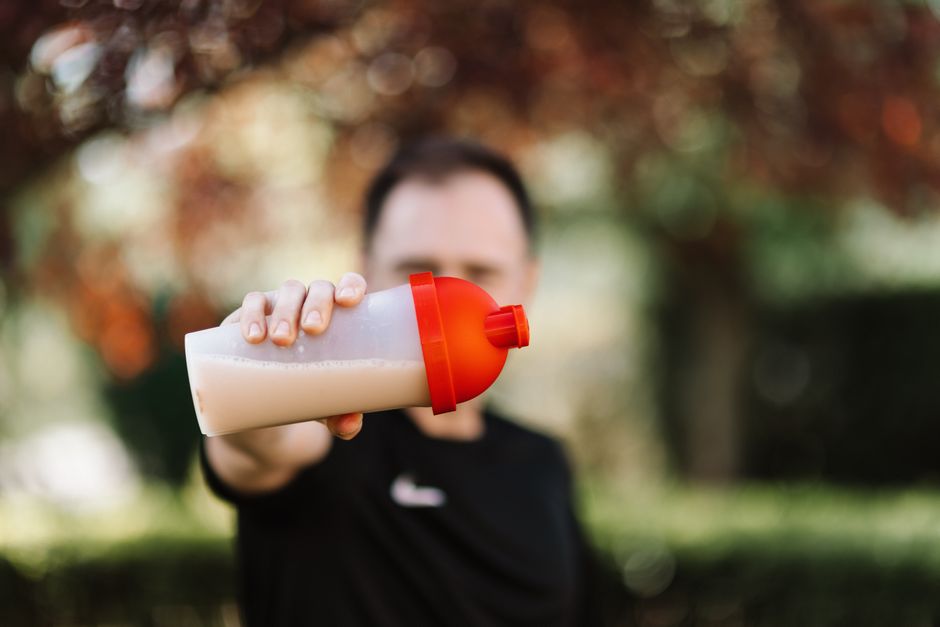
Whey protein powder is a supplement, not a requirement. Most healthy adults who eat enough protein from food do not need it. It becomes useful when you are not hitting your daily protein target through meals alone, and it works best when you spread your intake across the day rather than taking it all at once.
For most people, a single serving of whey provides roughly 20 to 25 grams of protein, and daily protein needs for generally healthy adults are commonly estimated at about 0.8 grams per kilogram of body weight. People with higher needs, such as older adults or those doing regular strength training, often aim higher. The timing matters less than the total amount you get across the day, but there are a few situations where when you take it makes a measurable difference.
How Much Whey Protein Powder Should You Take
There is no single correct dose. The right amount depends on how much protein you already get from food and what your body needs. The supplement fills a gap, so the dose is whatever closes that gap.
The general reference for protein intake in healthy adults is about 0.8 grams per kilogram of body weight per day. For someone who weighs 70 kilograms (about 154 pounds), that is roughly 56 grams of protein daily. A typical scoop of whey concentrate or isolate delivers about 20 to 25 grams, so one or two servings can cover a large share of that target if food intake is low.
Groups with higher protein needs include older adults, who tend to lose muscle mass with age, and people doing regular resistance training. Research on muscle building generally points toward higher intakes in these groups, though the exact target varies by individual and is not firmly fixed. Some research suggests intakes around 1.2 to 1.6 grams per kilogram per day may support muscle in older adults, but this is an area where recommendations differ.
A practical approach many clinicians suggest is to aim for a protein source at each meal first, then add whey only if you are consistently falling short. Taking more protein than your body can use does not build extra muscle. Excess protein is either used for energy or excreted.
- One serving is usually 20 to 25 grams of protein.
- Most people need one to two servings per day at most, if any.
- Food sources should come first when possible.
- Total daily protein matters more than any single dose.
When To Use Whey Protein Powder Dose And Timing
Timing is secondary to total intake for most people. If you eat enough protein across the day, when you take whey makes little difference to muscle, strength, or recovery. That is the honest position the evidence supports.
That said, there are a few moments where a serving fits naturally:
- After resistance training. The window right after a workout has gotten more attention than it deserves. The idea that you must drink a shake within 30 minutes is largely overstated. Research indicates the anabolic window is wider than once believed, and total daily protein still matters more than precise timing.
- At breakfast. Many people eat very little protein in the morning. Adding whey to a breakfast that is mostly carbs can help balance intake across the day.
- Between meals. If meals are far apart, a serving can help maintain a steadier supply of protein.
- When food is not practical. Travel, busy schedules, or low appetite are common reasons people use it.
One point worth separating from marketing: the “anabolic window” framing has been used to sell urgency. The evidence does not support the idea that missing a narrow post-workout window ruins your results. Getting enough protein over the full day is the bigger factor.
Does the Type of Whey Matter
The main types are concentrate, isolate, and hydrolysate. They differ in processing, protein content, and how quickly they are absorbed, but for most people the practical difference is small.
Whey concentrate typically contains about 70 to 80 percent protein, with some lactose and fat. Whey isolate is more processed and usually contains around 90 percent protein or more, with very little lactose. Hydrolysate is pre-digested, which some claim speeds absorption, but the real-world benefit over the others is not clearly established.
If you are lactose intolerant, isolate is often easier to tolerate because it has less lactose. If you are not, concentrate is usually cheaper and works just as well for general protein needs. The choice between them is mostly about digestion and cost, not about one being clearly superior for results.
Who Actually Needs Whey Protein Powder
Most people do not need it. If you eat meat, fish, eggs, dairy, beans, or soy regularly and hit your protein target, a powder adds little beyond convenience.
It tends to be genuinely useful for:
- Older adults who struggle to eat enough protein from food.
- People doing regular strength training with high protein needs.
- Vegetarians and vegans who find it hard to reach protein targets (though whey is a dairy product, so vegans would use a plant-based alternative).
- Anyone with a low appetite, illness, or a schedule that makes full meals hard.
It is not a fat-burning product, a meal replacement, or a shortcut. Some marketing presents it as all three. No clinical evidence confirms that whey protein powder causes fat loss on its own or replaces the need for real food.
Are There Risks or Downsides
For most healthy adults, whey protein from food-grade sources is well tolerated. The main issues are digestive and situational, not dangerous for the general population.
Lactose intolerance can cause bloating, gas, or cramping with concentrate. Isolate reduces this because it contains less lactose. Some people also react to other components in the powder, though this is less common.
People with kidney disease should talk to a doctor before increasing protein intake, because the kidneys handle protein waste and impaired kidneys may not manage a high load well. For people with healthy kidneys, higher protein intakes within reasonable ranges have not been shown to cause kidney damage in the general population, though this is a topic where individual medical advice matters.
Protein powders are supplements, which means they are not regulated the same way as medications in the United States. Quality and purity can vary between brands. Third-party testing is one way to check what is actually in a product.
How to Fit Whey Into Your Day
The simplest method is to count your protein for a day or two and see where you land. If you are short, add one serving at the meal or time that is easiest for you. If you are already meeting your target, you probably do not need it.
Mixing with water, milk, or a smoothie all work. Milk adds protein and calories; water keeps it lighter. There is no meaningful difference for most goals.
Do not stack multiple servings out of habit. More is not better past your body’s needs, and it can crowd out whole foods that provide nutrients a powder does not.
Frequently Asked Questions
How much whey protein should I take per day?
Most people need one to two servings, providing about 20 to 25 grams each, only if food alone does not meet their protein target. General adult protein needs are commonly estimated at about 0.8 grams per kilogram of body weight daily.
Is it better to take whey before or after a workout?
Total daily protein matters more than timing, and the post-workout window is wider than once believed. Taking it after training is fine, but missing a narrow window does not undo your results.
Can I take whey protein without working out?
Yes, if you need more protein in your diet. It is a protein source, not a workout-only product, though it offers no special benefit for muscle if you are not training.
Is whey protein safe for everyone?
It is generally well tolerated by healthy adults, but people with kidney disease should check with a doctor first. Lactose intolerance may cause digestive symptoms with concentrate, though isolate is often easier to tolerate.
