
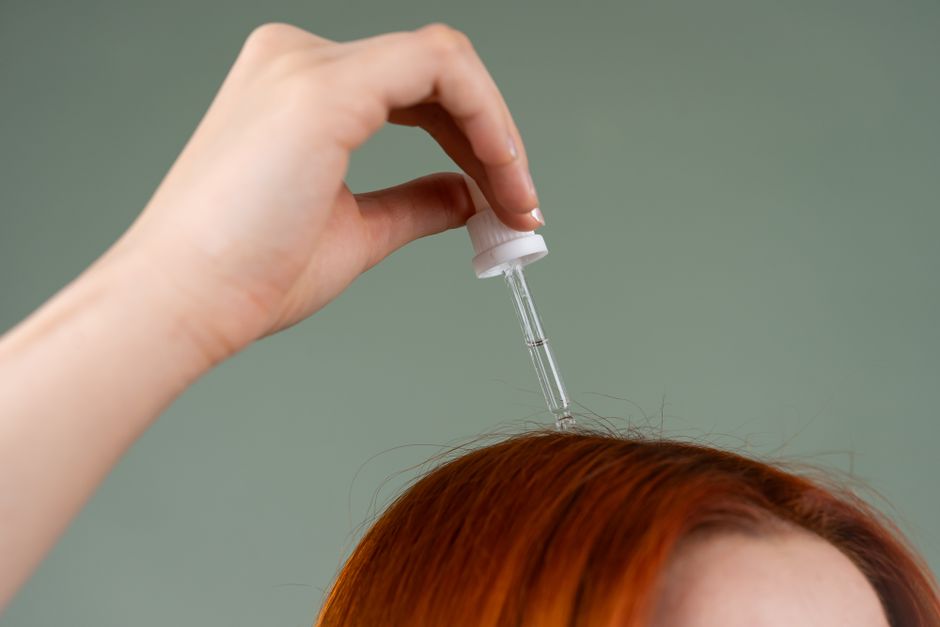
Hair oiling is a practice with deep roots in many cultures, but the modern advice about it is often confusing. Some say to apply it before washing, while others swear by overnight treatments. The complete timeline for when to use hair oil depends on your hair type, your goal, and the specific oil you choose. The most evidence-backed approach is to use oil as a pre-wash treatment to protect against damage, or as a light finishing touch for shine, rather than as a daily scalp treatment for everyone.
What Does Hair Oil Actually Do?
Hair oil works by coating the hair shaft. This layer of oil smooths down the cuticle, which is the outer layer of each strand. A smooth cuticle reflects light, which is why oil makes hair look shiny. The oil also reduces friction between strands, which can help prevent breakage when you brush or style your hair.
Oils do not “feed” the hair. Hair is dead tissue once it grows out of the scalp. It cannot absorb nutrients from oil. What oils do is provide a physical barrier. This barrier locks in moisture that is already in the hair and keeps out excess water that can cause swelling and damage.
Some oils, like coconut oil, are small enough to penetrate slightly into the hair cortex. Research published in the Journal of Cosmetic Science found that coconut oil can reduce protein loss in hair when used before or after washing. This is a mechanical effect, not a nutritional one. The oil fills gaps in the hair structure, making it stronger against the stress of washing and styling.
When Is the Best Time to Apply Hair Oil?
The best time to apply hair oil is 30 to 60 minutes before you shampoo. This is called a pre-wash treatment. The oil protects the hair from the harsh effects of shampoo, which strips away natural oils and can cause the hair to swell. When hair is coated with oil, the shampoo primarily removes the oil, not the hair’s natural moisture.
For people with dry or damaged hair, this pre-wash step is the most beneficial. The oil acts as a buffer. It reduces the protein loss that occurs during washing and makes the hair more manageable afterward.
Applying oil after washing is useful for shine and frizz control, but timing matters. The best time to apply oil after washing is while the hair is still damp, not soaking wet. Water in the hair can block the oil from coating the shaft evenly. Apply a few drops to the mid-lengths and ends, avoiding the scalp unless your hair is very dry.
Should You Leave Hair Oil On Overnight?
Leaving oil on overnight is a common practice, but it is not necessary for everyone. The evidence does not show that longer application times produce better results. The protective benefit of oil is achieved within 30 to 60 minutes. Leaving oil on for 8 hours adds no additional protection for most hair types.
There are downsides to overnight oiling. Oil can attract dust and dirt to the scalp. It can also clog hair follicles, which may contribute to irritation or even worsen certain scalp conditions like seborrheic dermatitis. For people with fine hair, overnight oiling can leave the hair feeling heavy and greasy, requiring a more aggressive shampoo that causes more damage.
If you have very thick, coarse, or severely damaged hair, overnight oiling may be helpful. But for most people, the shorter pre-wash window is sufficient. If you do choose to oil overnight, apply it to the lengths and ends only, not the scalp, and use a shower cap to avoid staining your pillowcase.





How Often Should You Oil Your Hair?
Frequency depends on your hair type and the condition of your scalp. For most people, oiling once a week is enough to see a benefit. This is the sweet spot for protecting hair during washing without weighing it down or irritating the scalp.
People with dry, curly, or textured hair may benefit from oiling two to three times a week. Curly hair produces less sebum, the natural oil from the scalp, so it tends to be drier and more prone to breakage. These hair types also benefit from oil applied between washes to maintain moisture and define curls.
People with fine, straight hair should oil less frequently. Once a week or even once every two weeks is sufficient. Oiling fine hair too often can make it look flat and greasy. The goal is to protect the hair, not to saturate it.
Scalp health matters more than hair texture. If you have an oily scalp, oiling the scalp is counterproductive. If you have a dry, itchy scalp, oiling the scalp may help, but it is not a treatment for underlying conditions like dandruff or psoriasis. For those conditions, you need a medicated treatment, not oil.
Which Oil Should You Use and When?
Not all oils are the same. Their molecular size determines whether they penetrate or simply coat the hair. This affects what each oil is best for.
| Oil Type | Primary Benefit | Best Used For |
|---|---|---|
| Coconut oil | Penetrates the hair cortex, reduces protein loss | Pre-wash treatment for damaged or high-porosity hair |
| Argan oil | Lightweight coating, adds shine, controls frizz | Post-wash finishing on damp or dry hair |
| Jojoba oil | Closely mimics human sebum, moisturizes scalp | Scalp massage for dry scalp, light pre-wash |
| Castor oil | Very thick, heavy coating | Occasional deep treatment for very dry, coarse hair |
| Mineral oil | Inexpensive, effective barrier, non-comedogenic | Pre-wash protection for those who tolerate it |
Coconut oil is the most studied for hair care. Its unique structure allows it to penetrate the hair shaft better than mineral or sunflower oil. However, coconut oil can be too heavy for fine hair. Some research suggests it can make hair stiff or brittle in certain conditions because it binds strongly to the hair protein.
Argan oil and jojoba oil are lighter options. They sit on the surface of the hair, smoothing it and adding shine without weighing it down. These are the best choices for a post-wash finish or for daily frizz control.
Castor oil is popular but has limited evidence for hair growth. It is a thick oil that coats the hair heavily. It may help prevent moisture loss in very dry hair, but it can be difficult to wash out. It should be used sparingly and rarely, not as a daily treatment.
When Should You Not Use Hair Oil?
There are situations where oiling your hair is not a good idea. Oiling the scalp when you have active dandruff can make it worse. The oil feeds the yeast that contributes to dandruff in some people. If you have flaking or an itchy scalp, skip the scalp oiling until the condition is under control.
Oiling before a chemical treatment is also unwise. Hair oils create a barrier that can interfere with hair dye or relaxers. These chemicals need to penetrate the hair to work. Oil can block them, leading to uneven results or damage from reapplication.
People with very fine or thin hair should avoid oiling the roots entirely. Oil at the roots makes hair clump together, exposing the scalp and making hair look thinner. Focus oil on the mid-lengths and ends, where the hair is oldest and most damaged.
Never apply oil to a scalp with open wounds, sores, or active infections. This can introduce bacteria and worsen the condition. If your scalp is painful, red, or has unexplained bumps, see a dermatologist before applying any product.
How to Apply Hair Oil Correctly
How you apply the oil matters as much as when you apply it. For a pre-wash treatment, warm the oil slightly in your hands. Apply it to dry hair, starting at the ends and working upward. Focus on the lengths, not the scalp, unless your scalp is very dry.
For a post-wash finish, use a very small amount. A pea-sized drop is often enough for shoulder-length hair. Rub it between your palms and gently press it onto the ends of damp hair. Do not rub it into the scalp.
Combing oil through the hair with a wide-tooth comb helps distribute it evenly. Never use a fine-tooth comb on oiled hair, as this can cause breakage. The oil makes the hair slippery, and fine-tooth combs pull on tangles.
Wash the oil out thoroughly with a gentle shampoo. You may need to shampoo twice to remove heavy oils like coconut or castor. Leaving residual oil on the scalp can trap dirt and lead to buildup.
When To Use Hair Oil: The Complete Timeline
Here is the practical timeline for most people. This is a general guide, not a strict rule. Adjust it based on how your hair responds.
- 30 to 60 minutes before washing: Apply oil to dry lengths and ends. Leave it on while you do other things, then shampoo as normal.
- Immediately after washing: Apply a tiny amount of oil to damp ends to seal in moisture and prevent frizz.
- Between washes: Apply a drop of light oil to dry ends if they look dull or feel rough. This is a touch-up, not a treatment.
- Once a week: Do a deeper pre-wash oil treatment, especially if your hair is dry or damaged.
- Overnight: Only for those with very thick or coarse hair. Apply to lengths and ends, cover with a shower cap, and wash in the morning.
The consistent finding across hair research is that oil protects hair from mechanical and chemical damage. It is not a growth stimulant for most people, and there is no evidence that more oil or longer application times are better. The key is consistency and moderation.
Pay attention to how your hair feels. If it looks greasy, limp, or heavy, you are using too much oil or applying it too often. If it still feels dry and brittle, you may need a slightly heavier oil or a longer pre-wash time. Your hair’s response is the most reliable guide.
Frequently Asked Questions
Can I leave hair oil in without washing it out?
Yes, but only in very small amounts and only on the lengths and ends. Leaving a heavy oil on the scalp can clog pores and attract dirt, leading to buildup or irritation.
Is it better to apply hair oil to wet or dry hair?
For pre-wash treatments, apply oil to dry hair because it coats the strand more evenly. For post-wash shine, apply a small amount to damp hair to seal in moisture.
Does oiling hair help it grow faster?
No clinical evidence confirms that oiling makes hair grow faster. Oiling can prevent breakage, which helps hair retain length, but it does not speed up growth from the follicle.
How much hair oil should I use?
Use a few drops for short hair, a pea-sized amount for shoulder-length hair, and a little more for longer or thicker hair. Start with less and add more only if needed.
