
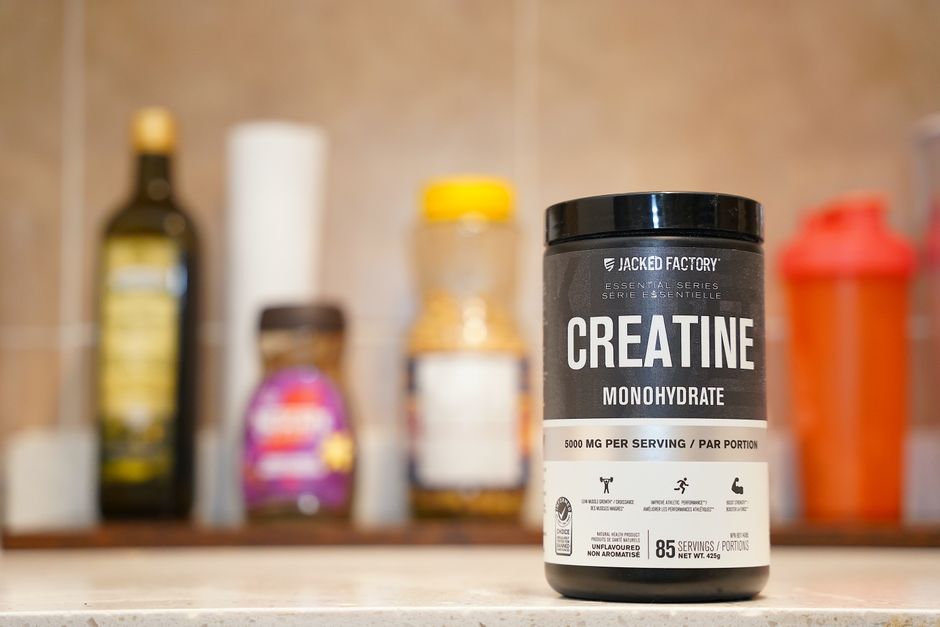
Creatine works through saturation, not timing. Taking it before a workout, after a workout, or on a rest day all raise muscle creatine stores as long as you take it consistently. The best time is the one you will remember every day. Rest days count too — muscle creatine levels fall back toward baseline when you stop, so skipping days off weakens the whole point.
When To Take Creatine Before After Rest Days?
Take it whenever it fits your routine, and take it on rest days as well. Timing relative to a workout is a minor factor compared with total daily intake and consistency.
The reason is simple physiology. Creatine is stored in skeletal muscle, and those stores fill up gradually with regular intake. Once muscle is saturated — which typically takes a few weeks of consistent daily dosing — the clock time of your scoop matters very little. What matters is that the scoop happens.
This is one of the few areas of sports nutrition where the mechanism is well understood. Oral creatine is absorbed, carried in the blood, and taken up by muscle cells against a concentration gradient. That uptake is slow and cumulative. A single dose does not produce a single effect. It adds to a pool.
So the practical answer is unglamorous. Pick a time you can repeat. Take it on training days and rest days alike. Do not overthink the clock.
Does It Matter If You Take Creatine Before Or After A Workout?
Probably not much. Some studies have looked at this directly, and results vary. The evidence does not clearly favor one over the other.
A few small trials have reported slightly better outcomes when creatine was taken shortly after resistance training compared with before. Other trials found no meaningful difference. The studies are generally small, and the effects, where seen, are modest. No strong consensus has emerged.
There is a plausible biological story for post-workout timing. Resistance exercise increases blood flow to working muscle and may influence how readily muscle takes up nutrients in the period afterward. That reasoning is reasonable but has not been shown to translate into a clear practical advantage in well-controlled trials.
What the research does support strongly is daily consistency. Muscle creatine stores rise with regular intake and fall when intake stops. The timing question is a detail layered on top of that foundation.
If you prefer training fasted and taking creatine afterward with a meal, that is fine. If you like taking it before you head to the gym as part of your routine, that is fine too. Neither choice is wrong.
Should You Take Creatine On Rest Days?
Yes. Rest days are part of the week, and muscle saturation does not pause because you skipped the gym.
Creatine stores decline when intake stops. The body continues to use and break down creatine phosphate during normal daily activity, and some creatine is lost through urine as creatinine. Without ongoing intake, muscle levels drift back toward what they were before you started.
Skipping weekends or rest days will not empty your muscles overnight. But it does reduce your average daily intake, and over time that can slow or blunt the saturation you worked to build. The simplest approach is to treat creatine like any other daily habit — same time, every day, whether or not you train.
Rest days are also a good opportunity if your training-day routine is chaotic. Many people find it easier to take creatine with breakfast or with an evening meal on days off. Build the habit on the easy days and it carries into the hard ones.
How Much Creatine Should You Take And Does Dose Size Affect Timing?
The established daily maintenance dose is 3 to 5 grams of creatine monohydrate per day. That range comes from the research literature on muscle saturation and is widely used in studies of creatine supplementation.
Dose size does affect timing in one specific way. Larger single doses are absorbed less efficiently than smaller ones. Some research indicates that very large single doses — in the range of 10 grams or more at once — result in more creatine being lost in urine compared with the same total amount split across the day.
This matters mainly if you are following a loading protocol. Loading typically involves around 20 grams per day split into four doses of about 5 grams each, taken over roughly a week, followed by a maintenance dose. Splitting the dose is the standard approach because it improves absorption and reduces the chance of loose stools, which large single doses can cause in some people.
If you are taking a standard 3 to 5 gram maintenance dose, splitting is unnecessary. One dose a day is enough, and the timing within the day is not critical.
No clinical guidelines currently exist for creatine dosing in children, and creatine use in pregnancy and breastfeeding has not been established as safe. Anyone in those groups should not treat general sports nutrition guidance as applying to them.
What About Taking Creatine With Food Or On An Empty Stomach?
Either works. Taking creatine with a meal that contains carbohydrate and protein may slightly improve uptake, based on the way insulin and nutrient delivery affect muscle.
Some studies suggest that combining creatine with a carbohydrate-containing meal, or with carbohydrate and protein together, increases muscle creatine retention compared with taking it alone. The effect appears modest and is not a reason to force a specific meal pattern.
Taking creatine on an empty stomach is generally well tolerated. Some people report mild stomach discomfort when they take it without food, particularly at higher doses. If that happens, taking it with a meal usually solves it.
Water intake matters more than food. Creatine draws water into muscle cells, and adequate hydration supports normal function. There is no need to drink excessive amounts, but staying normally hydrated is sensible.
What Happens If You Miss A Dose Or Take It At Different Times Each Day?
A missed dose here and there is not a problem. Muscle creatine stores change slowly, and one skipped day will not undo weeks of consistent intake.
Taking it at different times each day is also fine, as long as the total daily amount stays consistent. The body does not track clock time. It tracks how much creatine is available over days and weeks.
What does matter is stopping altogether. Muscle creatine levels return toward baseline after supplementation ends, typically over a period of weeks. Performance benefits tied to those elevated stores fade along with them.
If you struggle to remember, attach creatine to something you already do every day without fail — a morning coffee, a daily medication, brushing your teeth at night. Habit stacking tends to work better than willpower.
Does The Form Of Creatine Affect When You Should Take It?
Creatine monohydrate is the form with the most research behind it, and timing guidance for it applies to the general daily approach described here. Other forms are marketed with claims that are not well supported.
Creatine monohydrate has been studied extensively in both short- and longer-term trials. It is the reference standard against which other forms are compared. Claims that other forms — such as creatine hydrochloride, buffered creatine, or creatine ethyl ester — are absorbed better or work faster have not been confirmed in well-controlled human trials.
One practical point about monohydrate: it dissolves poorly in cold water. Warm water or a brief stir with a shaker helps. This has nothing to do with effectiveness, only with the experience of drinking it.
Some people experience mild water retention when they start creatine, particularly during a loading phase. This is a known and expected effect of creatine drawing water into muscle cells. It is not the same as general bloating and typically settles.
The Short Version
Take creatine every day, including rest days. Take it at a time you can repeat. Take 3 to 5 grams of creatine monohydrate for maintenance, or split a loading dose across the day if you choose to load.
Do not spend much energy on before versus after. The evidence does not firmly support one over the other. Consistency across weeks is what fills muscle stores, and consistency is what keeps them filled.
Frequently Asked Questions
Should I take creatine before or after a workout?
Either is fine. Research has not established a clear advantage for one over the other, and daily consistency matters more than timing.
Do I need to take creatine on rest days?
Yes. Muscle creatine stores decline when intake stops, so taking it every day — including rest days — helps maintain saturation.
How much creatine should I take per day?
The standard maintenance dose is 3 to 5 grams of creatine monohydrate daily. Loading protocols typically use around 20 grams per day split into smaller doses for about a week.
Can I take creatine on an empty stomach?
Yes, it is generally well tolerated without food. If it causes mild stomach discomfort, taking it with a meal usually helps.
