
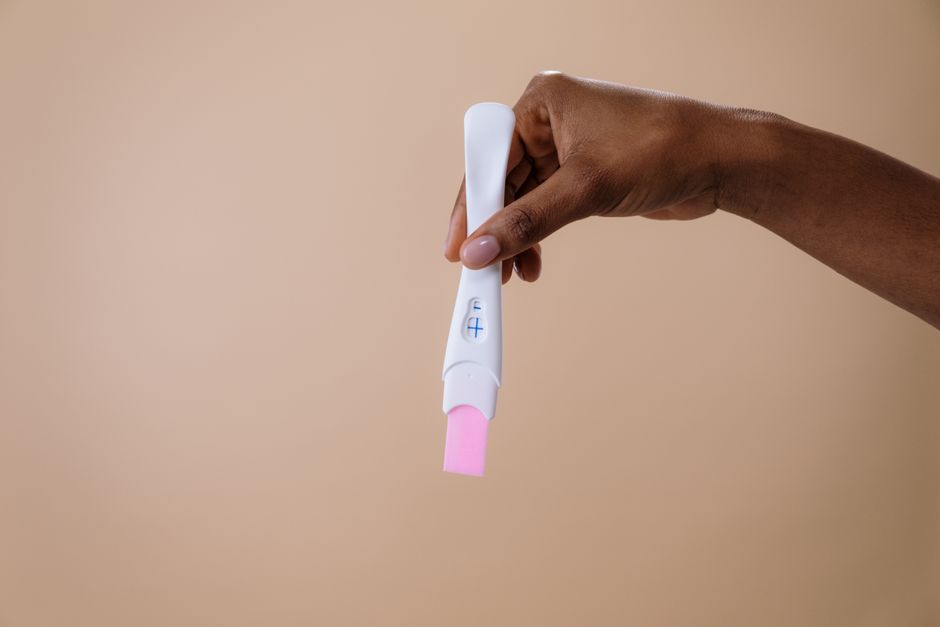
If you know the day you ovulated, the most reliable time to take a pregnancy test is the first day of your missed period — usually about 14 days after ovulation. Testing earlier than that raises the chance of a false negative, because it takes time for the hormone hCG to build up to a level a home test can detect.
That 14-day rule is not arbitrary. It reflects the biology of implantation and hormone production. Understanding why helps you decide when testing is worth your time — and when waiting a few more days will give you a clearer answer.
When To Take A Pregnancy Test Based On Ovulation?
Home pregnancy tests detect human chorionic gonadotropin, or hCG, a hormone the developing placenta produces after an embryo implants in the uterus. Ovulation and implantation are two separate events, and the gap between them is what determines when a test can turn positive.
After ovulation, an egg survives roughly 12 to 24 hours if it is not fertilized. If sperm fertilizes the egg, the resulting embryo travels to the uterus and implants in the lining, a process that generally happens about 6 to 12 days after ovulation. Only after implantation does the body begin making hCG.
Once hCG production starts, levels roughly double every 48 to 72 hours in early pregnancy. It takes several days for the amount to reach the detection threshold of a typical home test. Adding the implantation window to the time needed for hCG to rise is why waiting until a missed period — about 14 days after ovulation — gives the most trustworthy result.
Why the timing matters
Testing too early does not just risk a false negative. It can also catch a very early pregnancy that later does not continue, sometimes called a chemical pregnancy. A positive result that fades within days can be confusing and emotionally difficult. Waiting until around the missed period reduces this kind of uncertainty.
How Many Days After Ovulation Can You Test?
Most home tests are designed to be used from the first day of a missed period. That timing lines up with roughly 14 days after ovulation for people with regular cycles.
Some tests are marketed as sensitive enough to use a few days before a missed period. These tests can detect lower levels of hCG, but using them early comes with a real trade-off. The earlier you test, the higher the chance the result is negative even if you are pregnant, simply because hCG has not risen enough yet.
If you track ovulation carefully and want to test before your missed period, the earliest most sensitive tests claim to detect pregnancy is around 5 to 6 days before the expected period. That is roughly 8 to 9 days after ovulation. Even then, a negative result is not conclusive. If you test early and get a negative, retesting after your missed period gives a far more reliable answer.
How Ovulation Tracking Changes Your Testing Date
The 14-day guideline assumes a 28-day cycle with ovulation around day 14. Many people do not fit that pattern, which is why ovulation tracking can sharpen your testing window.
Ovulation tracking methods estimate when you released an egg, so you can count forward instead of guessing. Common approaches include:
- Ovulation predictor kits — urine tests that detect a surge in luteinizing hormone (LH), which typically happens 24 to 36 hours before ovulation.
- Basal body temperature — a slight sustained rise in waking temperature usually confirms ovulation already happened, often the day before the rise.
- Cervical mucus changes — clearer, stretchy mucus tends to appear around fertile days, though it is less precise than hormone testing.
- Cycle apps — useful for patterns over time, but estimates based on averages can be off, especially if your cycles vary.
An LH surge predicts ovulation is coming, not that it has occurred. Basal body temperature confirms it after the fact. Knowing which method you used matters, because the count to your test date starts from actual ovulation, not from the surge itself.




What Can Cause a False Negative or False Positive?
A false negative — a negative result when you are actually pregnant — most often comes from testing too early. Other causes include drinking a lot of fluid before testing, which dilutes urine, or using a test incorrectly or past its expiration date.
False positives are less common but possible. Certain fertility medications that contain hCG can trigger a positive result. In rare cases, some medical conditions can raise hCG levels without a pregnancy. If a positive result is unexpected or unclear, a healthcare provider can confirm with a blood test, which measures hCG more precisely than a urine test.
One detail people often miss: a faint line is still a line. Home tests are designed to show a visible result when hCG is present, and faintness usually reflects a lower hormone level rather than an invalid test. Confirm any positive result with your provider.
Morning vs. Evening: Does Time of Day Matter?
For early testing, first-morning urine is generally the most concentrated, which can make a low level of hCG easier to detect. As pregnancy progresses and hCG rises, the time of day matters less.
If you are testing before your missed period, using the first urine of the day gives you the best chance of an accurate result. If you are testing after a missed period, concentration is usually high enough that timing is less important. Always follow the instructions on your specific test, since sensitivity varies between brands.
When Should You See a Healthcare Provider?
Contact a provider if you have a positive test and want confirmation, if you have symptoms such as pain or bleeding, or if your period is late but tests stay negative.
A blood test can measure the exact amount of hCG and is more sensitive than a urine test. In early pregnancy, providers sometimes repeat the blood test to see whether hCG is rising as expected, which can offer information a single home test cannot.
If you have been trying to conceive for a year, or six months if you are 35 or older, a provider can help evaluate whether anything is affecting your ability to conceive. These timelines are general guidance, and your situation may call for a different approach.
Frequently Asked Questions
How soon after ovulation can I take a pregnancy test?
The most reliable time is about 14 days after ovulation, which usually lines up with the first day of a missed period. Highly sensitive tests may detect pregnancy as early as 8 to 9 days after ovulation, but a negative result that early is not conclusive.
Can I get a positive pregnancy test 7 days after ovulation?
It is possible but uncommon, because implantation and the rise in hCG may not have happened yet. Most pregnancies are not detectable that early, so a negative result at 7 days does not mean you are not pregnant.
Is it better to test in the morning or at night?
First-morning urine is generally the most concentrated, which can help detect low hCG levels when testing early. After a missed period, the time of day usually matters less.
Why did I get a negative test then a positive one days later?
This usually means hCG had not risen high enough to be detected at the first test. Testing again a few days later, once hCG has increased, can give a positive result.
