
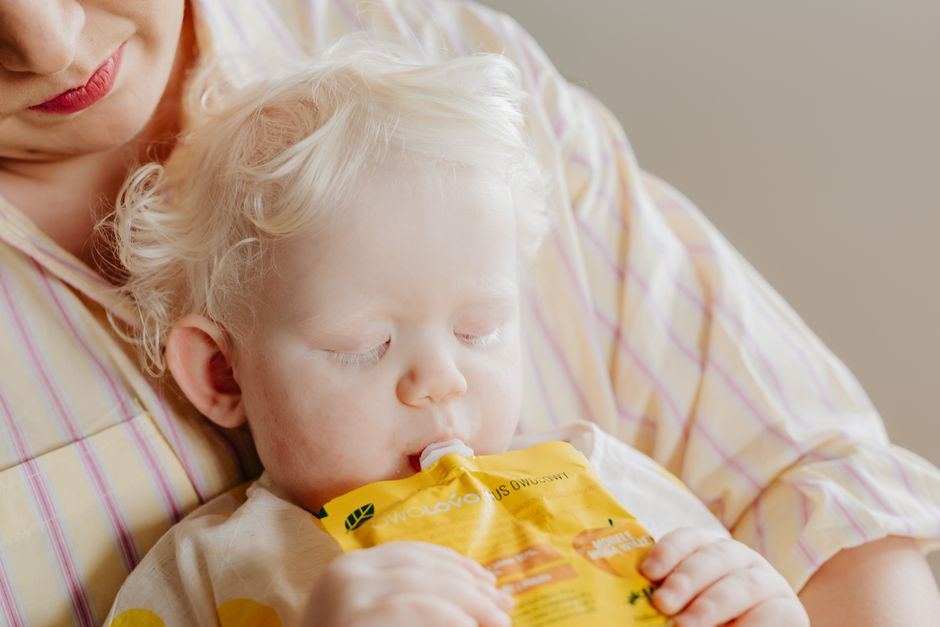
Babies can start having small amounts of oil added to their food around 6 months of age, when they begin eating solid foods alongside breast milk or formula. At that stage, a common starting point is about half a teaspoon (roughly 2 to 3 milliliters) of a suitable oil per day, mixed into a puree or soft food. Oils are not a required food group for babies, and the amount that fits depends on the rest of what your baby eats, so treat these numbers as a general guide rather than a target you have to hit.
Oil is easy to overthink. It is calorie-dense and provides fats a growing baby needs, but it is also easy to add too much without noticing. This guide explains when oils can be introduced, how much is reasonable, which oils are better choices, and where the evidence is genuinely thin.
When To Introduce Oil In Baby Food And How Much?
Around 6 months is when most babies are developmentally ready for solid foods, and that is also when small amounts of oil can be added to those foods. Before 6 months, babies should get their nutrition from breast milk or formula alone, and oil has no role in that period.
For the amount, there is no single official number that applies to every baby. Guidance from pediatric and nutrition bodies generally treats added fats as part of the overall fat intake a baby needs, not as a separate requirement. A practical range many clinicians and feeding resources mention is roughly half a teaspoon to one teaspoon (about 2 to 5 milliliters) of oil per day in the early months of solid feeding, adjusted based on the baby’s total diet and growth.
Two things matter more than the exact number:
- Oil adds calories. A baby who is eating well and growing normally does not need much of it. A baby who is underweight or a picky eater may benefit from more calorie-dense food, and a clinician can advise on that.
- Oil is not a substitute for nutrient-rich foods. It should be added to foods that already carry nutritional value, not used to make empty foods more appealing.
If your baby is breastfed or formula-fed and eating a variety of solid foods, the fat in breast milk, formula, and whole foods like avocado, nut butters (thinned safely), and full-fat yogurt already covers much of the need. Added oil is a supplement to that, not the foundation.
Why Do Babies Need Fat In Their Diet?
Fat is not optional for infants. It is a major source of energy and a building block for brain and nerve development. Babies grow faster in their first year than at any other time of life, and their brains use a large share of the energy they take in.
Breast milk and infant formula are both designed to deliver fat in forms a baby can absorb and use. As solids gradually replace some milk feeds, the fat has to come from somewhere, and that is where foods like full-fat dairy, avocado, nut butters, oily fish, and oils enter the picture.
One clarification worth making: “fat” in nutrition is not the same as “body fat.” Dietary fat is a nutrient. It supports brain development, helps the body absorb certain vitamins (A, D, E, and K are fat-soluble), and provides essential fatty acids the body cannot make on its own. These include linoleic acid and alpha-linolenic acid, which must come from food.
Because fat is calorie-dense, it is also an efficient way to help a baby who struggles to eat enough get more energy from smaller portions. That is often the reason a clinician suggests adding a little oil or butter to food.
Which Oils Are Best For Baby Food?
There is no single “best” oil, and no large trials have compared oils head-to-head in infants to declare a winner. The more useful way to think about it is which oils provide fats that add nutritional value and are well tolerated.
Oils that tend to come up in infant feeding guidance include:
- Olive oil — mostly monounsaturated fat, mild flavor, widely used.
- Canola oil — contains alpha-linolenic acid, an essential omega-3 fat.
- Soybean oil — also a source of alpha-linolenic acid and commonly used in commercial infant foods.
- Avocado oil — similar fat profile to olive oil, mild taste.
Oils high in omega-3 fats, such as flaxseed and walnut oil, are sometimes suggested, but they are fragile and go rancid quickly. If used, they should be stored cold and used fresh. They are not a substitute for the omega-3 fats found in oily fish, which provide a different and more directly usable form.
What to avoid: added salt, added sugar, and strong flavorings are not appropriate for infant food. Refined versus unrefined oil matters less than freshness and safe storage.




How Much Oil Is Too Much?
There is no sharp cutoff, but the concern with too much oil is that it displaces other foods. Oil provides calories without protein, vitamins, minerals, or fiber. If a baby fills up on oil-rich food, they may eat less of the foods that carry those nutrients.
Signs that the amount may be too high include loose stools, a baby who seems to lose interest in other foods, or weight gain that outpaces what a clinician expects. None of these alone confirms a problem, and all of them have other possible causes.
As a general frame, oil is a small addition, not a main ingredient. A teaspoon stirred through a bowl of vegetables or grains is very different from several teaspoons across multiple meals. If you are unsure, the most reliable source of guidance is your baby’s pediatrician or a registered dietitian who can look at the whole diet and the baby’s growth.
Are There Risks Or Cautions With Oil For Babies?
For most babies, a small amount of a fresh, plain oil mixed into food is well tolerated. The cautions that matter are specific.
Choking and aspiration are not oil risks, but they are relevant to how oil is served. Oil should be mixed into food, never given by spoon on its own, because a baby cannot safely manage a mouthful of pure liquid fat.
Allergies are a separate consideration. Refined oils generally do not contain the proteins that trigger allergic reactions, but unrefined or cold-pressed oils may contain trace proteins. If a baby has a known food allergy, check with a clinician before introducing an oil made from that same food.
Storage matters. Oils can go rancid, and rancid oil tastes unpleasant and offers no benefit. Keep oils in a cool, dark place, use them within a reasonable time, and discard any that smell off.
One more point: oil is not a treatment. It will not fix constipation, reflux, or poor weight gain on its own. These are clinical issues that need a proper evaluation, not a dietary tweak.
Do Babies Need Oil At All?
No. Oil is not a required food for babies. It is one option among many for providing fat and calories, and it is entirely reasonable to skip it if a baby is eating a varied diet and growing well.
Foods like avocado, full-fat yogurt, cheese, eggs, nut butters thinned to a safe consistency, and oily fish all provide fat along with other nutrients. For many families, these foods cover the need without any added oil at all.
Oil becomes more useful in specific situations: a baby who needs extra calories, a baby who is not eating enough volume, or a diet that is otherwise low in fat. In those cases, adding a little oil to food is a simple, practical step. In others, it is optional.
How Should Oil Be Added To Baby Food?
Keep it simple. Stir a small amount into a puree, mashed vegetable, cooked grain, or soft food just before serving. Start with less than you think you need and see how your baby responds.
A few practical notes:
- Add oil after cooking, not during, when possible. Some oils break down at high heat.
- Mix it in thoroughly so it is distributed evenly rather than pooling.
- Introduce one new oil at a time so you can tell if a food does not agree with your baby.
- Do not add oil to bottles of breast milk or formula. It changes the composition and is not how these feeds are designed to be given.
Texture matters as babies get older. By around 8 to 10 months, many babies move toward soft finger foods, and oil can be used in cooking those foods rather than only stirred into purees.
Frequently Asked Questions
At what age can I add oil to my baby’s food?
Around 6 months, when babies start eating solid foods alongside breast milk or formula. Before that, breast milk or formula alone meets all of a baby’s fat needs.
How much oil should I add to baby food?
A common starting range is about half a teaspoon to one teaspoon (roughly 2 to 5 milliliters) per day, adjusted to the rest of the diet. There is no single official number, so a pediatrician or dietitian can give more specific guidance.
Which oil is best for baby food?
Olive, canola, soybean, and avocado oils are all reasonable choices, and no large trials have shown one to be clearly better for infants. Freshness and safe storage matter more than the specific type.
Can I give my baby oil every day?
Yes, a small amount daily is generally fine if it fits the overall diet. Oil is not required, so skipping it is also reasonable if your baby eats a varied diet and is growing well.
