
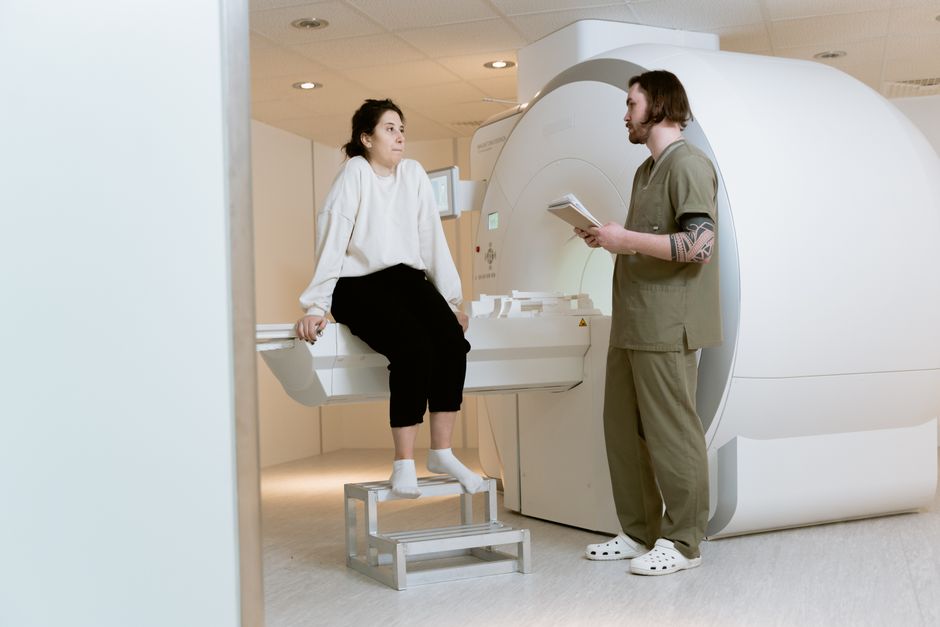
Guidelines from major bone health organizations generally recommend DEXA screening for all women aged 65 and older and all men aged 70 and older. Younger adults should be tested if they have risk factors that raise their odds of osteoporosis or fracture. A DEXA scan is a low-dose X-ray that measures bone mineral density, usually at the hip and spine, and it is the standard test used to diagnose osteoporosis.
The test is quick and painless. It takes about 10 to 15 minutes on a table while a scanner passes over you. The result is a number that tells you and your doctor how your bone density compares with a healthy young adult and with people your own age.
When To Get A Dexa Scan Age And Risk Factors
Age is the single strongest reason to get a DEXA scan. Bone mass peaks in your late 20s and early 30s, then slowly declines in both men and women. For women, the drop speeds up sharply after menopause because estrogen protects bone, and estrogen levels fall.
The widely used thresholds are:
- Women 65 and older: routine screening, no other risk factors needed.
- Men 70 and older: routine screening.
- Postmenopausal women under 65 and men age 50 to 69: screening when a risk assessment tool or your doctor’s judgment suggests elevated risk.
These ages come from long-standing guidance used by bone health organizations. Some groups now encourage earlier risk assessment in younger postmenopausal women so that testing can be targeted. The general direction has not changed: age 65 for women and 70 for men remain the standard screening ages.
A practical point many people miss: a DEXA scan is not only about finding osteoporosis. It also finds osteopenia, a lower-than-normal bone density that is not yet osteoporosis. Knowing your number earlier gives you and your doctor more room to act.
Which Risk Factors Mean You Should Be Tested Earlier?
Certain conditions and habits raise your risk enough that testing before the standard age makes sense. Your doctor can weigh these together rather than relying on any one of them.
- Previous fracture: a broken bone from a minor fall or low-impact injury after age 50 is a strong warning sign.
- Family history: a parent who had a hip fracture.
- Body size: low body weight is linked to lower bone density.
- Smoking and heavy alcohol use: both are associated with weaker bone.
- Long-term steroid use: glucocorticoid medications such as prednisone, taken for months or longer, are a well-established cause of bone loss.
- Medical conditions: examples include rheumatoid arthritis, hyperthyroidism, and malabsorption conditions like celiac disease.
- Medications: some drugs used for breast and prostate cancer lower hormone levels and accelerate bone loss.
- Early menopause: menopause before the typical age, or removal of the ovaries, reduces lifetime estrogen exposure.
If more than one of these applies to you, ask your doctor whether a scan is appropriate. The decision is a conversation, not a checklist you complete alone.
What Do the Results Actually Mean?
DEXA results are reported as a T-score and a Z-score. The T-score compares your bone density with that of a healthy young adult of the same sex. It is the number used to diagnose osteoporosis.
The World Health Organization categories are well established:
- T-score of -1.0 or higher: normal bone density.
- T-score between -1.0 and -2.5: osteopenia, also called low bone mass.
- T-score of -2.5 or lower: osteoporosis.
The Z-score compares you with people your own age. It matters most in younger people and children, where a low Z-score can point to a secondary cause of bone loss worth investigating.
A diagnosis of osteoporosis is not automatic treatment. Treatment decisions also weigh your fracture risk, which combines your bone density with age, prior fractures, and other factors. Some people with osteopenia are treated. Many are not, and instead focus on lifestyle and monitoring.
How Often Should You Repeat a DEXA Scan?
There is no single repeat schedule that fits everyone. For most people with normal bone density, repeating the test every several years is reasonable. For people with osteoporosis or those being treated, repeat scans are typically done sooner to track change.
Two honest caveats. First, bone density changes slowly, so testing too often rarely adds useful information. Second, a repeat scan should ideally be done on the same machine, because results from different scanners can differ slightly and make real change hard to read.
Your doctor will set the interval based on your results, your risk factors, and whether you are on treatment. Ask what interval makes sense for you rather than assuming a fixed number of years.
What Are the Risks and Limitations of a DEXA Scan?
The radiation dose from a DEXA scan is very low, lower than a standard chest X-ray. It is not a procedure that requires contrast or causes discomfort. The main limitation is not safety but interpretation.
DEXA measures density, not bone quality. Two people can have the same T-score and different actual fracture risk. It also can be affected by things like spinal arthritis or prior spine surgery, which can falsely raise the reading at the spine. In those cases, the hip reading may be more reliable.
For these reasons, a DEXA result is one input among several. A fracture risk calculator that combines bone density with other clinical factors is often used alongside it to guide decisions.
Can You Prevent Bone Loss Before Your First Scan?
Yes, and the steps are well established. Weight-bearing exercise, such as walking, and resistance training help maintain bone. Adequate calcium and vitamin D intake support bone health. Not smoking and limiting alcohol reduce risk.
These habits do not replace testing, but they matter at every age. Building bone earlier in life and slowing loss later both change your trajectory. If you are approaching the screening age, this is a good time to review your habits with your doctor.
One clarification worth making: supplements are not a substitute for a healthy diet and exercise, and more is not always better. Calcium and vitamin D needs vary by age and health status, so discuss amounts with your doctor rather than guessing.
What Should You Expect During the Test?
You lie on a padded table while a scanner arm passes over you. You may be asked to hold still and to change position once or twice. There are no injections and no dye. You can usually eat and drink normally beforehand.
Wear comfortable clothing without metal zippers or buttons, or you may be given a gown. Results are typically read by a radiologist and sent to your doctor within days. Plan to discuss the numbers and what they mean for you at a follow-up visit.
Frequently Asked Questions
At what age should a woman get a DEXA scan?
Women aged 65 and older are generally advised to have routine DEXA screening. Younger postmenopausal women should be tested if they have risk factors such as a prior fracture or long-term steroid use.
Can you have osteoporosis with a normal DEXA scan?
It is possible to have a fragility fracture with a bone density reading above the osteoporosis threshold. This is why fracture risk assessment considers your history and other clinical factors, not the T-score alone.
Is a DEXA scan the same as a bone density test?
Yes, DEXA is the standard method used for bone density testing. It measures bone mineral density at the hip and spine and is used to diagnose osteoporosis.
Do you need a referral for a DEXA scan?
In the United States, a referral or order from a doctor is usually required. Coverage and requirements vary by insurance plan, so check with your provider before scheduling.
