
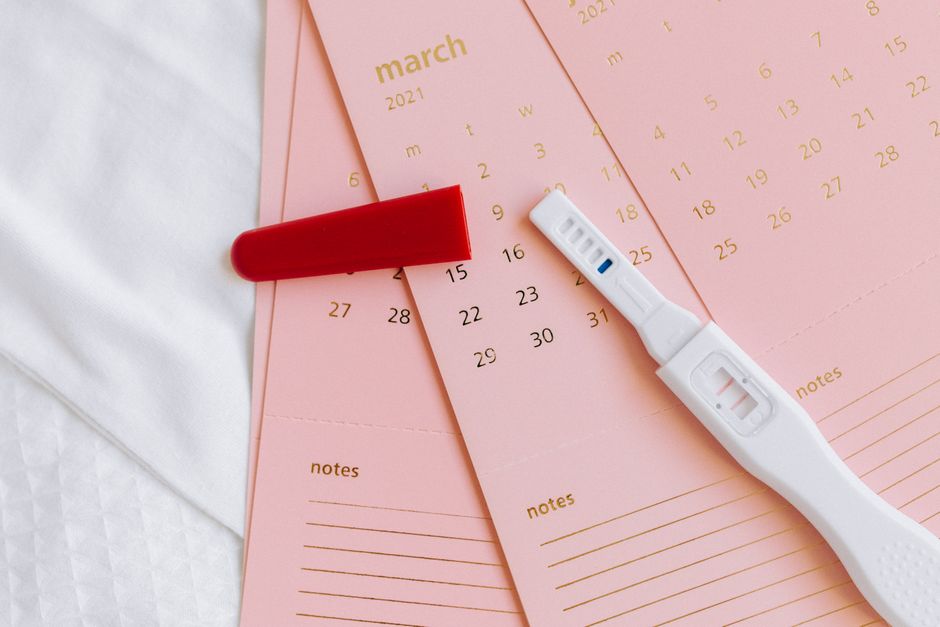
Ovulation tests work best when you start testing a few days before you expect to ovulate and keep testing daily until you see a positive result. For a typical 28-day cycle, that means starting around day 10 or 11 of your cycle. If your cycles are longer or irregular, start earlier and test for more days.
The goal is to catch the surge in luteinizing hormone (LH) that triggers ovulation. That surge usually happens 24 to 36 hours before an egg is released. Timing your tests to land in that window is the whole point.
How Do Ovulation Tests Actually Work?
Ovulation tests detect luteinizing hormone in your urine. LH is the hormone that spikes just before your ovary releases an egg.
Most tests use strips or sticks you hold in your urine stream or dip into a cup. A test line appears next to a control line. When the test line is as dark as or darker than the control line, that’s a positive result. It means your LH is surging.
Here’s something many people get wrong: a positive ovulation test does not mean you are ovulating at that exact moment. It means ovulation is likely coming soon, usually within a day or two. The egg itself lives only about 12 to 24 hours after release.
One clarification worth knowing. Ovulation tests and pregnancy tests look similar but measure different hormones. A pregnancy test detects hCG. An ovulation test detects LH. They are not interchangeable, even though the strips can look identical.
When To Do Ovulation Test: Finding Your Start Day
Your start day depends on your cycle length, not the calendar. The first day of your period is day 1. Count from there.
The general rule: subtract 17 from your average cycle length to get your start day. This gives you a buffer of several days before ovulation so you don’t miss the surge.
Here’s how that works in practice:
- 28-day cycle: start testing around day 11
- 30-day cycle: start testing around day 13
- 32-day cycle: start testing around day 15
- 35-day cycle: start testing around day 18
Once you get a positive, you can stop testing for that cycle. If you never get a positive, keep testing for a few more days before assuming you missed it or didn’t ovulate.
If your cycles are irregular, this math gets harder. You may need to start earlier and test longer. Some people use the earliest cycle length they’ve had in recent months to set their start day, so they don’t begin too late.
What Time of Day Should You Test?
Most ovulation tests are best used in the afternoon or early evening. LH tends to build up in urine over several hours, and many people see their first positive more clearly later in the day.
First morning urine is generally not recommended for ovulation tests, unlike pregnancy tests. Overnight urine can be too concentrated and may not reflect the surge as clearly.
Try to test around the same time each day. This makes it easier to compare results and spot the shift from negative to positive. If you drink a lot of fluids, you may dilute your urine and get a weaker line. Some people limit fluids for a couple of hours before testing.
These are general practices, not hard rules. Test timing can vary by brand, so follow the instructions that come with your specific test.


How Many Days Should You Keep Testing?
Keep testing daily until you get a positive result. For most people, that means testing for several days in a row.
If you get a positive, you don’t need to keep testing that cycle. The surge has been caught. Some people test again to watch the line fade, but it doesn’t add useful information.
If you’ve tested for a week or more past your expected ovulation date with no positive, several things could be happening:
- You ovulated later than expected
- You missed the surge because you tested at the wrong time of day
- Your urine was too diluted
- You didn’t ovulate that cycle
An occasional cycle without ovulation can happen. Repeated cycles without a positive test are worth discussing with a clinician.
Can Ovulation Tests Confirm That You Ovulated?
No. This is one of the most misunderstood points about ovulation tests.
A positive test shows that LH surged. It does not confirm that an egg was actually released. In most cases a surge is followed by ovulation, but the test cannot verify it happened.
If you want to confirm ovulation after the fact, other methods exist. A sustained rise in basal body temperature (a slight increase that stays elevated after ovulation) is one sign. A progesterone blood test drawn in the second half of the cycle is another, and it’s the method clinicians often use.
This distinction matters. Relying only on LH tests tells you when ovulation was likely, not whether it occurred.
When Should You Have Sex After a Positive Test?
The most fertile window is the day of the LH surge and the one to two days after. Sperm can survive in the reproductive tract for up to about five days, so intercourse in the days before ovulation also matters.
Because the egg survives only about 12 to 24 hours after release, timing intercourse close to the surge gives the best chance. Many people aim for intercourse on the day of the positive test and the following day.
You don’t need to wait for a positive test to start trying. The days leading up to ovulation are fertile too. The test helps you identify the peak, not the start of your fertile window.
Do Ovulation Tests Work for Everyone?
Ovulation tests are less reliable for some groups. People with polycystic ovary syndrome (PCOS) often have higher baseline LH levels, which can cause false positives or make the surge hard to read. Some medications and health conditions can also affect results.
If you have PCOS or irregular cycles, talk with a clinician about whether these tests fit your situation. Other tracking methods or clinical monitoring may be more useful.
For people with fairly regular cycles, ovulation tests are a reasonable and widely used tool. They are not a substitute for medical evaluation if you’ve been trying to conceive without success.
Frequently Asked Questions
What day should I start ovulation testing?
Start a few days before you expect to ovulate. For a 28-day cycle, that’s around day 11, based on subtracting 17 from your cycle length.
Can I use ovulation tests with first morning urine?
Most brands recommend testing in the afternoon or early evening rather than with first morning urine. Follow the instructions on your specific test.
Does a positive ovulation test mean I ovulated?
No. It shows an LH surge, which usually comes before ovulation, but it does not confirm that an egg was released.
How long after a positive ovulation test do you ovulate?
Ovulation typically happens about 24 to 36 hours after the LH surge. The egg then survives roughly 12 to 24 hours.
