
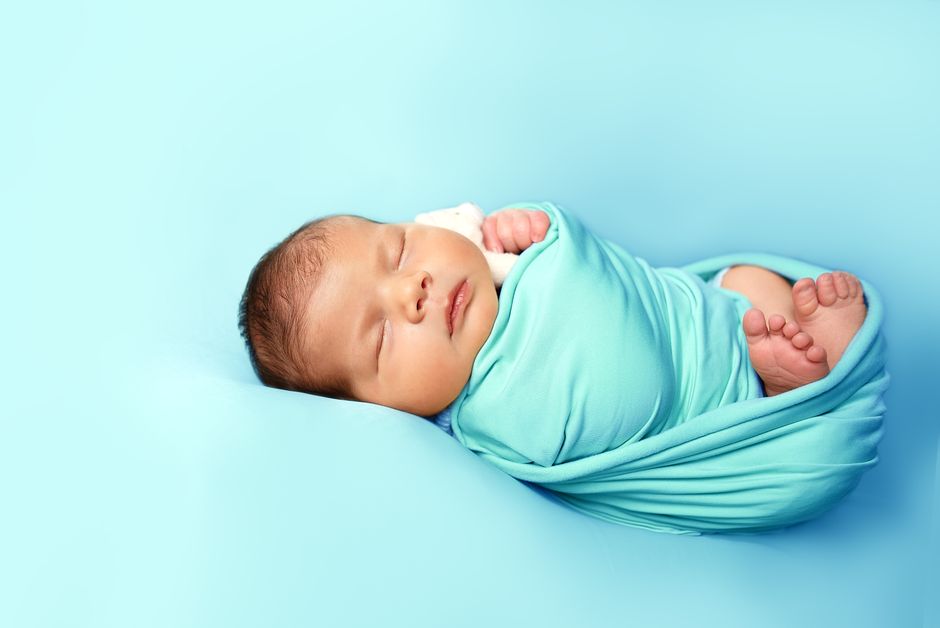
The evidence-based answer is clear: stop swaddling as soon as your baby shows any sign of trying to roll over, which for many babies happens around 2 to 3 months. The American Academy of Pediatrics advises parents to stop swaddling at that point, because a swaddled baby who rolls onto their stomach may not be able to roll back. Some babies start rolling earlier, so watch your baby rather than the calendar.
When Should You Stop Swaddling a Baby?
Stop swaddling the moment your baby begins attempting to roll. That is the single most important rule. The AAP recommends discontinuing swaddling at the first signs of rolling, and many pediatricians advise stopping by around 2 months as a safety margin.
Rolling usually starts between 3 and 5 months, but some babies attempt it earlier. A baby who has never rolled can still surprise you — the first roll can happen suddenly, and a swaddled baby has their arms pinned. That is the danger.
The reason comes down to the mechanics of infant sleep. Swaddling keeps a baby on their back, which is protective. But once a baby can roll, the swaddle becomes the opposite of protective. A swaddled baby who ends up face-down has no way to push up or turn their head freely. This raises the risk of suffocation.
Some parents stop swaddling earlier for other reasons — a baby who fights the swaddle, runs hot, or has started breaking free. Those are all reasonable signals to stop. The rolling milestone is the one that is non-negotiable.
Why Does Rolling Change Everything?
Because a swaddled baby cannot use their arms to reposition. That is the whole issue. When a baby rolls onto their stomach while swaddled, the arms are trapped against the body. The baby cannot push up, cannot turn the head easily, and cannot roll back.
Unswaddled babies who roll onto their stomach during sleep are generally considered safe to leave in that position once they can roll both ways on their own. The risk changes when the arms are restrained.
This is not a theoretical concern. It is the reason the AAP and safe-sleep guidance are consistent on this point. The transition from back to stomach is the moment the swaddle stops being a safety tool and starts being a hazard.
What Are the Signs Your Baby Is Ready to Stop?
Watch for rolling attempts during awake tummy time first. That is often where you will see it before it shows up during sleep. Look for these signs:
- Pushing up onto the arms during tummy time
- Rocking side to side or kicking to shift position
- Rolling from back to side, even briefly
- Rolling from back to stomach or stomach to back
- Breaking out of the swaddle during sleep
Any of these is a signal to stop. The back-to-side roll is often the earliest clue. You do not need to wait for a full roll.
If you are unsure whether what you are seeing counts as a roll attempt, treat it as one. The downside of stopping too early is a few rough nights. The downside of stopping too late is a serious safety risk.





How Do You Transition Away From Swaddling?
There is no single method that works for every baby. The transition is often bumpy, and that is normal. Most parents find it takes somewhere between a few nights and a couple of weeks for sleep to settle.
A common approach is to go one arm out first. This gives the baby some freedom to self-soothe while still feeling contained. After a few nights, free the second arm. Then switch to a sleep sack.
Other parents go cold turkey straight to a sleep sack. Some babies barely notice. Others protest for several nights. Both approaches are reasonable — there is no evidence that one method produces better sleep outcomes than another.
Here is a non-obvious point worth knowing: a baby who has been swaddled and suddenly has free arms may startle themselves awake more often. That startle reflex is normal and fades on its own. It is not a sign the transition is failing.
Room temperature matters during this shift. A baby in a sleep sack needs appropriate sleep clothing underneath. Overheating is a known risk factor for sleep-related infant deaths, so dress your baby in light layers and keep the room at a comfortable temperature.
What Should You Use Instead of a Swaddle?
A wearable sleep sack is the standard replacement. It keeps a baby warm without restricting the arms, and it cannot be kicked off like a loose blanket.
Loose blankets, pillows, and stuffed animals should stay out of the crib. The AAP recommends a bare sleep surface — just a fitted sheet — for infants. This applies whether or not your baby was ever swaddled.
Some products are marketed as “transition swaddles” with removable arms or weighted panels. Be cautious here. Weighted sleep products for infants have been linked to safety concerns, and the evidence supporting them is limited. No large human trials have confirmed that weighted sleep sacks are safe for infants. Several health organizations have called for caution or advised against them.
If you want a middle step, an arms-free sleep sack is the safer choice. It gives warmth and a bit of containment without restraint.
Does Swaddling Still Have a Place?
Yes, for newborns who have not started rolling. Swaddling can help young infants settle and stay on their backs, which is the position recommended for sleep. For the first weeks of life, it can be a useful tool.
But swaddling was never meant to be a long-term solution. It is a short-term aid during the newborn period. Once rolling enters the picture, the calculation flips.
There is also a practical limit on how tight a swaddle should be. It should be snug around the arms but loose around the hips, so the legs can bend and move. A too-tight swaddle around the hips has been associated with hip problems in some infants. If you are unsure how to swaddle correctly, ask your pediatrician or a nurse to show you.
Some parents stop swaddling for reasons unrelated to rolling — a baby who runs hot, who hates having arms pinned, or who is breaking out nightly. Those are all valid reasons to stop sooner. There is no benefit to pushing through if the swaddle is not helping.
What About Nighttime Wake-Ups After Stopping?
Expect some disruption. This is the part most parents are not prepared for. A baby who slept well swaddled may wake more often once the arms are free.
The startle reflex is the usual culprit. Young infants have a Moro reflex that makes them fling their arms out, which can wake them. This reflex typically fades over the first few months. Until it does, a sleep sack with some snugness around the torso can help without restraining the arms.
Most families see sleep improve again within one to two weeks. Some babies adjust in a few nights. There is no reliable way to predict which baby will do which, and no evidence that any specific product shortens the adjustment.
If sleep does not improve, or if you are worried about your baby’s breathing or sleep at any point, talk to your pediatrician. Do not rely on a product or a blog post to solve a sleep concern that feels serious.
Frequently Asked Questions
At what age should you stop swaddling?
Stop at the first sign of rolling, which for many babies is around 2 to 3 months. The AAP advises stopping swaddling as soon as a baby shows any attempt to roll.
Can I swaddle my baby if they are starting to roll?
No. A swaddled baby who rolls onto their stomach cannot use their arms to push up or roll back, which raises the risk of suffocation.
What do I use instead of a swaddle?
A wearable sleep sack is the standard replacement because it keeps your baby warm without restricting the arms. Keep loose blankets, pillows, and stuffed animals out of the crib.
How long does it take a baby to adjust after stopping swaddling?
Most babies adjust within a few nights to a couple of weeks, though it varies. Some sleep disruption during the transition is normal and usually settles on its own.
