
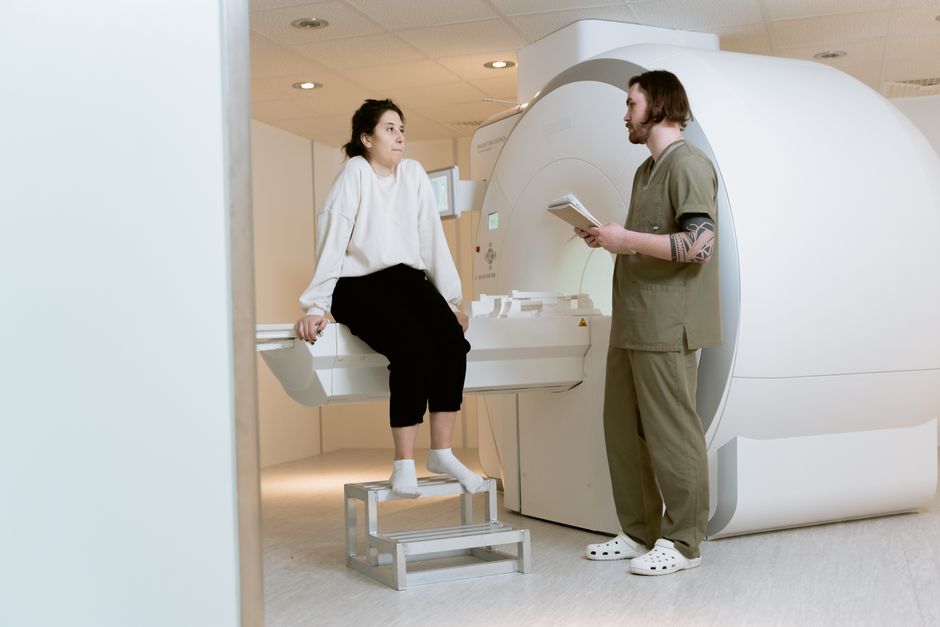
Bone density changes quietly. There is no ache, no stiffness, no warning sign that your skeleton is losing strength. A DEXA scan is the test that measures this change, and the timing of when to get one depends mostly on your age, your sex, and a set of risk factors that push the recommended age earlier.
For most women, routine bone density screening begins at age 65. For most men, it begins at age 70. If you have risk factors — a prior fracture from a minor fall, long-term steroid use, early menopause, or a condition that affects bone — screening may be recommended earlier, sometimes decades earlier. A DEXA scan is the standard test for measuring bone mineral density, and it is the test used to diagnose osteoporosis.
What Is a DEXA Scan and What Does It Measure?
DEXA stands for dual-energy X-ray absorptiometry. It uses two low-dose X-ray beams to measure how much mineral — mostly calcium — is packed into a section of bone. The scan typically measures the hip and the lower spine, because those are the sites where fractures related to bone loss most often occur.
The result is a T-score. This number compares your bone density to that of a healthy young adult of the same sex. A T-score of −1.0 or above is considered normal. A T-score between −1.0 and −2.5 indicates low bone mass, often called osteopenia. A T-score of −2.5 or lower meets the diagnostic threshold for osteoporosis.
The radiation dose is very small — far less than a standard chest X-ray. The scan takes about 10 to 15 minutes and requires no injection, no sedation, and no fasting.
One clarification worth knowing: DEXA measures bone mineral density, which is one part of bone strength but not the whole picture. Bone quality, architecture, and other factors also affect whether a bone breaks. This is why some people with osteopenia fracture and some people with the same T-score do not.
When Should You Get a DEXA Scan? Age and Risk Factors
Age is the strongest single factor. Bone mass peaks in your late 20s and then gradually declines. For women, the drop accelerates after menopause because estrogen supports bone-building activity. For men, the decline is slower and steadier.
The general screening thresholds are:
- Women age 65 and older
- Men age 70 and older
- Postmenopausal women under 65 and men age 50 to 69 with risk factors
- Anyone who has broken a bone from a fall at standing height or lower
These age thresholds come from long-standing clinical guidance. The exact wording has been refined over the years, but the underlying logic has stayed consistent: screen when the combination of age and risk makes fracture likely enough that knowing your bone density would change what you and your clinician do next.
Risk factors that can move screening earlier include:
- Long-term use of glucocorticoid steroids such as prednisone
- Early menopause, before age 45
- Low body weight or a history of an eating disorder
- A parent who broke a hip
- Current smoking
- Heavy alcohol use
- Rheumatoid arthritis
- Conditions that interfere with nutrient absorption, such as celiac disease or inflammatory bowel disease
- Certain medications used for breast cancer or prostate cancer that lower hormone levels
- Chronic kidney disease, liver disease, or thyroid conditions
Having one risk factor does not automatically mean you need a scan. Having several, or having one that is strongly linked to bone loss, is what usually prompts earlier testing.
Why Sex and Hormones Change the Timeline
Women lose bone faster than men, and the reason is largely hormonal. Estrogen slows the rate at which old bone is broken down. When estrogen falls after menopause, that brake is released, and bone loss speeds up for several years.
This is why the age threshold for women is 65 rather than 70. It is also why women who go through menopause early — whether naturally or because of surgery — are often screened sooner. The years without estrogen add up.
Men are not exempt. They have larger, denser bones on average, which delays the point at which bone loss becomes clinically meaningful. But men do develop osteoporosis, and men who break a hip are more likely to die in the year following the fracture than women who do. The lower screening rate in men is a known gap, not evidence that men are protected.
How Often Should You Repeat a DEXA Scan?
There is no single correct interval. For most people with normal results and no major risk factors, repeat testing every several years is common. For people with osteopenia, a shorter interval may be used. For people on osteoporosis treatment, testing is often done every one to two years to see whether the treatment is working.
Some clinicians recommend against frequent repeat scans in people with normal bone density and no new risk factors, because the change between tests is small and unlikely to change management. This is one area where practice varies more than the guidelines suggest.
If you are being treated for osteoporosis, the timing of your follow-up scan is usually tied to the medication you are taking and how long you have been on it. Ask your clinician what interval they are using and why.
What Happens After a DEXA Scan?
A T-score alone does not decide treatment. Your clinician combines the result with your age, your fracture history, and other risk factors to estimate your 10-year probability of a major fracture. Tools such as FRAX were developed for this purpose and are widely used.
This matters because two people with the same T-score can get different recommendations. A 68-year-old woman with a T-score of −2.0 and no fractures may be advised to focus on calcium, vitamin D, and weight-bearing exercise. A 68-year-old woman with the same T-score who has already broken a wrist from a fall may be advised to start medication.
Treatment decisions in osteoporosis are genuinely individualized. If you are told your T-score is “borderline,” ask what your fracture risk estimate is and what would change the recommendation.
| T-score | Category | General meaning |
|---|---|---|
| −1.0 and above | Normal | Bone density in the expected range for a young healthy adult |
| −1.0 to −2.5 | Low bone mass (osteopenia) | Below normal but not at the osteoporosis threshold |
| −2.5 and below | Osteoporosis | Meets the diagnostic threshold for osteoporosis |
What a DEXA Scan Cannot Tell You
A DEXA scan does not measure bone quality, only bone quantity. It also cannot predict with certainty who will fracture. Most people with low bone mass never break a bone, and some people with normal bone density do.
The scan can also be affected by things that are not bone loss. Degenerative changes in the spine, calcium deposits in blood vessels, and prior spinal surgery can all artificially raise a reading. This is one reason the hip is often used alongside the spine — it is less prone to these artifacts.
If your result seems inconsistent with your history, it is reasonable to ask whether any of these factors could be affecting the measurement.
Frequently Asked Questions
At what age should a woman get a DEXA scan?
Routine screening is generally recommended starting at age 65 for women. Women under 65 with risk factors such as early menopause, long-term steroid use, or a prior low-trauma fracture may be screened earlier.
At what age should a man get a DEXA scan?
Routine screening is generally recommended starting at age 70 for men. Men age 50 to 69 with risk factors may be screened earlier, though men are screened less often than women in practice.
What T-score means osteoporosis?
A T-score of −2.5 or lower meets the diagnostic threshold for osteoporosis. A T-score between −1.0 and −2.5 indicates low bone mass, sometimes called osteopenia.
Do I need a DEXA scan if I have no symptoms?
Yes, if you meet the age or risk criteria. Bone loss causes no symptoms until a fracture occurs, which is why screening is based on age and risk factors rather than how you feel.
