
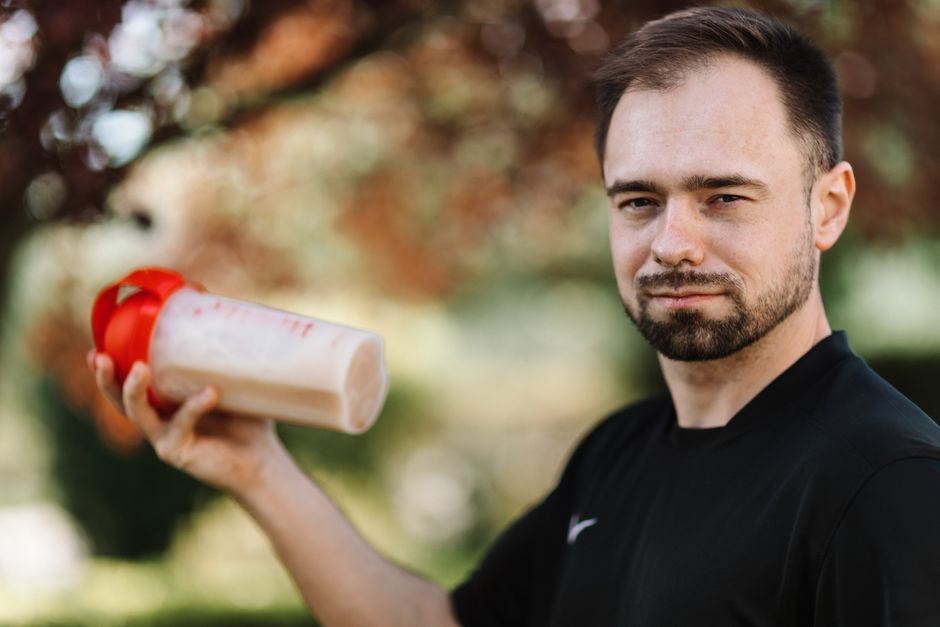
Protein shakes are a common tool for men trying to lose weight, but the timing often causes confusion. For weight loss specifically, the most important factor is your total daily protein intake, not the exact minute you drink the shake. If you are using shakes to replace a meal or to hit a daily protein target that helps preserve muscle while in a calorie deficit, the timing matters less than the overall plan. The best time to drink one is when it helps you stay consistent with your calorie goals and keeps you from reaching for higher-calorie alternatives.
Does Shake Timing Actually Matter for Weight Loss?
No. Research consistently shows that total daily protein intake is what drives muscle retention and satiety during weight loss. Whether that protein comes from a shake at breakfast or a chicken breast at dinner makes little difference to the scale over the course of a week.
Your body does not have a strict “window” where protein must be consumed to aid weight loss. The idea of an anabolic window—where you must consume protein within 30 to 60 minutes after a workout—has been overstated in marketing. Studies indicate that as long as you eat adequate protein spread across the day, the precise timing around exercise has minimal impact on body composition changes for most people.
What matters is the math. Weight loss requires a calorie deficit. Protein shakes can help you achieve that deficit because they are filling and relatively low in calories compared to many whole-food meals. But if you drink a shake on top of your normal meals without adjusting anything else, you will simply add calories and slow your progress.
When Should Men Drink Protein Shakes For Weight Loss?
The best time to drink a protein shake for weight loss is when it replaces a meal or snack that would otherwise be higher in calories and lower in protein. For many men, that means using a shake as a breakfast replacement or as an afternoon snack to prevent overeating later in the day.
There is no biological advantage to drinking a shake at a specific hour. Morning, afternoon, or evening—the effect on weight loss is the same if your total calories and protein for the day are consistent. Choose the time that fits your schedule and reduces your likelihood of making poor food choices.
If you train in the morning on an empty stomach and feel fine, you do not need a pre-workout shake. If you find yourself ravenous after a workout and prone to overeating at your next meal, a shake immediately after training may help you manage portion sizes. That is a behavioral benefit, not a metabolic one.
How Much Protein Do Men Need While Losing Weight?
During weight loss, protein needs increase slightly compared to maintenance. A common evidence-based target for men aiming to preserve muscle while losing fat is 1.6 to 2.2 grams of protein per kilogram of body weight per day. For a 200-pound man (about 91 kilograms), that equals roughly 145 to 200 grams of protein daily.
This range is supported by sports nutrition research and is widely used by clinicians who counsel patients on body composition changes. It is not a universal prescription—individual needs vary based on age, activity level, and how large your calorie deficit is. But it provides a practical starting point for most men.
Whole foods should form the foundation of your protein intake. Chicken, fish, eggs, Greek yogurt, and legumes deliver protein along with other nutrients. Protein shakes are a supplement to fill gaps, not a replacement for a varied diet.
If you are unsure how much protein you currently eat, track your intake for three to five days using a food app. That gives you real data rather than guessing. Most men who struggle with weight loss are eating far less protein than they think.




What Kind of Protein Shake Should You Choose?
For weight loss, the type of protein matters less than the calorie content of the shake. Whey protein is well-studied, convenient, and quickly absorbed. Casein digests more slowly. Plant-based proteins like pea or soy are effective alternatives for men who avoid dairy.
What you mix into the shake matters more than the powder itself. A shake made with water and plain whey protein contains roughly 100 to 150 calories. The same powder blended with whole milk, peanut butter, banana, and honey can easily exceed 500 calories. That difference determines whether the shake helps or hurts your weight loss efforts.
If weight loss is your goal, keep shakes simple. Use water or unsweetened almond milk as the base. Avoid adding calorie-dense ingredients unless the shake is serving as a full meal replacement that would otherwise be even higher in calories.
Read the label on your protein powder. Some products marketed for muscle gain contain added sugars, maltodextrin, or high-calorie carbohydrate blends. A basic protein powder with minimal ingredients is the safer choice for weight loss.
Can Protein Shakes Replace Meals Safely?
Yes, but only occasionally and with planning. Using a protein shake to replace one meal per day can help create a calorie deficit because it removes the variability of cooking and portion control. This works best for breakfast or lunch, where meals are often rushed and prone to unhealthy choices.
Do not replace every meal with shakes. Whole foods provide fiber, vitamins, minerals, and phytochemicals that protein powder does not contain. Long-term reliance on liquid meals is not a sustainable or nutritionally complete strategy.
A reasonable approach is one shake per day as a meal replacement or high-protein snack, with the rest of your calories coming from whole foods. This gives you the convenience of a shake without sacrificing nutritional quality.
If you have a medical condition such as diabetes or kidney disease, talk to your doctor before using protein shakes regularly. High protein intakes require adjustment in certain health conditions, and individual guidance is necessary.
Do Protein Shakes Help You Feel Full?
Yes. Protein is the most satiating macronutrient, meaning it reduces hunger more effectively than carbohydrates or fat. This effect is well-established in nutrition research.
Liquid calories are generally less filling than solid food of the same calorie content. This is a known limitation of protein shakes. However, the high protein content partially compensates for this. A shake with 30 grams of protein will blunt hunger for several hours in most men, even if it does not suppress appetite quite as strongly as a solid meal with the same protein content.
If you find shakes do not keep you full, add a source of fiber. Blending in a handful of spinach, a few berries, or a tablespoon of chia seeds increases volume and fiber without adding excessive calories. This makes the shake more physically filling.
Should You Drink Protein Shakes on Rest Days?
Yes, if you need the protein. Your muscles are not only recovering on training days. Protein synthesis occurs throughout the day and night, including rest days.
Your daily protein target should stay roughly the same whether you train or not. If you are struggling to hit that target with whole foods alone on a rest day, a shake is a convenient way to close the gap.
If you already eat enough protein from food on rest days, you do not need a shake. There is no benefit to consuming extra protein beyond your target. Excess protein is simply used for energy or stored, and it adds calories that can interfere with weight loss.
What About Drinking Protein Shakes Before Bed?
Drinking a protein shake before bed is not harmful, and it may help some men meet their daily protein target. The old belief that eating protein late at night causes fat gain has been largely disproven. Weight gain results from total daily calorie surplus, not the clock time of your last meal.
Casein protein before bed has been studied for its slow digestion rate. Some research suggests it may support overnight muscle recovery, but the practical benefit for weight loss is minimal. If a nighttime shake helps you avoid late-night snacking on chips or ice cream, it is a useful strategy.
Be mindful of the calories. A shake before bed counts toward your daily total just like any other food. If you are already at your calorie limit for the day, skip the shake.
What Mistakes Do Men Make With Protein Shakes and Weight Loss?
The most common mistake is treating shakes as free calories. A protein shake is food. It contains calories that count toward your daily total.
Another frequent error is relying on shakes while ignoring the rest of the diet. Drinking a protein shake does not cancel out a high-calorie lunch or a large dinner. Weight loss still requires an overall calorie deficit.
Some men also overestimate their protein needs and consume far more than necessary. Extra protein beyond your target does not accelerate fat loss. It just adds calories.
Finally, many men choose protein powders loaded with added sugar and artificial ingredients. These products can contain as many calories as a candy bar. Check the nutrition label and choose a powder with minimal additives and low sugar content.
Frequently Asked Questions
Is it better to drink a protein shake before or after a workout for weight loss?
For weight loss, the difference is negligible as long as you hit your daily protein target. Choose the time that helps you manage hunger and stay consistent with your calorie goals.
Can I drink two protein shakes a day to lose weight?
Yes, but only if you are replacing meals or snacks and staying within your calorie target. Two shakes plus a solid diet can work, but do not add them on top of your usual meals.
Will drinking protein shakes make me gain weight?
Only if they push you into a calorie surplus. Protein shakes themselves do not cause fat gain, but excess calories from any source will slow weight loss.
How much protein should a man have in one shake?
A typical serving contains 20 to 40 grams of protein, which is appropriate for most men. Spread your remaining protein across whole-food meals for the rest of the day.
