
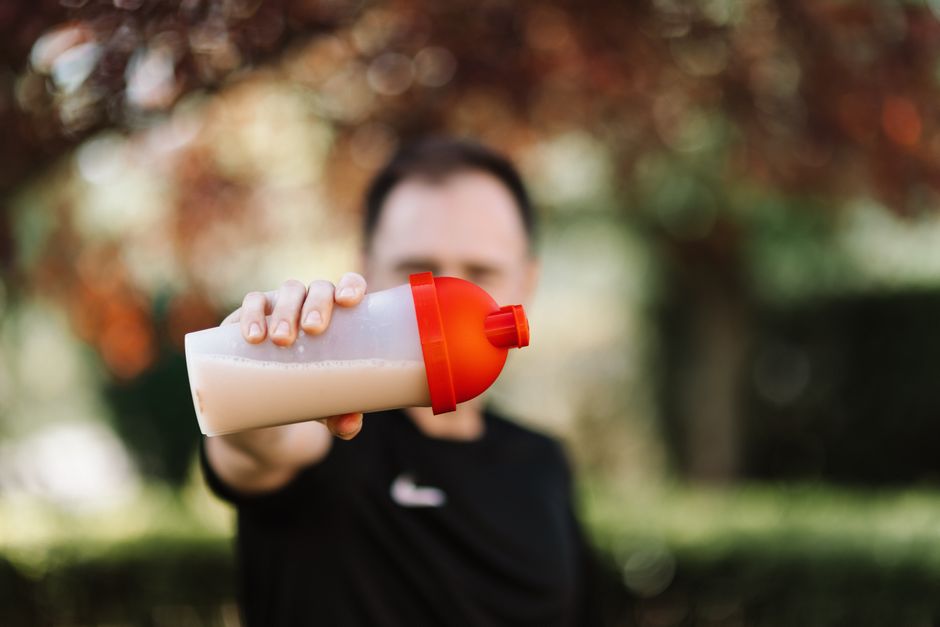
When you drink whey protein matters less than most supplement marketing suggests. Total daily protein intake is the strongest driver of results, and timing is a smaller factor layered on top. That said, the timing that has the best evidence behind it is shortly after a resistance training session, and the practical window is wider than the “30-minute anabolic window” you may have heard about.
Whey is a fast-digesting milk protein. It is rich in leucine, an amino acid that helps trigger muscle protein synthesis. Those properties are why it is popular around workouts. Whether you actually need a shake at a specific hour depends on what you eat the rest of the day.
When Should I Drink Whey Protein For Best Results?
Drink whey protein within a few hours of a resistance training session, and make sure your total protein for the day is adequate. That is the honest summary of what the evidence supports. The exact minute you drink it is not the deciding factor.
The idea of a narrow 30-minute window after exercise became popular in the 1990s and early 2000s. Later research softened that picture. Studies comparing protein taken immediately after training with protein taken several hours later have generally found little difference in muscle growth and strength when total daily protein is matched.
What the evidence does support is that protein around training — before or after — helps support muscle repair and adaptation. A reasonable approach many researchers describe is a serving of protein within a couple of hours on either side of your workout. Whey fits well here because it digests quickly and delivers a high leucine dose per gram.
One clarification worth making: whey is not magic. It is a convenient, well-absorbed protein source. If you already eat enough protein from food, adding a shake does not automatically build more muscle. It adds calories and protein. Whether that helps depends on your overall diet and training.
Does the “Anabolic Window” Really Close After 30 Minutes?
No. The anabolic window is much wider than the old 30-minute rule implied. Muscle protein synthesis stays elevated for hours after resistance exercise, not minutes.
Research on post-exercise nutrition has repeatedly found that the timing of protein intake matters most when you train fasted or go a long time without eating afterward. If you ate a protein-containing meal a few hours before training, your body is still processing those amino acids during and after the session.
This is why many sports nutrition researchers describe a window of several hours rather than 30 minutes. The practical takeaway is simple: get protein in around your workout, but do not panic if your shake comes an hour or two later than planned.
Some studies suggest that the total amount of protein you eat across the day, and how evenly you spread it across meals, matters more than precise timing around a single session. That is a more useful thing to focus on than a stopwatch.
What About Drinking Whey Protein on Rest Days or in the Morning?
Whey works fine on rest days and in the morning. Muscle repair and rebuilding continue for a day or more after training, so protein intake on rest days still supports recovery.
There is no strong evidence that whey must be taken at a specific hour of the day. If you struggle to hit your protein target, a morning shake is a practical way to start. Many people find it easier to drink protein early than to force down a large meal.
Some research has looked at whether spreading protein across meals — rather than loading it all at dinner — supports muscle maintenance better, particularly in older adults. The findings are suggestive rather than definitive, but eating protein at multiple meals is a reasonable pattern. A whey shake can fill a gap at breakfast or as an afternoon snack.
For older adults, adequate total protein and resistance exercise together are the well-established levers for preserving muscle mass. A shake can help meet the protein target, but it does not replace resistance training.
How Much Whey Protein Should You Drink at Once?
A common serving is about 20 to 25 grams of whey protein, which supplies roughly 20 to 25 grams of protein depending on the product. That range is widely used in sports nutrition research and practice.
Larger doses are not harmful for most healthy people, but the muscle-building response tends to plateau. Some research suggests that doses well above roughly 25 to 40 grams of high-quality protein in a single sitting do not produce proportionally more muscle protein synthesis in young adults. The exact ceiling is debated and varies by body size and training status.
For most people, one scoop providing around 20 to 25 grams of protein per serving is a sensible default. If you are larger or training hard, a somewhat bigger serving is reasonable. There is no established clinical guideline that sets a universal per-serving dose for whey — the numbers above reflect common research and product standards, not a regulatory rule.
Does Whey Timing Matter More Than Total Daily Protein?
Total daily protein matters more than timing. This is one of the clearest findings in the sports nutrition literature.
General guidance for adults who want to build or maintain muscle is roughly 1.2 to 2.0 grams of protein per kilogram of body weight per day, depending on training and goals. For a 70 kg (about 154 lb) person, that is roughly 84 to 140 grams per day. These ranges come from position stands on protein and exercise, and they are widely cited.
Timing is a secondary lever. If your daily protein is low, moving your shake to the “perfect” moment will not fix it. If your daily protein is adequate, the exact timing of a shake has a modest effect at most.
This is where whey earns its place. It is a convenient way to close a protein gap. Treat it as a tool for hitting your daily target, not as a timing trick.
When Might Whey Timing Matter More?
Timing matters more in a few specific situations. If you train first thing in the morning without eating, your body has less circulating amino acid to draw on during and after the session. In that case, getting protein in soon after training is more useful.
The same applies if you go many hours without eating after a workout. If your next meal is far off, a shake bridges the gap. People with very high training volumes, or those in a calorie deficit trying to preserve muscle, may also benefit from paying closer attention to protein spread across the day.
For everyone else — people who eat regular meals containing protein — the precise timing of a whey shake is a minor detail. It is not worth stressing over.
Practical Takeaways
Here is how to think about whey timing without overcomplicating it.
- Around training: Have whey within a couple of hours before or after a resistance session. This is the timing with the best supporting evidence.
- Total protein first: Aim for an adequate daily protein intake before worrying about timing. A shake helps you reach that target.
- Spread it out: Eating protein at several meals across the day is a reasonable pattern, especially for older adults.
- Fasted training: If you train without eating, get protein in soon after. Timing matters more here.
- Serving size: Around 20 to 25 grams of protein per serving is a common, sensible default.
Whey is not required. Food sources like eggs, dairy, fish, poultry, and legumes can meet protein needs. Whey is simply convenient, fast-digesting, and easy to measure. If you tolerate dairy and want a simple way to hit your protein target, it works well. If you are lactose intolerant, whey isolate or a plant protein may suit you better.
People with kidney disease or other conditions affecting protein metabolism should talk to a clinician before adding protein supplements. For most healthy adults, whey is generally well tolerated, but individual needs vary.
Frequently Asked Questions
Is it better to drink whey before or after a workout?
Either works. Research generally shows little difference in muscle growth when total daily protein is matched, so choose whichever fits your routine.
Do I need whey protein if I already eat enough protein?
No. If your diet already meets your protein needs, a shake adds convenience and calories but is not required for muscle growth.
Can I drink whey protein without working out?
Yes. Whey is simply a protein source and can help you meet daily protein needs on rest days or when meals fall short.
How much whey protein should I drink per day?
There is no universal daily whey dose; it depends on how much protein you get from food. A common single serving provides about 20 to 25 grams of protein, and total daily protein intake is what matters most.
