
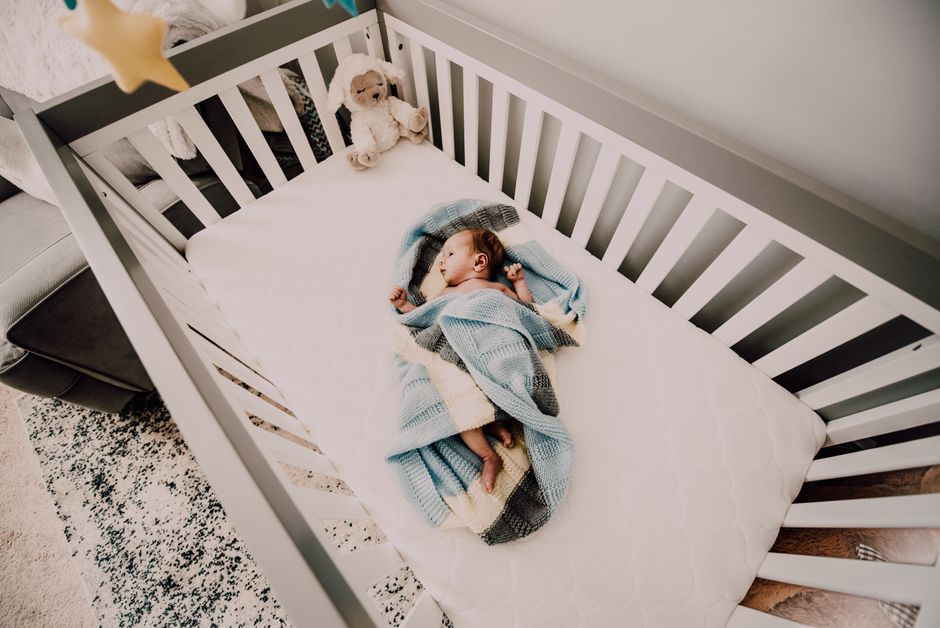
Most newborns can start sleeping in a crib from day one, as long as the crib meets current safety standards. The American Academy of Pediatrics recommends that babies sleep in the same room as their parents for at least the first six months, but the crib itself can be used immediately. The real question is not when to move your baby to a crib, but how to set up the crib safely from the very first night.
When Should A Newborn Sleep In A Crib
The short answer is that a newborn can sleep in a crib from birth. There is no medical reason to delay moving a baby to a crib, provided the crib meets current safety standards and the sleep environment is safe. Many parents choose to use a bassinet or a crib from the start, and both are acceptable options.
What matters most is that the baby sleeps alone, on their back, in a firm, flat sleep surface. A crib that meets federal safety standards is considered a safe sleep surface for a newborn. The key is to keep the crib bare — no pillows, blankets, bumpers, or stuffed animals.
What Are the Official Safe Sleep Guidelines for Newborns?
Established guidelines from the American Academy of Pediatrics are clear about safe infant sleep. The recommendations are designed to reduce the risk of Sudden Infant Death Syndrome (SIDS) and accidental suffocation.
The core recommendations include placing the baby on their back for every sleep, using a firm and flat sleep surface, and keeping soft objects and loose bedding out of the crib. The guidelines also recommend room-sharing — keeping the baby’s crib in the parents’ bedroom for at least the first six months, and ideally for the first year.
Room-sharing is different from bed-sharing. Room-sharing means the baby sleeps in their own crib or bassinet in the same room as the parents. Bed-sharing, where the baby sleeps on the same surface as an adult, is not recommended by the American Academy of Pediatrics.
Bassinet vs. Crib: Which Should You Choose First?
Both bassinets and cribs can be safe sleep options for newborns. The choice often comes down to space, convenience, and personal preference.
A bassinet is smaller and easier to move around. Many parents keep a bassinet next to their bed for nighttime feedings. Bassinets are designed for younger infants and have weight limits, usually around 15 to 20 pounds. Once your baby reaches that limit or starts pushing up on their hands and knees, it is time to switch to a crib.
A crib is a long-term investment. Most cribs convert to toddler beds and can be used for years. Some parents choose to have their baby sleep in a crib from the very beginning to avoid a later transition.
There is no wrong choice here. Both options are safe when used correctly. The American Academy of Pediatrics does not prefer one over the other, as long as the sleep surface is firm, flat, and free of loose items.





How Do You Know When to Move from Bassinet to Crib?
Most babies outgrow a bassinet between three and six months of age. The signs are usually practical rather than medical.
Check the weight limit on your specific bassinet. Once your baby reaches that limit, the bassinet is no longer safe. Also watch for developmental milestones. If your baby can roll over, push up on their hands and knees, or is starting to sit, they need more space than a bassinet provides.
Another sign is simple comfort. If your baby seems cramped or is bumping their head or arms against the sides of the bassinet, it is time to move to a crib.
There is no set age that applies to every baby. Some babies move to a crib at two months. Others stay in a bassinet until six months. Follow your baby’s size and developmental progress rather than a calendar date.
How Do You Set Up a Crib Safely for a Newborn?
Safe crib setup is about eliminating risk. The crib itself must meet current federal safety standards. Look for a crib that has not been recalled and has no missing or broken parts.
Use a firm mattress that fits snugly in the crib. You should not be able to fit more than two fingers between the mattress and the crib frame. The sheet should be fitted and tight.
Keep the crib completely bare. This means:
- No blankets or quilts
- No pillows
- No crib bumpers
- No stuffed animals or toys
- No positioners or wedges
Dress your baby in a wearable blanket or sleep sack instead of using loose blankets. This keeps the baby warm without adding loose bedding to the sleep environment.
Place the crib away from windows, cords, and wall decorations. Window blind cords and electrical cords are strangulation hazards. Keep the area around the crib clear.
What About Swaddling and Sleep Sacks?
Swaddling can help some newborns settle and sleep. When done correctly, it can be a useful tool for the first few months.
Swaddle your baby snugly but not too tightly. The hips should have room to move, and the swaddle should not be loose enough to come undone during sleep. Stop swaddling once your baby shows signs of trying to roll over. A swaddled baby who rolls onto their stomach is at risk.
Sleep sacks are a safer alternative to loose blankets. They come in different sizes and weights, so you can choose one appropriate for your baby’s size and the room temperature. Sleep sacks can be used from birth through toddlerhood.
There is no evidence that swaddling prevents SIDS. It is a comfort measure, not a safety measure. If your baby does not like being swaddled, there is no reason to force it.
What If Your Baby Will Not Sleep in the Crib?
Many newborns prefer to be held, and they often resist being placed in a crib. This is normal, but it can be exhausting for parents.
Some parents find that warming the crib mattress with a heating pad before placing the baby down helps. Remove the heating pad before putting the baby in the crib. Others find that swaddling or using white noise helps the baby settle.
You can also try placing your baby in the crib when they are drowsy but not fully asleep. This helps them learn to fall asleep independently. This approach does not work for every baby, and that is okay.
It is important to remember that the crib is the safest place for your baby to sleep. Holding a sleeping baby is not safe if you are at risk of falling asleep yourself. If you are exhausted, place the baby in the crib and take a short break.
If your baby consistently refuses to sleep in the crib, talk to your pediatrician. There may be underlying issues like reflux or colic that are making sleep difficult. Your pediatrician can help you find solutions that work for your family.
Can a Newborn Sleep in a Crib in Another Room?
The American Academy of Pediatrics recommends room-sharing for at least the first six months. This means the crib should be in your bedroom, not in a separate nursery.
Room-sharing reduces the risk of SIDS by as much as 50 percent, according to research. It also makes nighttime feedings and check-ins easier.
If you choose to have your baby sleep in a separate room, that is a personal decision. But the evidence strongly supports room-sharing for the first six months. If you do use a separate nursery, make sure you can hear your baby clearly. Use a baby monitor and check on your baby regularly.
When Is It Safe to Move the Crib to a Separate Nursery?
Most experts suggest waiting until your baby is at least six months old before moving them to a separate room. Some families wait until the first birthday.
The decision depends on your family’s needs and your baby’s sleep patterns. Some babies sleep better in their own room. Some parents sleep better when their baby is nearby.
There is no evidence that moving a baby to a separate room is harmful after six months. The risk reduction from room-sharing is most significant in the first six months of life.
When you do move the crib, keep the same sleep routine. Consistency helps babies adjust to the new space.
Frequently Asked Questions
Can a newborn sleep in a crib from day one?
Yes, a newborn can sleep in a crib from day one if the crib meets current safety standards. The crib must have a firm mattress and no loose bedding, pillows, or bumpers.
How long should a baby sleep in a bassinet before moving to a crib?
Most babies outgrow a bassinet between three and six months. Check the weight limit on your bassinet and watch for signs that your baby is getting too big or starting to roll over.
Is it safe for a newborn to sleep in a crib in a separate room?
Room-sharing is recommended for at least the first six months because it reduces the risk of SIDS. If you use a separate room, make sure you can hear your baby clearly with a monitor.
What should be in a newborn’s crib for safe sleep?
The crib should contain only a fitted sheet on a firm mattress. No blankets, pillows, bumpers, stuffed animals, or positioners should be in the crib.
