
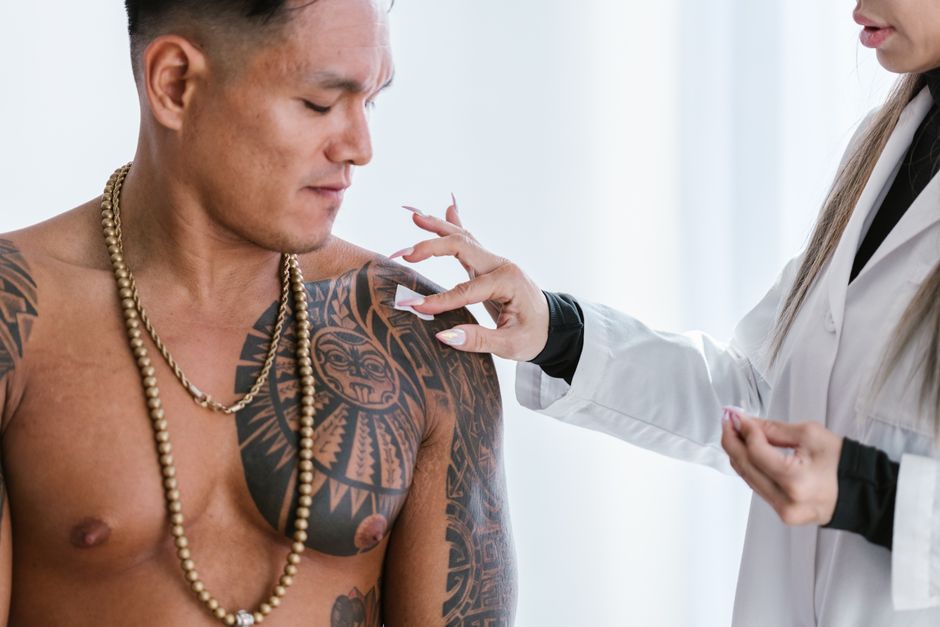
A new tattoo is an open wound. That is not a scare tactic — it is the literal biology. Thousands of tiny punctures push ink past your skin barrier and into the dermis, and your immune system responds the way it responds to any wound: inflammation, clotting, and a cleanup crew of white blood cells.
Most tattoos heal without infection. The window of highest risk is the first two to three weeks, when the skin surface is still repairing and bacteria have the easiest path in. After roughly three to four weeks, a tattoo that has healed normally is generally considered closed skin again. If you see spreading redness, worsening pain, pus, or fever at any point, that is a medical issue, not a normal healing stage.
What Actually Happens to Your Skin During and After a Tattoo
A tattoo needle deposits pigment roughly into the dermis, the layer below the epidermis. The epidermis is the part that seals back over. Until that seal is complete, the dermis is exposed to whatever is on your skin.
Your body does not ignore the ink. Immune cells called macrophages migrate to the site and attempt to engulf the pigment particles. Many succeed and carry pigment away. Others essentially park on it, which is part of why tattoos fade slowly rather than disappearing. The pigment that stays lodged in the dermis is what you see.
That immune activity is normal and expected. It is also why a fresh tattoo looks red, feels warm, and may ooze clear fluid and a little blood in the first day. Those are signs of healing. They become concerning when they intensify after day two or three instead of settling down.
One detail worth knowing: the epidermis typically closes over within the first week or two, but the tissue underneath keeps remodeling for weeks after. A tattoo can look fully healed on the surface while the deeper layers are still settling. That gap between what you see and what is still happening underneath is where a lot of confusion about “safe” timelines comes from.
When Is Your Tattoo Safe From Infection?
The highest-risk period is the first two to three weeks. That is when the wound is most open and when bacterial contamination most easily takes hold.
Most clinicians treat a tattoo as low-risk for new infection once the skin has fully closed and normal healing signs have resolved — typically somewhere around three to four weeks for a straightforward tattoo in a healthy person. Larger pieces, tattoos over joints or areas that stretch, and tattoos on people with slower healing may take longer. There is no universal cutoff date that applies to everyone.
What matters more than a calendar is a set of observations:
- The skin surface has closed with no open cracks or weeping areas
- Redness and warmth have faded rather than spread
- Swelling has gone down
- Pain is decreasing, not increasing
- No pus, no foul smell, no fever
If all of those are true, the risk of a new infection at that site is low. If any are false, the tattoo is not past its risk window regardless of how many days have passed.
Signs a Tattoo Is Infected vs. Just Healing
Normal healing and infection overlap in the early days, which is exactly why people get confused. The difference is direction and timing.
Normal healing improves day by day. Redness and swelling peak early and then recede. Some itching and flaking as the skin peels is common and expected. A thin, clear or slightly blood-tinged ooze in the first day or two is normal.
Infection goes the other way. It gets worse after the first few days. The signs that should prompt a call to a doctor or clinic include:
- Redness that spreads outward past the tattoo edges, or streaks running away from the site
- Increasing pain rather than decreasing
- Swelling that grows instead of shrinking
- Thick yellow or green discharge, or any discharge with a bad smell
- Warmth that intensifies over days
- Fever, chills, or feeling generally unwell
- Blisters, boils, or a rash of small bumps inside the tattooed area
Fever and streaking redness are the two that should push you to seek care quickly. Those can indicate a spreading infection that needs prompt treatment. This is not a wait-and-see situation.
It is also worth separating infection from allergic reaction. Some people react to specific pigments — red is the most commonly reported — with redness, swelling, and itching that can appear days to weeks later, sometimes even months or years after a tattoo. That is an immune reaction to the ink, not a bacterial infection, and it is treated differently. A clinician can help tell the difference, and this is genuinely hard to sort out on your own.
How Tattoo Infections Happen in the First Place
Infections come from bacteria getting into the wound. That can happen during the tattoo itself or during the healing period afterward.
At the studio, the main variables are sterile technique, single-use needles, clean equipment, and the artist’s hygiene. A licensed, inspected shop following standard infection control practices keeps this risk low. That does not make it zero — no procedure that breaks the skin is risk-free.
After the tattoo, most contamination comes from your own hands and environment. Touching the tattoo with unwashed hands, letting pets near it, soaking it in a bathtub, pool, hot tub, lake, or ocean before it closes, and sharing towels or bedding are all common ways bacteria get introduced. Water is a particular issue because soaking softens the forming scab and can carry organisms directly into the open skin.
Non-tuberculous mycobacteria are a documented cause of tattoo-associated skin infections, and they have been linked to contaminated ink and to non-sterile water used during tattooing. These infections can be slow to appear and stubborn to treat, and they often look different from a typical fast-moving bacterial infection. This is one reason a tattoo that develops bumps or a rash weeks later deserves a medical look rather than a wait-and-see approach.
How to Lower Your Risk While It Heals
Most of the practical advice here is about keeping the wound clean and keeping bacteria out.
- Follow the aftercare instructions your artist gives you. They know the specifics of your tattoo and the products they used.
- Wash your hands before touching the tattoo or changing any bandage or dressing.
- Clean the tattoo gently with mild soap and water as directed, then pat dry with a clean paper towel rather than rubbing.
- Keep it out of pools, hot tubs, baths, lakes, and the ocean until it has fully closed.
- Avoid direct sun on the healing tattoo. Sunburn on fresh tattooed skin is painful and can affect how it heals.
- Do not pick or scratch at scabs or peeling skin. Picking can reopen the wound and introduce bacteria.
- Keep pets away from the site and use your own clean towels and bedding.
Some artists recommend a specific ointment or film dressing; others recommend letting it breathe. There is no single aftercare method that has been proven superior in large trials, so the general principles — clean, moisturized, protected, undisturbed — matter more than the specific product.
If you notice signs of infection, contact a healthcare provider. Do not try to treat a suspected tattoo infection with leftover antibiotics or home remedies. Oral and topical antibiotics are prescription decisions, and using the wrong one or the wrong duration can make things worse.
When to See a Doctor
See a healthcare provider if you have spreading redness, red streaks, increasing pain or swelling after the first few days, pus, a foul smell, fever, or chills. Those are signs the infection may be moving beyond the tattoo site.
Also see a provider if you develop a rash, bumps, or swelling inside the tattoo weeks to months later, especially if it itches or does not resolve. That pattern can point to an allergic reaction or a slower-growing infection, and both need a proper diagnosis.
People with diabetes, weakened immune systems, or certain skin conditions may heal more slowly and face higher risk. If that applies to you, it is worth talking to your doctor before getting a tattoo and being more cautious about any changes afterward.
Frequently Asked Questions
How long after a tattoo can it get infected?
The highest risk is in the first two to three weeks while the skin is still open and healing. A tattoo can also develop problems weeks or even months later from allergic reactions or slower-growing organisms, so new symptoms at any point deserve a medical look.
How do I know if my tattoo is infected or just healing normally?
Normal healing improves day by day, while infection gets worse after the first few days. Spreading redness, increasing pain, pus, or fever point to infection rather than normal healing.
Can a tattoo get infected after it looks healed?
Yes, though it is less common. Reactions to pigment or slow-growing infections can appear weeks to months after the surface has closed, often as bumps, a rash, or swelling inside the tattooed area.
Should I cover a new tattoo to prevent infection?
Follow the instructions from your artist, since recommendations vary and no single method has been proven best. The consistent principles are keeping the area clean, avoiding soaking it in water, and not touching it with unwashed hands.
