
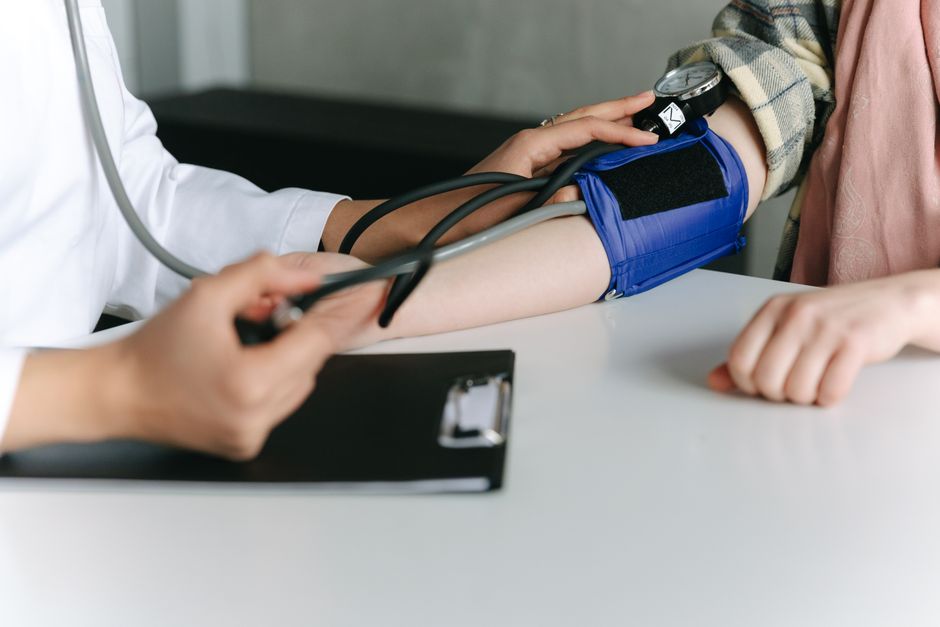
Blood pressure is considered too high when it reads 130/80 mm Hg or above on repeated measurements, according to the American Heart Association and American College of Cardiology. Readings between 120/80 and 129/80 fall into the elevated range, and anything at or above 180/120 needs urgent medical attention. There is no single “too high” number that applies to everyone in every moment, though. Context matters — how the reading was taken, what you were doing beforehand, and how many times it has been confirmed.
What follows is a timeline-based guide. It walks through what different readings mean, how quickly high blood pressure tends to develop, when a spike becomes an emergency, and what the evidence does and does not show about catching it early.
What Do the Blood Pressure Categories Actually Mean?
Blood pressure is measured in two numbers. The top number is systolic pressure — the force against your artery walls when your heart beats. The bottom number is diastolic pressure — the pressure when your heart rests between beats. Both numbers matter, and the higher category either one falls into determines your overall classification.
The standard categories used in US clinical practice are:
- Normal: below 120/80 mm Hg
- Elevated: systolic 120–129 and diastolic below 80
- Stage 1 hypertension: 130–139 systolic or 80–89 diastolic
- Stage 2 hypertension: 140 or higher systolic or 90 or higher diastolic
- Hypertensive crisis: higher than 180 systolic and/or higher than 120 diastolic
These thresholds come from the 2017 guideline jointly issued by the American Heart Association and American College of Cardiology. They lowered the hypertension threshold from the older 140/90 standard, which is why some people who were told they had “normal” blood pressure a decade ago now fall into Stage 1.
One clarification that surprises many people: a single high reading does not diagnose hypertension. Blood pressure fluctuates throughout the day. It rises with stress, caffeine, a full bladder, talking during the measurement, or simply being in a doctor’s office. Diagnosis requires repeated readings over time, or confirmation with home monitoring or a 24-hour ambulatory monitor.
When Is Blood Pressure Too High? The Timeline From Normal to Diagnosis
High blood pressure rarely appears overnight. For most people it develops gradually over years, often without any symptoms at all. That slow, silent progression is why it earned the name “the silent killer.”
Here is how the timeline typically unfolds for someone developing primary hypertension:
- Years 1–3: readings drift into the elevated range (120–129 systolic). No symptoms. Often dismissed as “white coat” or a bad day.
- Years 3–10: readings cross into Stage 1 (130–139/80–89). Still usually no symptoms. This is where lifestyle changes have the most impact.
- Years 10+: without intervention, many people progress to Stage 2 (140+/90+). Damage to arteries, kidneys, heart, and eyes begins accumulating.
That timeline is a general pattern, not a rule. Some people progress faster. Others stay in the elevated range for decades. Genetics, body weight, diet, physical activity, alcohol intake, sleep quality, and age all influence the pace.
There is an important exception. Secondary hypertension — high blood pressure caused by another condition such as kidney disease, sleep apnea, or a hormonal disorder — can appear suddenly and rise quickly. So can hypertension related to pregnancy. These cases do not follow the slow timeline and need prompt medical evaluation.
How Quickly Can Blood Pressure Rise to Dangerous Levels?
Blood pressure can spike within minutes. A sudden fright, intense pain, a panic attack, or strenuous exercise can push systolic pressure well above 180 temporarily. In a healthy person, it typically returns to baseline within minutes to hours once the trigger passes.
A sustained reading above 180/120 is different. When it stays that high and comes with symptoms — chest pain, shortness of breath, severe headache, vision changes, weakness, confusion, or difficulty speaking — it is a hypertensive crisis and a medical emergency. Call emergency services. Do not wait to see if it comes down on its own.
When a reading above 180/120 occurs without symptoms, clinical guidance is to rest for about five minutes and measure again. If it remains that high, contact a healthcare provider promptly. This is sometimes called hypertensive urgency, and it still requires medical assessment even without symptoms.
One point worth stating plainly: the size of a spike does not reliably predict harm in the moment. What matters more is whether the pressure stays elevated and whether organs are showing signs of strain. That is a clinical judgment, not something a home monitor can make.
What Does “White Coat” Versus “Masked” Hypertension Mean for Timing?
Where and when you measure changes the number you get. This is not a minor detail — it affects when high blood pressure is actually caught.
White coat hypertension describes readings that are high in a clinic but normal at home. It affects a meaningful share of people who show elevated office readings. Research suggests some of these individuals still carry elevated cardiovascular risk over time, so it is not simply dismissed — it usually prompts home monitoring to clarify.
Masked hypertension is the reverse: normal readings in the clinic but high readings at home or during daily life. It is easy to miss because the office measurement looks fine. Home monitoring or a 24-hour ambulatory monitor is what catches it.
This is why the timing and setting of measurement matter as much as the number itself. A single clinic reading is a snapshot. Home readings taken over several days give a more accurate picture of what your blood pressure actually does.
How Is High Blood Pressure Confirmed Over Time?
Confirmation follows a stepwise process. The general approach in clinical practice is:
- Repeat measurements at separate visits, not just one reading
- Home blood pressure monitoring over several days, typically morning and evening
- 24-hour ambulatory monitoring when office and home readings disagree
- Review of symptoms, medications, and other health conditions
- Basic tests to look for causes and organ effects, such as blood tests and sometimes urine tests
Home monitoring has become central to how hypertension is diagnosed and managed. The technique matters. Sit quietly for five minutes first. Keep your back supported and feet flat. Rest your arm at heart level. Avoid caffeine, exercise, and smoking for 30 minutes beforehand. Take two readings a minute apart and record them.
A cuff that is the wrong size gives wrong numbers. Too small a cuff reads high. Too large reads low. If home and clinic readings consistently disagree, cuff fit is one of the first things to check.
When Should You Seek Care Right Away?
Some situations do not follow the slow timeline and need immediate attention. Seek emergency care for a reading above 180/120 with any of the following:
- Chest pain or pressure
- Shortness of breath
- Severe headache
- Vision changes or blurred vision
- Weakness, numbness, or difficulty speaking
- Confusion
- Blood in the urine
Also seek prompt care for a sudden rise in blood pressure during pregnancy or shortly after delivery, or for a first-time very high reading in someone who has never had high blood pressure before. These patterns can point to causes that need urgent evaluation.
For readings that are consistently in the Stage 1 or Stage 2 range without symptoms, the appropriate step is a scheduled visit with a healthcare provider — not the emergency room. The risk from those readings builds over years, not hours.
Does Early Detection Actually Change Outcomes?
Yes, and the evidence here is strong. Treating high blood pressure reduces the risk of stroke, heart attack, heart failure, and kidney disease. That is one of the most consistently supported findings in cardiovascular medicine, backed by decades of clinical trials.
What is less certain is exactly when treatment should start for people at the lower end of the elevated range, and how aggressively to treat older adults. Those questions are genuinely debated, and guidelines differ somewhat across countries. A 130/80 threshold is standard in US practice, but some international guidelines still use 140/90 for diagnosis in certain groups.
What is not debated: undetected high blood pressure causes real harm over time, and the damage is often irreversible once it accumulates. Catching it early — through regular readings, not symptom-watching — is the part within your control. High blood pressure usually produces no symptoms until damage is already underway, which is precisely why routine measurement matters more than how you feel.
Frequently Asked Questions
Is 130 over 80 considered high blood pressure?
Yes. Under current US guidelines, 130/80 falls into Stage 1 hypertension. A single reading at that level does not confirm a diagnosis — repeated measurements over time are needed.
Can blood pressure be too high only sometimes?
Yes. Blood pressure naturally rises with stress, pain, caffeine, and activity, and some people have spikes only in certain settings. This is why home monitoring and repeated readings are used to confirm a pattern.
How long does it take for high blood pressure to cause damage?
Damage typically accumulates over years to decades of untreated elevated pressure. The exact pace varies widely depending on the person and other risk factors.
Should I go to the emergency room for a reading of 180 over 120?
Go to the emergency room if that reading comes with symptoms like chest pain, shortness of breath, severe headache, vision changes, or weakness. Without symptoms, rest and re-measure, then contact a healthcare provider promptly if it stays that high.
