
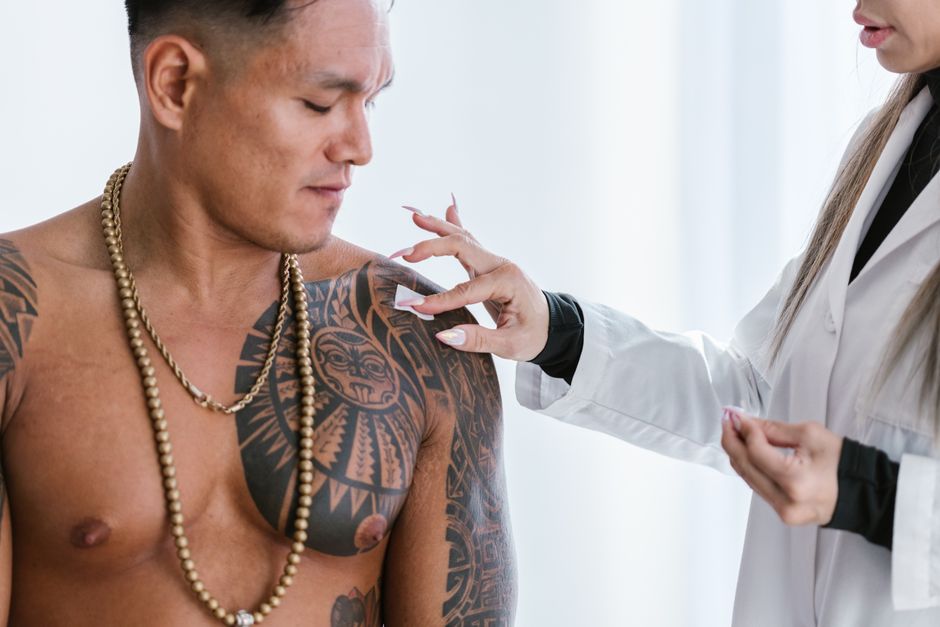
A tattoo is fully healed when the skin has closed over the ink and returned to its normal texture and function — typically about 2 to 3 months after the session, though surface healing happens much sooner. The outer layer of skin usually closes within 2 to 3 weeks, but the deeper layers where ink sits take longer to settle. Below is what actually happens week by week, and how to tell real healing from a problem.
When Is A Tattoo Fully Healed?
A tattoo is fully healed when the epidermis — the outer layer of skin — has completely regenerated and the deeper dermis has finished its repair response. For most people this takes around 2 to 3 months. Some larger or heavily worked tattoos take longer.
The ink itself never fully “heals” in the sense of disappearing. Tattoo pigment is deposited in the dermis, the layer below the surface, where your immune system’s cells surround it and hold it in place. That is why tattoos are permanent. Healing refers to the skin recovering around that pigment, not the ink changing.
There are two distinct phases people often confuse:
- Surface healing: the visible wound closes and scabbing finishes, usually within 2 to 3 weeks.
- Deep healing: the dermis finishes remodeling and the tattoo settles into its final appearance, usually by 2 to 3 months.
During deep healing the tattoo may look slightly dull or “milky.” This is normal. The skin over the ink is still thickening and renewing itself, and clarity often returns once that process settles.
What Happens Week by Week During Tattoo Healing?
Healing follows a fairly predictable pattern, though the exact pace varies with tattoo size, placement, skin type, and how well you care for it. Here is the general timeline most people experience.
Days 1 to 3
The skin is an open wound. It will be red, tender, and may weep clear fluid or a little blood. Some swelling is normal. The tattoo looks bright and sharp because the ink is close to the surface and the skin is inflamed.
Days 4 to 14
A thin scab or flaky layer forms. The tattoo may itch. Light peeling is common and expected. Do not pick or scratch — pulling off scabs early can remove pigment and leave patchy areas. By the end of the second week the surface is usually mostly closed.
Weeks 3 to 4
The outer skin has typically finished closing. Flaking stops. The tattoo may look slightly faded or uneven at this stage. This is not the final result — the deeper layers are still settling.
Months 2 to 3
This is when most tattoos reach their fully healed appearance. Texture returns to normal, the milky look clears, and the ink looks sharper and more settled. Any minor touch-ups are usually discussed after this point.
How Can You Tell If a Tattoo Is Fully Healed?
A tattoo is fully healed when the skin feels like the skin around it — no raised areas, no flaking, no tenderness, and no scabbing. The surface should be smooth and the tattoo should look clear rather than dull.
Signs that healing is complete include:
- The skin texture matches the surrounding area.
- No itching, stinging, or sensitivity when touched.
- No flaking or peeling, even when lightly rubbed.
- The ink looks sharp and consistent in color.
- You can shower, swim, and expose the area to sun without irritation.
One point people often miss: a tattoo can look healed on the surface while the deeper skin is still remodeling. That is why swimming pools, hot tubs, and prolonged sun exposure are usually avoided for longer than the visible wound seems to require. The surface closing does not mean the deeper tissue has finished.
What Slows Tattoo Healing?
Several factors can extend healing time beyond the typical 2 to 3 months. Some are within your control and some are not.
Placement matters. Areas with thin skin or constant movement — hands, feet, ribs, ankles — tend to heal more slowly and are more prone to patchy results. Skin that stretches and flexes repeatedly is harder to keep stable during repair.
Skin care during healing matters. Picking scabs, scratching, over-washing, or using harsh products can delay closure and damage pigment. So can excessive sun exposure or soaking the tattoo in water before it has closed.
Personal health factors matter. Conditions that affect wound healing — such as diabetes, certain autoimmune conditions, or poor circulation — can lengthen the process. Smoking is well established to impair wound healing. Some medications, including certain steroids and blood thinners, can also affect repair. If you have a health condition or take regular medication, it is reasonable to ask a clinician how it might affect healing before booking a tattoo.
Age and general health play a role too, though the effect is gradual rather than dramatic. A healthy 50-year-old often heals similarly to a healthy 30-year-old. The bigger variables are usually placement and aftercare.
What Does Normal Healing Look Like Versus Infection?
Mild redness, tenderness, itching, and flaking are normal parts of healing. Infection is different — it tends to worsen rather than improve after the first few days.
Signs that warrant medical attention include:
- Spreading redness or warmth around the tattoo.
- Increasing pain rather than decreasing pain.
- Pus or foul-smelling discharge.
- Fever or chills.
- Red streaks moving away from the site.
These are signs of possible infection and should be checked by a healthcare professional. Do not try to treat a suspected infection at home with ointments or home remedies. Skin infections can spread, and the earlier they are assessed the better.
Allergic reactions are also possible. Some people react to specific pigments — red ink is a commonly reported trigger, though reactions can occur with any color. Signs include persistent itching, swelling, or raised bumps confined to one color area, sometimes appearing weeks after the tattoo. If this happens, a clinician can assess whether it is an allergic response.
It is also worth knowing that a small number of people develop raised, thickened scarring (keloids) after tattooing, particularly those with a personal or family history of keloids. This is a healing complication rather than an infection, and it is best discussed with a dermatologist if it occurs.
How Should You Care for a Healing Tattoo?
Basic aftercare supports healing without speeding it up artificially. There is no product that makes a tattoo heal faster — the body sets the pace. What aftercare does is reduce the chance of complications and protect the final result.
General guidance most tattoo artists and clinicians agree on:
- Keep the tattoo clean with gentle washing and mild soap.
- Keep it lightly moisturized with a thin layer of a plain, fragrance-free product.
- Avoid picking, scratching, or scrubbing.
- Avoid soaking in pools, hot tubs, or baths until the surface has closed.
- Protect it from direct sun — new skin burns easily and sun exposure can fade ink over time.
- Avoid tight clothing that rubs the area.
Specific product recommendations vary widely between artists, and there is no strong evidence that any one ointment outperforms another for tattoo healing. Plain, gentle care is the consistent theme. If your artist gives you specific instructions, follow them — they know the tattoo and the technique used.
When Can You Swim, Exercise, or Get Sun Exposure Again?
Swimming and soaking are usually avoided until the surface has fully closed — typically around 2 to 3 weeks. Pools, lakes, and hot tubs carry bacteria, and open skin is more vulnerable to infection.
Light exercise is generally fine, but heavy sweating and friction can irritate a fresh tattoo. Many people wait a few days to a week before returning to intense workouts, and clean the area afterward.
Sun protection is the long game. New skin is sensitive to UV damage, and sun exposure is one of the main reasons tattoos fade over the years. Once healed, regular sunscreen on the tattooed area helps preserve ink clarity. This is not about healing speed — it is about protecting the result for the long term.
Frequently Asked Questions
How long until a tattoo is fully healed?
Most tattoos are fully healed in about 2 to 3 months, though larger or heavily worked pieces can take longer. The surface usually closes within 2 to 3 weeks.
Can a tattoo look faded while it is healing?
Yes, a slightly dull or milky appearance is common during the first month as new skin forms over the ink. Clarity typically returns once deep healing finishes.
What happens if I pick a scab off my tattoo?
Picking can pull pigment out of the skin and leave a patchy or faded area. Let scabs fall off on their own.
When should I see a doctor about a healing tattoo?
See a clinician if you notice spreading redness, increasing pain, pus, fever, or red streaks away from the tattoo. These can signal infection and should be assessed promptly.
