
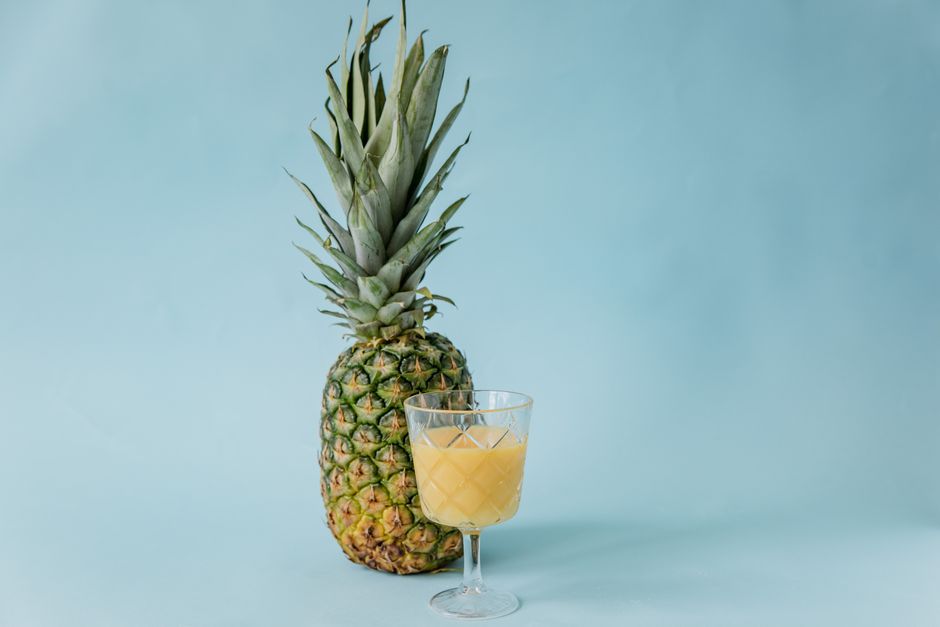
A pineapple is ripe and ready to cut when it smells sweet at the base, gives slightly when you press the sides, and shows mostly golden-yellow skin from the bottom upward. Color is the most reliable single sign. A pineapple that is still fully green will not ripen much after harvest, because the fruit stops building sugar once it is picked.
When Is A Pineapple Ripe To Cut?
Pineapples do not ripen the way bananas or peaches do. They are non-climacteric fruits, which means they do not continue to ripen after being harvested. A pineapple builds its sugar while still attached to the plant. Once it is cut from the plant, its sugar content is essentially fixed.
That single fact explains most of what people get wrong about pineapples. You cannot buy a hard green pineapple and expect it to sweeten on the counter. It may soften slightly and change color, but it will not become noticeably sweeter. This is different from a banana, which continues converting starch to sugar after picking.
So the question “when is a pineapple ripe to cut?” has two answers depending on where you are. If the pineapple is still growing in the ground, you cut it when the color, smell, and firmness all say it is ready. If you bought it at a store, you are really asking when it is ready to eat — and that is about color, aroma, and feel, not about waiting for it to ripen further.
What Are the Signs a Pineapple Is Ripe?
Three senses tell you almost everything you need to know: sight, smell, and touch. Use them together rather than relying on any one alone.
Color
Color is the most dependable visual cue. A ripe pineapple shifts from green to golden-yellow, and that color change starts at the base and moves upward toward the crown. The more yellow the base, the riper the fruit. A pineapple that is green all the way down is almost certainly underripe.
Some varieties stay green even when ripe, so color is a strong guide but not an absolute rule. If the skin is green but the base smells sweet and the fruit gives slightly, trust the smell and feel.
Smell
Smell the bottom of the pineapple, near the base. A ripe pineapple has a sweet, tropical aroma there. If you smell nothing, it is likely underripe. If the smell is sharp, fermented, or vinegary, it is past its best and may be starting to spoil.
The base is where the aroma concentrates because that is where the fruit ripened first. Smelling near the crown will tell you much less.
Feel
Press the sides gently with your thumb. A ripe pineapple gives slightly, like a ripe avocado, but is not mushy. A rock-hard pineapple is underripe. A soft, spongy, or squishy one is overripe.
You can also check the weight. A ripe pineapple feels heavy for its size because it is full of juice. A light pineapple may be dry or past its prime.
Does a Pineapple Ripen After It Is Picked?
No. A pineapple does not ripen after it is picked. This is the most important thing to understand, and it is where most shopping mistakes happen.
Because the fruit is non-climacteric, its sugar content is set at harvest. After picking, a pineapple may soften a little and its skin may turn slightly more yellow, but these are changes in appearance and texture, not in sweetness. The starch-to-sugar conversion that sweetens a banana or a peach does not happen in a pineapple.
This means you should buy a pineapple that already looks and smells ripe. There is no benefit to buying a green one and waiting. You are not giving it time to improve — you are just delaying a fruit that will stay about as sweet as it was the day it was cut.





How Do You Cut a Ripe Pineapple?
Once your pineapple is ripe, cutting it is straightforward. The goal is to remove the tough skin and the fibrous core, and to keep as much of the sweet flesh as possible.
- Lay the pineapple on its side and slice off the leafy crown and the base with a sharp knife.
- Stand it upright and cut the skin away in strips, following the curve of the fruit. Cut deep enough to remove the “eyes” — the small brown dimples just under the skin.
- Cut the peeled fruit into quarters or thick slices, then trim out the central core.
- Slice or cube the flesh to your preferred size.
The core is edible but tough and less sweet. Some people juice it or add it to smoothies rather than eating it whole. There is no safety issue with eating the core; it is simply a texture preference.
How Should You Store a Pineapple?
An uncut ripe pineapple can sit at room temperature for a day or two, but it will not improve. If you are not ready to cut it, refrigeration slows further softening and helps prevent spoilage. A whole pineapple kept in the refrigerator can last several days.
Once cut, pineapple should be refrigerated in a sealed container. Cut pineapple is more vulnerable to spoilage and to absorbing odors from other foods, so keep it covered. It is best eaten within a few days.
Pineapple can also be frozen. Freezing changes the texture and makes it softer, which is fine for smoothies, baking, or cooking, but less ideal for eating fresh.
What About Pineapple and Bromelain?
Pineapple contains bromelain, a group of enzymes that break down proteins. This is why fresh pineapple can make your mouth tingle or feel sore, and why it is sometimes used as a meat tenderizer. The enzyme is doing real work on the proteins in your tissue and in the meat.
Bromelain is often sold as a supplement, and it has been studied for various purposes, including inflammation and digestion. Much of that research is preliminary, and results have been mixed. It is worth being cautious about supplement claims. Eating pineapple is not the same as taking a concentrated bromelain supplement, and the amount in a serving of fruit is modest.
One practical note: bromelain is destroyed by heat. Canned pineapple is heated during processing, so it does not tenderize meat and does not cause the same mouth-tingling effect as fresh. That is why some recipes specifically call for fresh pineapple.
Can You Eat the Core and the Leaves?
The core is safe to eat but fibrous and less sweet. The leaves, or crown, are not a food. They are tough and not meant to be eaten.
The crown does have one use beyond decoration: you can plant it. A pineapple crown can be rooted and grown into a new plant, though it takes a long time and requires a warm climate to produce fruit. This is a gardening project, not a way to get a fast harvest.
Frequently Asked Questions
How can you tell if a pineapple is ripe enough to cut?
Look for golden-yellow skin starting at the base, a sweet smell at the bottom, and flesh that gives slightly when pressed. If all three are present, the pineapple is ripe and ready to cut.
Will a pineapple ripen on the counter after you buy it?
No. A pineapple does not ripen after it is picked, so its sweetness will not increase on your counter. Buy one that already looks and smells ripe.
Is a green pineapple safe to eat?
It is safe but likely underripe, meaning it will be more acidic and less sweet. It will not become sweeter if you wait.
How long does cut pineapple last in the fridge?
Cut pineapple stored in a sealed container in the refrigerator is best eaten within a few days. Discard it if it smells fermented or looks slimy.
