
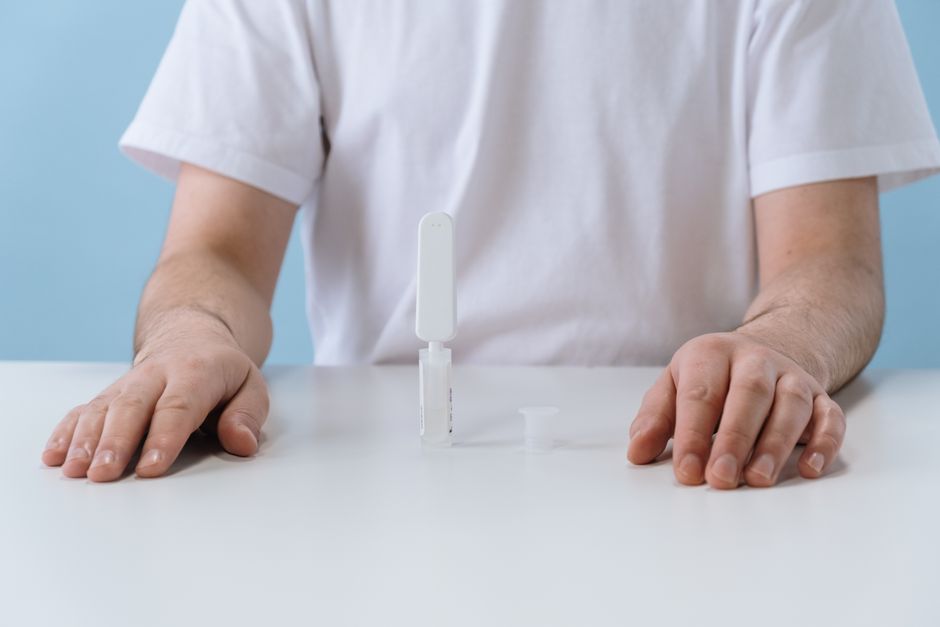
A Lyme PCR test is used for diagnosis mainly in two situations: when a person has signs of early Lyme disease and a blood antibody test has not yet turned positive, and when there is reason to check for Lyme bacteria in a specific body fluid or tissue, such as joint fluid or cerebrospinal fluid. It is not a routine first-line test for most people with suspected Lyme disease. Understanding where it fits — and where it does not — helps you make sense of your own test results.
What Is a Lyme PCR Test and What Does It Actually Detect?
PCR stands for polymerase chain reaction. The test looks for DNA from the bacteria that cause Lyme disease, which belong to the Borrelia burgdorferi group. If bacterial DNA is present in the sample, the test can amplify and detect it.
That sounds straightforward. The catch is where the bacteria live. Borrelia bacteria do not circulate freely in the bloodstream in large numbers for long periods. They move quickly into tissue — joints, skin, the nervous system, the heart. A blood sample usually contains too few bacteria to detect, especially after the first few weeks of infection.
This is the central limitation of Lyme PCR testing. The test is highly specific when it works — a positive result is strong evidence of infection. But a negative result does not rule out Lyme disease. Sensitivity varies widely depending on the sample type, how long the person has been infected, and whether they have already taken antibiotics.
When Is A Lyme PCR Test Used For Diagnosis?
PCR testing for Lyme disease is used in specific clinical situations where antibody testing is unreliable or where confirmation of bacterial DNA in a particular body site matters.
The most established use is testing synovial fluid — the fluid inside a joint — in someone with Lyme arthritis. In that situation, the bacteria are concentrated in the joint, and PCR can detect them directly. This is one of the few settings where PCR performs well.
PCR may also be used on cerebrospinal fluid when a clinician is evaluating possible Lyme neuroborreliosis, though antibody testing on both blood and cerebrospinal fluid is generally the preferred approach. The evidence for cerebrospinal fluid PCR is more limited, and a negative result does not exclude neurologic Lyme disease.
Another use is testing a skin biopsy from an erythema migrans rash — the expanding red rash that often appears at the site of a tick bite. However, this rash is usually diagnosed by its appearance alone, and biopsy is rarely needed.
PCR is not used as a general screening test for Lyme disease. It is not the right test for someone with a recent tick bite and no symptoms. And it is not a reliable way to check whether treatment has worked.
Why Standard Lyme Testing Usually Starts With Antibodies
Most people with suspected Lyme disease get a two-step antibody blood test, not PCR. The immune system produces antibodies against Borrelia within a few weeks of infection. Those antibodies are easier to detect in blood than the bacteria themselves.
The standard approach is a two-tier algorithm. The first step is usually an enzyme immunoassay. If that is positive or equivocal, a second test — typically a Western blot or a second immunoassay — is done to confirm. This approach is what the Centers for Disease Control and Prevention recommends for most cases.
The timing problem is real. In the first few weeks after infection, antibodies may not have developed enough to show up on a test. A person can have early Lyme disease and still test negative. That is one reason clinicians sometimes treat based on symptoms and known tick exposure rather than waiting for a positive antibody result.
Later in infection, antibody tests become more reliable. By several weeks in, most people with Lyme disease will have detectable antibodies.





How Accurate Is Lyme PCR Testing?
The accuracy depends heavily on which sample is being tested. There is no single sensitivity figure that applies across all situations.
For synovial fluid in Lyme arthritis, PCR sensitivity is generally reported as moderate to high. For blood, sensitivity is low — often too low to be clinically useful. For cerebrospinal fluid, results are inconsistent across studies.
Specificity is high across sample types. When PCR returns positive, it is usually a true positive. False positives can occur from contamination in the lab, but this is uncommon with proper technique.
Antibiotic use before testing lowers the chance of detecting bacterial DNA. If you have already started antibiotics, tell the lab and your clinician, because it affects how a negative result should be interpreted.
Lyme PCR vs. Antibody Testing: Key Differences
| Feature | PCR Test | Antibody Test |
|---|---|---|
| What it detects | Bacterial DNA | Immune response to bacteria |
| Best sample type | Joint fluid, sometimes CSF or skin | Blood |
| Early infection | May detect before antibodies form | Often negative in first weeks |
| After treatment | Usually negative | Can stay positive for years |
| Negative result meaning | Does not rule out Lyme | Does not rule out early Lyme |
| Positive result meaning | Strong evidence of infection | Evidence of exposure, not necessarily active infection |
The last row matters. A positive antibody test can persist long after the infection is gone. It shows the immune system encountered the bacteria at some point. It does not always mean active infection is present now. PCR, when positive, points to bacterial DNA being there at the time of testing.
What a Negative PCR Result Does and Does Not Mean
A negative PCR result does not rule out Lyme disease. This is the most important thing to understand about the test.
Bacteria may be present in tissue the sample did not reach. They may be at low numbers. Antibiotics may have already cleared them from the sampled fluid. Any of these can produce a negative result in someone who genuinely has or had Lyme disease.
This is why clinicians do not rely on PCR alone. They combine test results with symptoms, physical exam findings, tick exposure history, and sometimes response to treatment.
If you have a negative PCR but strong clinical signs of Lyme disease, that does not automatically mean you do not have it. Talk with your clinician about what the full picture suggests.
Who Should Not Rely on PCR Testing Alone
PCR is not a stand-alone diagnostic tool for most people. It works best as a targeted test in specific situations — mainly when joint fluid or another concentrated sample is available and when antibody testing has been inconclusive.
People with vague symptoms and no clear tick exposure, no rash, and negative antibody tests are unlikely to get useful information from PCR. In that situation, the test is more likely to produce a misleading negative than a helpful positive.
If you are being evaluated for Lyme disease and your clinician recommends PCR, it is reasonable to ask which sample is being tested, why PCR rather than antibody testing, and how the result will change the plan. Those questions help you understand what the test can and cannot tell you.
Frequently Asked Questions
When is a Lyme PCR test used instead of an antibody test?
It is used mainly when a specific body fluid or tissue sample is available, such as joint fluid in Lyme arthritis, or when antibody testing has been unclear. It is not a routine replacement for standard antibody testing in most suspected cases.
Can a Lyme PCR test be negative even if I have Lyme disease?
Yes. A negative result does not rule out Lyme disease because the bacteria may not be present in the sample at detectable levels. Sensitivity varies by sample type and timing of infection.
How soon after a tick bite can a Lyme PCR test detect infection?
There is no reliable timeline because detection depends on whether bacteria have reached the sampled fluid or tissue in sufficient numbers. Blood PCR in particular is often negative even during active infection.
Does a positive Lyme PCR test mean I am still infected?
A positive PCR means bacterial DNA was present in the sample at the time of testing, which generally indicates active infection at that site. It does not by itself tell you how long the infection has been present or how it should be treated.
