
Ovulation usually happens about 14 days before the next period begins, not 14 days after the last one started. In a typical 28-day cycle, that lands around day 14. But cycle length varies widely from person to person and from month to month, so the calendar date of ovulation moves with it.
That single fact explains why so many people mistime fertility tracking. The second half of the cycle — from ovulation to the next period — is far more consistent than the first half. This guide explains what ovulation is, how to estimate when it happens, which signs are reliable, and where the evidence is genuinely thin.
What Is Ovulation and When Does It Happen?
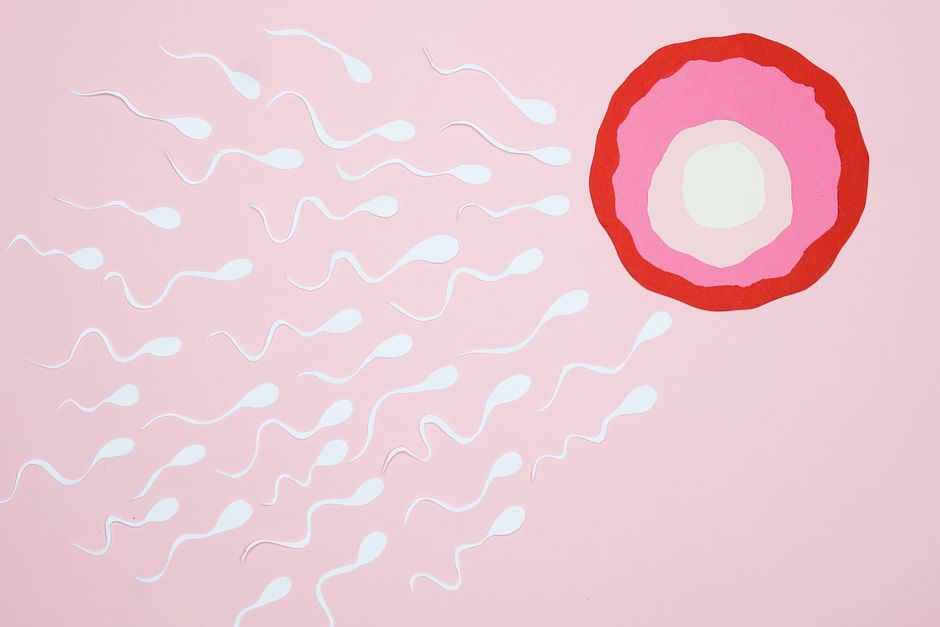
Ovulation is the release of a mature egg from one of the ovaries. The egg then travels into the fallopian tube, where it can be fertilized for roughly 12 to 24 hours after release.
The process is driven by hormones. Near the middle of the cycle, a surge in luteinizing hormone (LH) triggers the follicle to rupture and release the egg. That LH surge is the event most ovulation tests detect.
The timing rule that matters most: ovulation occurs around 14 days before the next period starts. The phase after ovulation, called the luteal phase, is fairly stable in most people at about 12 to 14 days. The phase before ovulation, the follicular phase, is the variable one. That is why counting forward from the first day of bleeding is less reliable than counting backward from the expected next period.
In a 28-day cycle, ovulation falls near day 14. In a 32-day cycle, it falls nearer day 18. In a 24-day cycle, nearer day 10. The pattern holds because the luteal phase stays roughly the same length while the follicular phase stretches or shrinks.
When Is A Female Ovulation in a Typical Cycle?
A typical 28-day cycle places ovulation around day 14, counting day one as the first day of full bleeding. The fertile window — the days when conception is possible — spans roughly the five days before ovulation plus the day of ovulation itself.
That window is wider before ovulation than after it because sperm can survive in the reproductive tract for up to about five days, while the egg survives only around a day. This is why the days leading up to ovulation matter more for conception than the day after.
Cycle length is not fixed for most people. A cycle that runs 26 days one month and 30 the next will shift the ovulation date accordingly. Stress, illness, travel, and significant weight change can all delay ovulation in a given cycle. Age matters too — cycles often shorten and become more variable in the years approaching menopause.
If cycles are consistently shorter than 21 days or longer than 35 days, that falls outside the commonly cited typical range. It does not automatically signal a problem, but it is worth discussing with a clinician, since ovulation timing becomes much harder to predict.
What Signs Suggest Ovulation Is Happening?
Several physical signs track with the hormonal changes around ovulation. None of them confirms ovulation with certainty on its own, but together they give a reasonable picture.
- Cervical mucus changes. As estrogen rises before ovulation, cervical mucus becomes clearer, wetter, and stretchier — often compared to raw egg white. After ovulation, it tends to become thicker and less abundant.
- Basal body temperature shift. Resting temperature rises slightly after ovulation, by roughly 0.5 to 1 degree Fahrenheit, due to progesterone. This confirms ovulation after it has happened — it cannot predict it.
- Mittelschmerz. Some people feel a one-sided twinge or ache in the lower abdomen around ovulation. It is common but not universal, and it can resemble other kinds of pelvic pain.
- LH surge detected by an ovulation predictor kit. These urine tests detect the hormone surge that typically precedes ovulation by about 24 to 36 hours. They are the most direct home tool available.
- Libido and breast sensitivity changes. Some people notice shifts in these around mid-cycle, though the pattern varies a great deal between individuals.
One clarification worth knowing: the “egg white” mucus sign is often described as a reliable indicator, and it is a useful clue. But studies tracking mucus alongside hormone measurements have found it does not perfectly align with the fertile window in every person. It is one signal among several, not a guarantee.
How Accurate Are Ovulation Calculators and Apps?
Calendar-based calculators give an estimate, not a measurement. They work best for people with regular cycles and become less reliable as cycle length varies.
Apps that rely only on past cycle dates are doing the same math. Some add data from temperature or LH tests, which improves the picture, but the underlying prediction is still statistical. No app can tell you with certainty that you ovulated on a specific day.
For people trying to conceive, combining methods tends to be more useful than any single one. An LH test narrows the window. Cervical mucus observation adds context. A temperature chart confirms after the fact whether ovulation occurred. Used together, they give a clearer picture than a calendar alone.
For people trying to avoid pregnancy, it is worth being direct: calendar-based methods alone have a meaningful failure rate. Fertility awareness methods that combine multiple signs perform better in research, but they require training and consistent daily tracking. Anyone relying on timing alone for contraception should discuss it with a clinician rather than assume it is reliable.
Can You Ovulate at a Different Time Than Expected?
Yes, and it happens often. Ovulation can arrive several days early or late in any given cycle, even in people whose cycles are usually regular.
Illness, poor sleep, high stress, travel across time zones, and changes in weight can all delay ovulation. When ovulation is delayed, the whole cycle lengthens — the luteal phase stays roughly the same, so the next period arrives later too. This is a common reason for a “late” period that turns out not to be pregnancy.
A less common scenario is ovulation occurring more than once in a single cycle. Release of two eggs within a short window can happen, which is one way fraternal twins arise. True ovulation on two separate occasions many days apart in the same cycle is not well documented and is generally considered unlikely.
There is also an important distinction between an LH surge and actual ovulation. A positive ovulation test shows the hormone surge happened. In most cycles that leads to egg release, but not always. Some cycles produce an LH surge without ovulation, particularly in people with conditions like polycystic ovary syndrome. A temperature rise or a period arriving on schedule is stronger evidence that ovulation actually occurred.
When Should You Talk to a Clinician About Ovulation?
Irregular cycles, absent periods, or cycles that repeatedly fall outside the typical 21-to-35-day range are worth a conversation with a clinician. So is tracking that never shows signs of ovulation.
For people trying to conceive, a common threshold for seeking evaluation is twelve months of trying without success, or six months if the person trying is 35 or older. That guidance is widely used in clinical practice. Anyone with known cycle irregularity may reasonably seek advice sooner rather than waiting.
Signs that warrant earlier attention include periods that stop for several months without pregnancy, very heavy or very painful periods, and symptoms suggesting a hormonal condition such as PCOS or thyroid dysfunction. These are not diagnoses to self-assign — they are reasons to get an evaluation.
Ovulation tracking is a useful tool, but it is not a diagnostic test. If something about your cycle seems off, a clinician can assess hormone levels and ovarian function directly in ways home tracking cannot.
Frequently Asked Questions
How many days after your period do you ovulate?
It depends on cycle length, but ovulation typically occurs about 14 days before the next period starts — not a fixed number of days after bleeding begins. In a 28-day cycle that falls around day 14; in a 32-day cycle, around day 18.
Can you ovulate on day 10 of your cycle?
Yes, especially in shorter cycles. A 24-day cycle would place ovulation near day 10, since the luteal phase after ovulation stays roughly 12 to 14 days.
How long does ovulation last?
The egg remains viable for roughly 12 to 24 hours after release, though the broader fertile window lasts about six days because sperm can survive for up to about five days beforehand.
Can you get pregnant without knowing when you ovulate?
Yes. Because the fertile window spans several days before ovulation, pregnancy can occur without any tracking at all. Tracking mainly helps people who want to time intercourse more precisely or better understand their cycle.
