
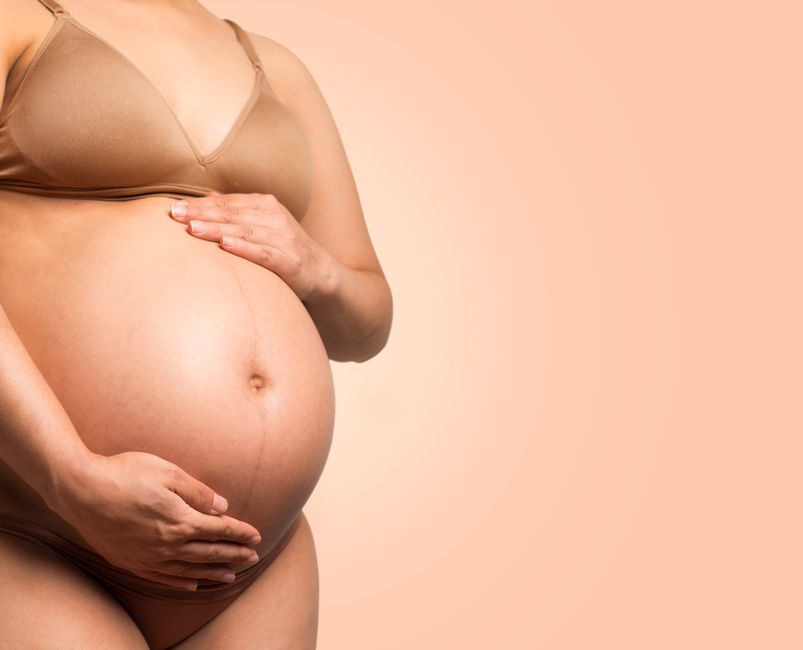
Eight months pregnant means you are in the third trimester, somewhere between roughly 32 and 35 weeks of pregnancy. The exact calendar date depends on how your weeks are counted, because an eight-month marker is not a single day — it is a window. Most clinicians track pregnancy by weeks from the first day of your last menstrual period, not by calendar months, and that difference explains why “eight months” can feel confusing.
If you are 32 to 35 weeks pregnant, you are eight months along in the common way people count it. You are nearing the finish line, but you are not there yet. Full term is generally considered 39 to 40 weeks, so at eight months you still have several weeks of fetal growth and preparation ahead.
How Do Pregnancy Months and Weeks Actually Line Up?
Pregnancy is measured in weeks, and a full-term pregnancy runs about 40 weeks from the first day of your last menstrual period. That is closer to nine calendar months, which is why the “nine months” figure is a rough average rather than a precise count.
When people say “eight months pregnant,” they usually mean the eighth month of pregnancy, which spans weeks 32 through 35. Here is how the months typically break down:
- Month 1: weeks 1–4
- Month 2: weeks 5–8
- Month 3: weeks 9–13
- Month 4: weeks 14–17
- Month 5: weeks 18–21
- Month 6: weeks 22–26
- Month 7: weeks 27–31
- Month 8: weeks 32–35
- Month 9: weeks 36–40
These ranges are approximate. Different providers and pregnancy apps divide the months slightly differently, so do not be alarmed if your app and your doctor seem to disagree by a week. The week count is the number that matters clinically.
When Is 8 Months Pregnant in Terms of Weeks and Days?
You are eight months pregnant from the start of week 32 through the end of week 35. In days, that is roughly day 218 through day 245 of pregnancy, counting from the first day of your last menstrual period.
A useful way to think about it: at 32 weeks you have completed about 80 percent of a 40-week pregnancy. At 35 weeks you are closing in on 88 percent. The remaining weeks matter a great deal, even though they are few.
One clarification that surprises many people: pregnancy weeks are counted from your last period, not from conception. That means the first two weeks of the count happen before you are actually pregnant. This is a convention used worldwide because the date of the last period is usually easier to pin down than the date of conception.
What Happens During the Eighth Month of Pregnancy?
The eighth month is a period of rapid fetal maturation, especially in the lungs and brain. Your baby is gaining weight steadily, and many of the body systems that need to work independently after birth are getting their final preparation.
By around 32 weeks, most babies have settled into a head-down position, though some turn later. By 35 weeks, the lungs are continuing to develop surfactant, a substance that helps the air sacs stay open after birth. This is one reason babies born before 37 weeks may need breathing support — their lungs are still finishing this process.
Your baby’s brain is also growing quickly. The brain’s surface develops folds and grooves during this time, which increases its capacity. Fat is accumulating under the skin, so the wrinkled appearance of earlier months begins to smooth out.
For you, the eighth month often brings more noticeable physical strain. The uterus is large, and it presses upward on the diaphragm and stomach. This can cause shortness of breath and heartburn. Sleep can become harder as finding a comfortable position gets more difficult.





What Symptoms Are Common at 8 Months Pregnant?
Common symptoms in the eighth month include shortness of breath, heartburn, swelling in the feet and ankles, back pain, trouble sleeping, and frequent urination. These are largely caused by the size and position of the uterus and by normal changes in blood volume and hormones.
Swelling, called edema, is common in late pregnancy. Mild swelling of the feet and ankles is usually not a concern. But sudden swelling of the face or hands, or swelling that comes with a headache or vision changes, needs prompt medical attention. Those can be signs of a serious condition called preeclampsia, and they should not be ignored.
Some symptoms in the eighth month deserve a call to your provider rather than a wait-and-see approach:
- Severe or persistent headache
- Changes in vision, such as blurring or seeing spots
- Sudden swelling of the face or hands
- Pain in the upper abdomen
- Decreased fetal movement
- Fluid leaking from the vagina
- Regular contractions before 37 weeks
Contractions before 37 weeks can be a sign of preterm labor. If you are having regular contractions, call your provider right away. Preterm labor can sometimes be stopped or managed, and early care improves outcomes.
How Big Is a Baby at 8 Months Pregnant?
At 32 weeks, a baby typically weighs around 3.75 pounds and measures about 16.7 inches from head to heel. By 35 weeks, the average baby weighs about 5.25 pounds and measures around 18.2 inches.
These are averages from established fetal growth references, and healthy babies vary widely. A baby measuring smaller or larger than average is not automatically a concern. Your provider tracks growth over time using ultrasound and fundal height measurements, and the trend matters more than any single number.
It helps to remember that third-trimester weight estimates from ultrasound can be off by a meaningful margin. They are useful for spotting general trends, not for predicting an exact birth weight.
What Appointments and Tests Happen Around 8 Months?
Prenatal visits typically become more frequent in the third trimester, often every two weeks around this stage. Your provider will check your blood pressure, weight, urine, and the baby’s growth and heart rate at each visit.
Several standard tests and discussions often happen around the eighth month:
- Group B strep screening is commonly done between 36 and 37 weeks, so it may fall just after the eighth month.
- Blood tests to check for anemia or other conditions may be repeated.
- Your provider may discuss your birth plan and options for pain management.
- If you have certain risk factors, your provider may recommend additional monitoring, such as nonstress tests or biophysical profiles.
The timing of specific tests can vary by provider and by your individual health history. Ask your provider what is scheduled for your next visits so you know what to expect.
Is It Safe to Give Birth at 8 Months Pregnant?
Birth at 8 months pregnant means a birth before 37 weeks, which is considered preterm. Babies born at 32 to 35 weeks are premature and usually need some level of special care, though outcomes for babies born in this range are generally good with modern medical support.
The earlier a baby is born, the higher the risk of complications, particularly with breathing and feeding. Babies born between 34 and 36 weeks are sometimes called “late preterm,” and while they often do well, they can still have challenges with temperature control, feeding, and jaundice.
This is why providers aim to keep a pregnancy going to at least 39 weeks when there is no medical reason to deliver earlier. If you are at 8 months and having signs of preterm labor, contact your provider immediately. Early medical care can make a real difference.
If you are scheduled for a medically indicated early delivery, your provider has weighed the risks of continuing the pregnancy against the risks of early birth. That decision is specific to your situation and should be discussed in detail with your care team.
What Should You Prepare During the Eighth Month?
The eighth month is a practical time to finish preparations for birth and bringing a baby home. Many people use this window to complete childbirth classes, pack a hospital bag, and set up the nursery.
It is also a good time to confirm logistics. Know how you will get to the hospital or birth center, who to call, and what your provider’s instructions are for when labor starts. If you have other children or pets, arranging help in advance can reduce stress later.
Rest when you can. Sleep often gets harder in the final weeks, and fatigue is common. Gentle activity, if your provider approves it, can help with some discomforts, but check with your provider before starting or continuing any exercise routine this late in pregnancy.
Frequently Asked Questions
How many weeks is 8 months pregnant?
Eight months pregnant is generally weeks 32 through 35 of pregnancy. The exact range can vary slightly depending on how months are divided.
Is 8 months pregnant considered full term?
No, 8 months pregnant is not full term. Full term is generally considered 39 to 40 weeks, so 8 months is still preterm if the baby were born at that point.
Can a baby survive if born at 8 months pregnant?
Yes, babies born between 32 and 35 weeks can survive with medical support, though they often need special care for breathing and feeding. Outcomes are generally good with modern neonatal care.
What does 8 months pregnant feel like?
Common feelings include shortness of breath, heartburn, back pain, swollen feet, and trouble sleeping. These symptoms come mostly from the size of the uterus and normal pregnancy changes.
