
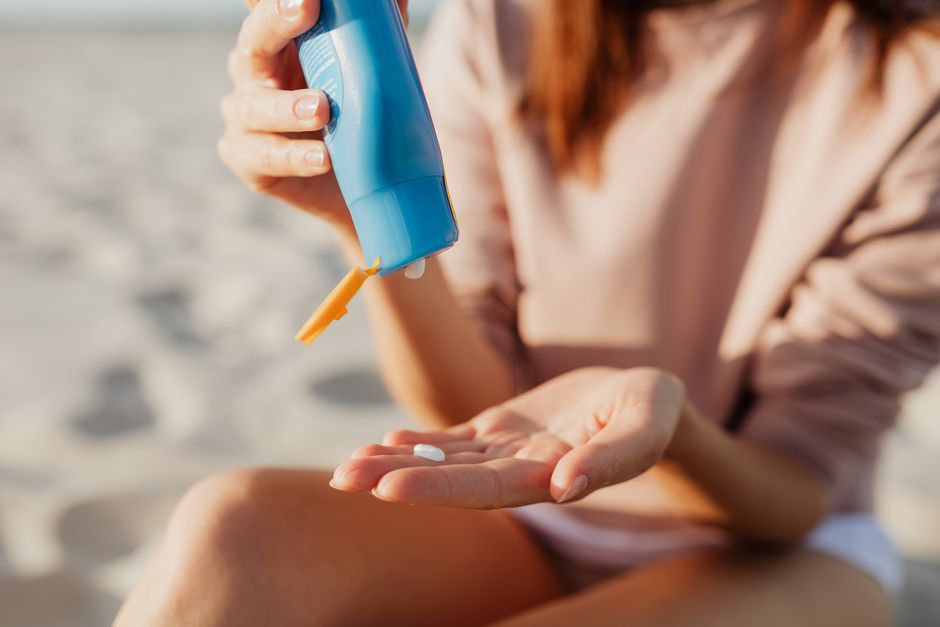
Sunscreen does not last forever. Most bottles carry an expiration date, and once that date passes, the product may no longer deliver the sun protection listed on the label. The typical shelf life is three years from the date of manufacture, or the expiration date printed on the bottle — whichever comes first. If you cannot find a date, a good rule is to replace the bottle three years after you bought it.
When Does Sunscreen Expire?
Sunscreen expiration dates exist because the active ingredients that absorb or block ultraviolet radiation break down over time. Once they degrade, the product may not provide the SPF listed on the label.
In the United States, the FDA requires sunscreen to remain stable at its original strength for at least three years. That is why many bottles show either a specific expiration date or a “best by” date. Some manufacturers print a date code instead of a clear calendar date, which can be hard to read. If you cannot decode it, assume three years from purchase.
Chemical sunscreens — those with ingredients like avobenzone, oxybenzone, or octisalate — work by absorbing UV rays and converting them to heat. These ingredients are generally stable but can degrade over time, especially with heat exposure. Mineral sunscreens using zinc oxide or titanium dioxide work by sitting on top of the skin and reflecting or scattering UV rays. These minerals are chemically stable, but the lotion or cream base they are suspended in can still separate, dry out, or become contaminated.
Expiration is not just about ingredient breakdown. Preservatives in the formula also lose effectiveness, which means bacteria and mold can grow in an old product. That matters most for face and body products applied to broken or sensitive skin.
How to Tell If Your Sunscreen Has Gone Bad
Expiration dates are the clearest signal, but they are not the only one. Physical changes in the product can tell you it is time to replace it.
- Separation: If the lotion has split into liquid and solid layers that will not blend back together when shaken, the emulsion has broken down.
- Texture changes: A cream that has become gritty, watery, or unusually thick may no longer spread evenly. Uneven application means uneven protection.
- Color changes: A noticeable shift in color — especially browning or yellowing — suggests the ingredients have degraded.
- Smell: An off or sour odor usually means preservatives have failed and microorganisms may be present.
- Packaging changes: A bottle that has swollen, leaked, or changed shape may indicate chemical breakdown or bacterial gas production.
If you see any of these signs, replace the product. Do not try to stretch it by using more. An expired or degraded sunscreen cannot be made effective by applying a thicker layer.
Does Expired Sunscreen Still Work?
It might provide some protection, but you cannot count on it. The problem is that you have no way to know how much protection remains.
Some research suggests that certain sunscreen ingredients degrade more slowly than others. Mineral actives like zinc oxide and titanium dioxide are inherently stable and may retain much of their UV-blocking ability past the expiration date. Chemical actives are more vulnerable to breakdown. But even a mineral sunscreen with stable actives can fail if the base has separated or become contaminated.
No clinical evidence currently confirms that expired sunscreen provides reliable protection at its labeled SPF. The risk is not worth it. A sunburn today increases your lifetime risk of skin damage and skin cancer. Replacing a bottle of sunscreen costs far less than treating a preventable burn.
The same logic applies to sunscreen that has been stored in a hot car. Heat accelerates the breakdown of chemical actives and can cause the formula to separate. If your sunscreen has been baking in a glove compartment all summer, treat it as expired even if the date says otherwise.





How Should You Store Sunscreen to Make It Last?
Storage conditions matter as much as the expiration date. Heat and direct sunlight are the two biggest enemies of sunscreen stability.
Keep your sunscreen in a cool, dry place when you are not using it. A bathroom cabinet or a shaded bag works well. Avoid leaving it in a car, on a windowsill, or anywhere it will be exposed to prolonged heat. If you spend a day at the beach or pool, take the bottle with you rather than leaving it in a hot car for hours.
Keep the cap tightly closed when not in use. Air exposure can dry out the product and introduce contaminants. Do not share sunscreen with someone who has an active skin infection, and do not use sunscreen past its expiration date on broken skin or on children.
If you use sunscreen regularly, you will likely finish a bottle before it expires. The problem is most people do not use enough. The American Academy of Dermatology recommends using about one ounce — roughly a shot glass full — to cover the body, and reapplying every two hours or after swimming or sweating. At that rate, a standard 3-ounce bottle lasts about three full-body applications. Most people use far less, which means their bottle lasts longer and is more likely to expire before it runs out.
Sunscreen Expiration and Children
Children’s skin is more vulnerable to UV damage, and sunburns in childhood are linked to higher lifetime skin cancer risk. Using expired sunscreen on a child is not a risk worth taking.
Check the expiration date on any sunscreen you plan to use on children. If it has passed, replace it. The same storage rules apply — keep it out of hot cars and direct sun. For infants under six months, the FDA and the American Academy of Pediatrics recommend keeping them out of direct sunlight and using protective clothing and shade rather than sunscreen. If you must apply sunscreen to a small area on an infant, use a mineral-based product and check with your pediatrician first. No clinical guidelines currently exist for using expired sunscreen on infants.
Does Sunscreen Expire Faster Once Opened?
Yes. The expiration date on the bottle assumes the product has been stored properly and remains sealed. Once you open it, the clock starts ticking faster.
Opening a container exposes the formula to air, bacteria, and moisture. Preservatives begin to lose effectiveness. The product may still be within its printed expiration window but no longer stable. A practical rule: if a sunscreen has been open for more than a year, especially if it has been stored in warm conditions, replace it.
This is different from the three-year shelf life for an unopened bottle. The three-year figure comes from stability testing required by the FDA for sealed products. It does not guarantee the same shelf life after opening.
| Scenario | General Guidance |
|---|---|
| Unopened bottle, stored cool and dry | Good until printed expiration date, or three years from purchase if no date is visible |
| Opened bottle, stored cool and dry | Best used within one year of opening |
| Opened or unopened, stored in hot car | Replace — heat accelerates breakdown |
| Any bottle showing separation, odor, or color change | Replace regardless of date |
Can You Use Expired Sunscreen as a Moisturizer?
No. Expired sunscreen is not a safe substitute for a moisturizer. The ingredients that made it effective as a sunscreen may have broken down into compounds that can irritate the skin.
More importantly, a degraded sunscreen offers no reliable UV protection. If you use it as a daily moisturizer and spend time outdoors, you may be getting far less protection than you think. That defeats the purpose of wearing it at all.
The same applies to using old sunscreen on tattoos, scars, or sensitive areas. Compromised skin is more vulnerable to irritation from degraded ingredients and to infection from contaminated product.
How Often Should You Replace Sunscreen?
Replace your sunscreen at least once a year if you use it regularly. If you only use it occasionally, check the expiration date before each use and replace it if the date has passed or if you cannot determine when it was purchased.
Buying a new bottle each summer is a simple habit that ensures you always have effective protection. If you stock up on sale, check the dates and store the bottles in a cool, dark place. Do not buy more than you will use within a year or two.
If you are unsure whether a bottle is still good, throw it out. The cost of a new bottle is small compared to the risk of a sunburn or the long-term consequences of UV exposure. Skin cancer is the most common cancer in the United States, and UV radiation from the sun is a major preventable cause.
Frequently Asked Questions
Does sunscreen really expire?
Yes. The FDA requires sunscreen to remain stable at its labeled SPF for at least three years, after which the active ingredients may degrade. Once expired, the product may not provide the protection listed on the bottle.
Can I use sunscreen that expired a year ago?
It is not recommended. Even if the product looks and smells normal, you have no way to know how much UV protection remains, and degraded preservatives may allow bacterial growth.
How do I find the expiration date on sunscreen?
Check the bottle for a printed date or a batch code. If no date is visible, assume the sunscreen expires three years after you bought it.
Does sunscreen expire faster if it is left in a hot car?
Yes. Heat accelerates the breakdown of chemical sunscreen ingredients and can cause the formula to separate. Replace any sunscreen that has been stored in a hot car, regardless of the printed date.
