
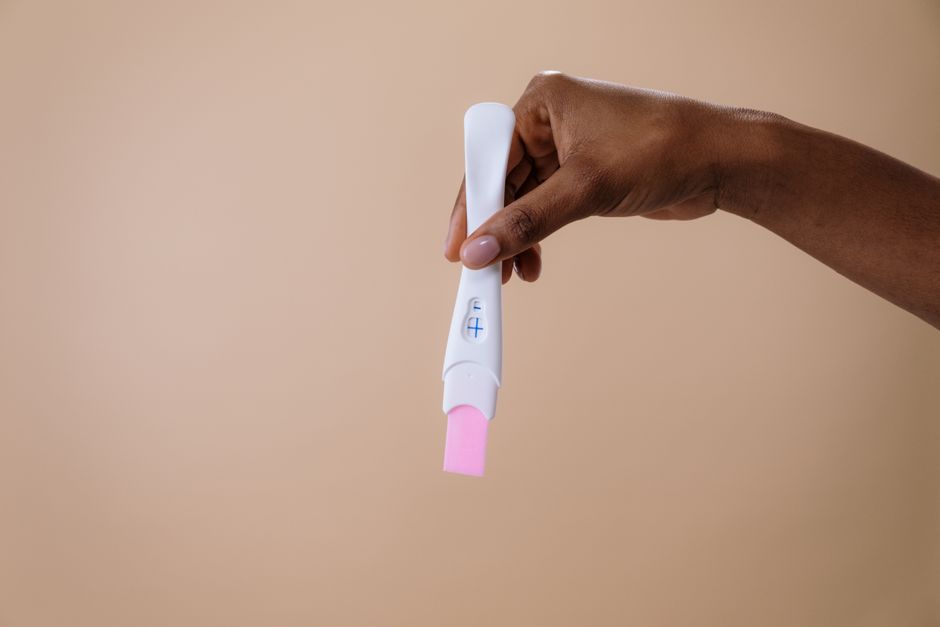
Spotting can happen in any trimester, but the reasons behind it change as pregnancy progresses. In the first trimester, spotting is common and most often harmless — implantation bleeding, cervical changes, and early hormone shifts are frequent causes. In the second and third trimesters, spotting is less common and deserves a call to your care provider, because it can signal something that needs attention. The trimester you are in does not tell you whether spotting is serious on its own. What matters is how much bleeding there is, what it looks like, and whether you have other symptoms.
When Does Spotting Happen In Pregnancy By Trimester?
Spotting is most frequent in the first trimester and becomes less common as pregnancy advances. That pattern is well established in obstetric practice.
First trimester spotting affects a large share of pregnancies. Studies over the years have found that roughly one in four pregnant women experience some first-trimester bleeding, and the majority of those pregnancies continue normally. That is not a reason to ignore it. It is a reason not to panic before you have information.
Second trimester spotting is less frequent. The placenta is fully formed by this point and the cervix has changed, so the causes shift. Third trimester spotting is the least common of the three, and it is the one that most often prompts immediate evaluation.
Here is a point that gets lost: spotting and bleeding are not the same thing clinically. Spotting means a few drops of blood that do not fill a pad. Bleeding means more volume, often with clots or continuous flow. Care providers treat these differently. If you are soaking a pad, the guidance is to seek care right away regardless of trimester.
What Causes Spotting In The First Trimester?
Implantation bleeding is one of the earliest possible causes. When a fertilized egg attaches to the uterine lining, it can cause light spotting. This typically happens around the time a period would be expected, which is why some people mistake it for a period. It is usually light and short-lived.
Cervical changes are another common cause. Pregnancy increases blood flow to the cervix, and the tissue becomes softer and more fragile. Intercourse, a pelvic exam, or even a Pap smear can cause light spotting afterward. This is a well-understood mechanical cause, not a sign of something wrong.
Hormonal shifts in early pregnancy can also cause spotting. Some people notice light bleeding around the time of their expected period in the first month or two, even after a positive test.
Other first-trimester causes include:
- Subchorionic hematoma — a collection of blood between the uterine wall and the chorion, which some studies suggest is the most common cause of first-trimester bleeding seen on ultrasound
- Ectopic pregnancy — a pregnancy outside the uterus, which is a medical emergency
- Early pregnancy loss — which often presents with bleeding and cramping
- Infection of the cervix or vagina
Most first-trimester spotting does not mean miscarriage. But bleeding with cramping, especially worsening cramping, needs prompt evaluation. Ectopic pregnancy is uncommon but serious, and it can present with spotting, one-sided pelvic pain, and sometimes shoulder pain or dizziness. Those symptoms warrant emergency care.
What Causes Spotting In The Second Trimester?
Second trimester spotting is less common and the causes are different. The placenta has finished forming, and the cervix continues to change.
A low-lying placenta, called placenta previa, can cause painless bleeding. In placenta previa, the placenta covers or sits near the cervix. It is often detected on ultrasound. Many cases resolve as the uterus grows and the placenta moves upward, but bleeding from previa can be significant and needs medical attention.
Cervical changes remain a cause. As pregnancy progresses, the cervix can bleed easily after exams or intercourse. Some people develop a cervical polyp, a benign growth that can bleed. Polyps are usually harmless but are often checked to be sure.
Preterm labor can sometimes present with spotting, especially when combined with contractions, pelvic pressure, or a change in discharge. Spotting alone is not a reliable sign of preterm labor, but it is one reason providers ask about it.
Second trimester bleeding is associated with a higher chance of pregnancy complications than first trimester bleeding in some studies, but the evidence is mixed and depends heavily on the cause. An ultrasound and exam usually clarify what is going on.
What Causes Spotting In The Third Trimester?
Third trimester spotting is the least common and the one that most often needs urgent evaluation. The main concern is placental problems.
Placental abruption is a serious condition where the placenta separates from the uterine wall before delivery. It can cause vaginal bleeding, but in some cases the bleeding is hidden behind the placenta. Abruption often comes with abdominal pain, a hard or tender uterus, and sometimes contractions. It is a medical emergency.
Placenta previa can cause painless bleeding in the third trimester as well. If you have been told you have a low-lying placenta, any bleeding should be reported right away.
Bloody show is a different thing. As the cervix begins to dilate near the end of pregnancy, the mucus plug can come out mixed with a small amount of blood. This is a normal sign that labor may be approaching, usually within days to a couple of weeks. It is not the same as unexplained spotting earlier in pregnancy.
Any third trimester bleeding should be reported to your care provider. The guidance in obstetric practice is to call rather than wait, because the causes that matter most in this trimester can worsen quickly.
How Do You Tell The Difference Between Spotting And Bleeding?
Spotting is light. It is a few drops or a small streak of blood that does not fill a pad or require a pad for protection. Bleeding is heavier — it fills a pad, comes with clots, or continues over time.
Color can give clues but is not reliable on its own. Brown spotting usually means older blood. Pink or red spotting means fresher blood. Bright red bleeding with clots is more concerning.
What matters more than color is volume and symptoms. A small amount of brown discharge is common and usually not urgent. Soaking a pad, passing clots larger than a quarter, or bleeding with pain, dizziness, or contractions is a reason to seek care promptly.
When Should You Call Your Care Provider?
Call your care provider for any spotting in the second or third trimester. In the first trimester, call if the spotting is heavy, comes with cramping, or lasts more than a day or two.
Seek emergency care for:
- Heavy bleeding that fills a pad
- Bleeding with severe or one-sided pelvic pain
- Bleeding with dizziness, fainting, or a racing heartbeat
- Bleeding with shoulder pain
- Bleeding with fever or chills
- Bleeding with contractions or a gush of fluid
These signs can point to ectopic pregnancy, miscarriage, placental abruption, or infection. None of these can be ruled out by how you feel alone. An exam and often an ultrasound are needed.
What Does Spotting Not Tell You?
Spotting alone does not tell you whether the pregnancy is healthy. Many people with spotting go on to have uncomplicated pregnancies. Many people with no spotting have complications. The presence or absence of spotting is not a reliable test of pregnancy viability.
Spotting also does not tell you the cause. The same light bleeding could come from implantation, a cervical change, a subchorionic hematoma, or an ectopic pregnancy. Those are very different situations with very different outcomes. Only an exam and imaging can sort them out.
That is why the practical advice is consistent: report spotting, especially after the first trimester, and let your care provider decide whether it needs evaluation. Self-monitoring is not a substitute for that conversation.
Frequently Asked Questions
Is spotting in early pregnancy normal?
Some first-trimester spotting is common and most pregnancies with light spotting continue normally. It is still worth reporting to your care provider, especially if it comes with cramping or lasts more than a day or two.
Can spotting happen in the second trimester and still be fine?
Yes. Cervical changes and benign polyps can cause light spotting in the second trimester without harm. Because second-trimester bleeding can also signal placenta problems, it should always be checked.
Does third trimester spotting mean labor is starting?
Not necessarily. A small amount of bloody mucus, called bloody show, can mean labor is approaching within days to a couple of weeks. Any other third-trimester bleeding should be reported right away rather than assumed to be labor.
How much spotting is too much?
Spotting that fills a pad, comes with clots, or is accompanied by pain, dizziness, or contractions is beyond light spotting and needs prompt care. Light spotting that does not fill a pad is less urgent but still worth mentioning to your provider.
